Tesla Assisted Driving Update Adds 130 km/h Wheel Rule and Earlier Alerts
- Joseph Williams
- 702 views
Tesla’s European driver assistance update adds earlier attention warnings, maneuver related strikes and speed display changes. Rollout timing is up to Tesla.
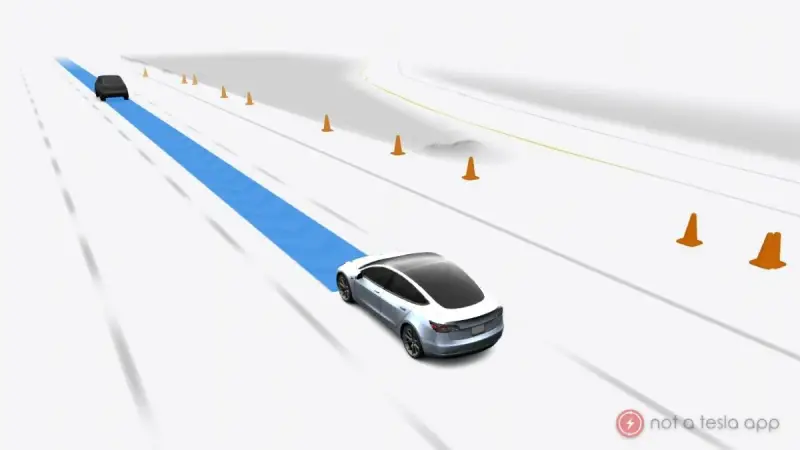
Tesla’s next European update for Tesla Assisted Driving (TAD) tightens driver monitoring and makes speed settings more visible. For drivers, the clearest change is a hands on the wheel requirement above 130 km/h, or about 81 mph. The update applies to vehicles with HW4 hardware and has been approved by the Dutch vehicle authority RDW; Tesla controls when it reaches cars.

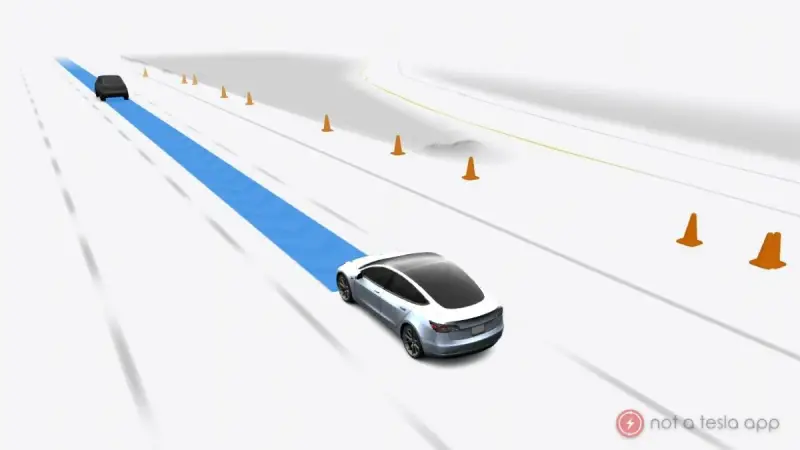
More direct prompts for driver attention
The revised system is set to warn drivers sooner when it detects inattention. If a driver is inattentive while TAD is carrying out a maneuver, the system will issue a full strike. The change makes driver supervision more consequential at a moment when the car is actively changing what it is doing.

That distinction matters in day to day use. A warning gives the driver a chance to respond; a strike records a more serious lapse under the system’s monitoring rules. The available details don’t specify how many strikes lead to a further consequence, or how quickly the new alerts will appear. Drivers will need to see the update’s prompts in their own cars to understand how the revised monitoring feels in practice.
The update also adds safeguards against misuse, though the RDW’s description doesn’t spell out each one. Tesla calls the European product TAD; it is the European version of FSD (Supervised). The name itself reflects the supervised nature of the system: the driver remains responsible for attention while assistance is active.
Speed settings become easier to spot
A second group of changes concerns Contextual Max Speed, which lets TAD set its own speed limit. When the feature is controlling the maximum speed, the indicator will pulse to show that it is active. If a driver wants to raise that maximum, they must confirm the change by scrolling up on the steering wheel.
The display also responds when the car travels faster than the posted limit. In that case, the speed limit sign on screen will pulse red and show the set maximum beside the car’s current speed. That pairing gives the driver two reference points at once: the limit shown for the road and the speed the vehicle is actually travelling.

These details are practical because an automatically selected maximum can be less obvious than a speed limit chosen directly by the driver. A pulsing indicator and a clear confirmation step make the system’s setting easier to recognize and change. The update does not describe how Contextual Max Speed selects a limit in every situation, so the new display cues are the clearest stated change for drivers.

At speeds above 130 km/h, TAD will also require hands on the wheel. The threshold is specific: the RDW describes the requirement as applying above that speed. The update details do not say whether the system will use a different prompt at exactly 130 km/h, or describe how long a driver may take to respond to a hands on warning.
A further step in Europe’s rollout
The RDW tested the changes on a test track and on public roads. It reported no negative or unintended effects on the system’s operation or on how the vehicle drives. The update is intended for over the air delivery, but no rollout date is given; timing is up to Tesla.

This approval follows earlier changes to TAD in Europe. The RDW had approved a reduction in the maximum Speed Offset from +50% to +10%, and Tesla renamed FSD as Tesla Assisted Driving. Tesla later introduced the Speed Offset change in software version 2026.39.100 without listing it in the release notes. That history leaves open the possibility that this update could also arrive without a prominent software note, although its timing is not confirmed.

The RDW has notified 10 other EU member nations that adopted its approval: Belgium, Denmark, Estonia, Finland, Croatia, Latvia, Lithuania, Slovenia, Slovakia and Czechia. TAD is being handled through an exemption process under Article 39 of EU Regulation 2018/858, a route for technologies that do not fit existing rules. The separate EU wide approval process remains underway.

For Tesla, the update addresses concerns about driver attention through earlier warnings, a maneuver related strike and a clear hands on requirement at higher speeds. For owners, the most visible changes should be the steering wheel prompts and pulsing speed indicators. The next practical marker is the over the air rollout; until Tesla schedules it, the approved changes are not yet a confirmed delivery date.