Tesla Puts Full Self-Driving on a Times Square Billboard
- Christopher Miller
- 333 views
Tesla’s first Times Square ad for FSD promotes a 7x safety claim and more than 15 billion miles driven, as the company steps up software marketing.
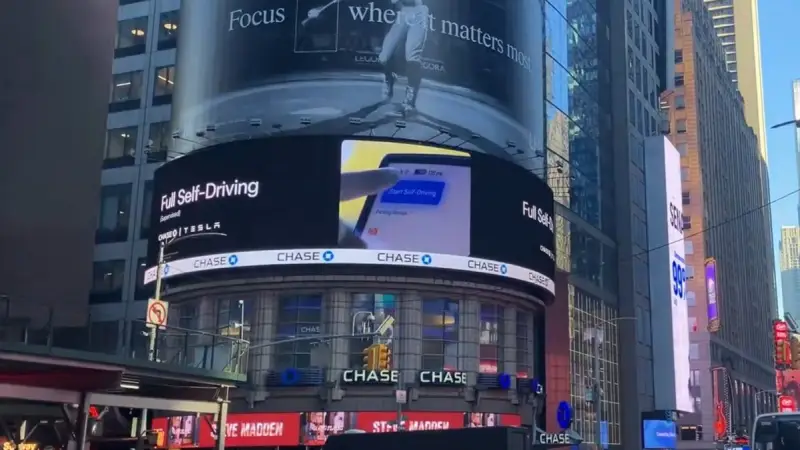
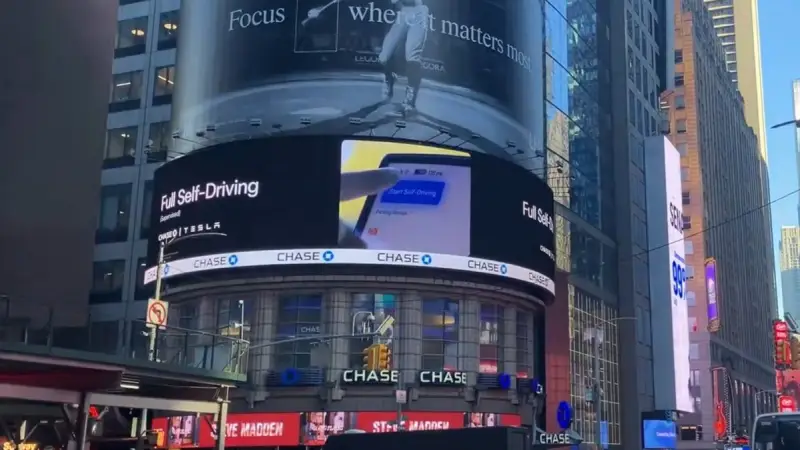
Tesla is giving Full Self-Driving (Supervised) a rare showcase in Times Square, using a high-visibility billboard to put its driver-assistance software in front of a broad audience. The ad is scheduled to run through the end of November and promotes two figures: Tesla’s claim that FSD is “7x safer than a human when engaged” and that the system has logged more than 15 billion miles globally.
The display runs on the curved Chase billboard and cycles through footage of FSD (Supervised) in use. Chase branding also appears, alongside a mention of a vehicle financing collaboration between Chase and Tesla. The placement makes the campaign notable for the company: Tesla has generally relied on customer recommendations, social media and fan activity, and began testing paid advertising in 2023.
A software pitch with a large audience
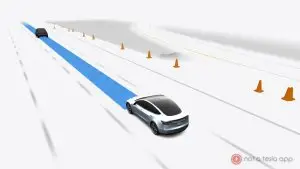
The billboard sells a software feature rather than a particular vehicle. That distinction matters as Tesla seeks to turn FSD into a more visible part of the ownership proposition. A car ad can focus on design, range or price; this campaign instead asks viewers to consider a driver-assistance system and the distance Tesla says it has accumulated using the software.
The safety figure is Tesla’s own claim, presented with the qualification “when engaged.” The mileage figure gives the campaign a scale argument: the company says FSD has been driven for more than 15 billion miles worldwide. Neither line, on its own, describes the system’s performance in every driving situation. For buyers, the practical questions remain how the software behaves on the routes they use, what supervision it requires, and whether its capabilities justify its cost.
Tesla has recently reported a record 1.74 million FSD subscribers in the third quarter, with the feature purchased alongside 75% of new orders in North America. The company also said customers were visiting stores to try FSD, rather than coming only to look at vehicles. Those figures help explain why a public campaign focused on the software could fit its sales strategy: getting more people to experience the feature may support both subscriptions and vehicle orders.
More attention on subscriptions
The Times Square placement sits alongside other efforts to grow FSD use. Tesla has introduced a referral program for the software, and Basic Autopilot was removed from new vehicle orders in a move intended to encourage customers to choose FSD. Together, these steps point to a stronger push to make paid driver assistance a more prominent part of the purchase and ownership conversation.
That approach puts the software’s perceived value under sharper scrutiny. A large audience can learn the headline claims quickly, but repeat use depends on how well FSD fits day-to-day driving and how clearly Tesla communicates the role of the driver. The ad’s “Supervised” label is central to that proposition: the feature is presented as a system that operates with driver oversight.

Availability is also becoming part of the story. Finland recently became the 11th European Union country to approve FSD, with a bloc-wide decision expected in December. That could put the software in front of more European drivers if approval is granted, though the billboard campaign itself provides no new information about where or when the feature will become available.
Grok Bot takes a separate big-screen turn
Tesla’s FSD campaign is not the only Musk-linked product appearing on a landmark display. SpaceXSI is advertising Grok Bot on the Sphere in Las Vegas. The presentation turns the venue into a blue racing helmet, with the Las Vegas Grand Prix circuit shown below it, before ending on colorful Grok Bot characters that represent uses including sales and customer support.
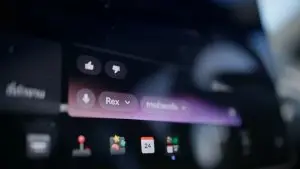
Tesla has also added Grok Bot to its vehicles, where drivers can use AI agents for errands and other tasks hands-free. The two campaigns showcase different kinds of software: one aimed at driving assistance and the other at AI-supported tasks. For Tesla, the Times Square ad is a clear sign that FSD is moving into a more deliberate public-marketing phase. The measure to watch is whether that visibility translates into sustained interest from drivers who can try the system and judge its everyday usefulness for themselves.