2027 Hyundai Elantra Brings Premium Design to the Budget Sedan Class
- [email protected] (Andy Kalmowitz)
- 469 views
Hyundai's 2027 Elantra and 2028 Elantra Hybrid bring Tucson-style design, a 12.9-inch screen and up to 53 mpg combined to the compact sedan class.
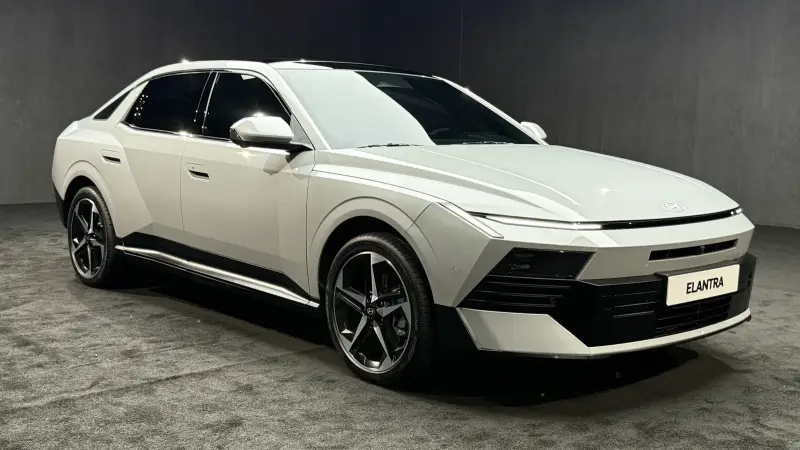
Economy sedans usually get treated as appliances. They haul people from A to B, collect door dings in grocery store lots and end up in a junkyard once the payments stop. The eighth-generation Hyundai Elantra deserves better, and that's the first thing that struck me after a look at the 2027 Elantra and 2028 Elantra Hybrid. Hyundai has clearly put its design and tech budget into a car that most buyers will consider a practical choice rather than an exciting one.
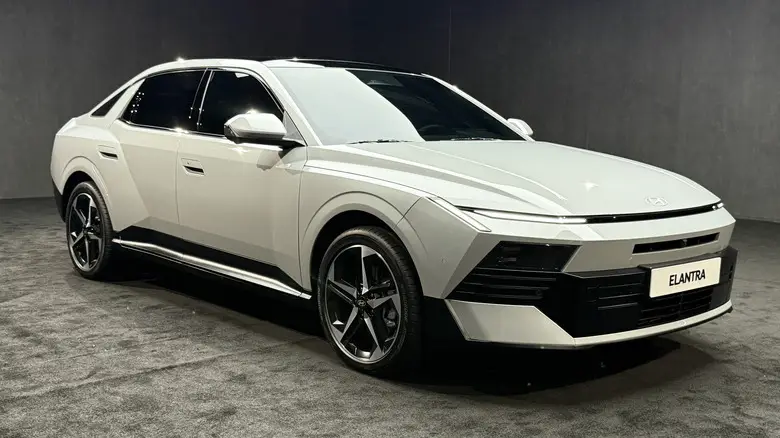
Hyundai's product planning chief, Olabisi Boyle, framed the car around the idea that "affordability is standard." That's a sharp line, and the car backs it up on paper. It shares the upmarket look, interior and tech direction of the redesigned Tucson, and it arrives with a hybrid option that Hyundai says can exceed 50 mpg. I haven't driven it yet, so everything below comes from the spec sheet and a walkaround at a warehouse event in Jersey City, New Jersey, where Hyundai covered my food and transportation.
Hard edges, soft cabin
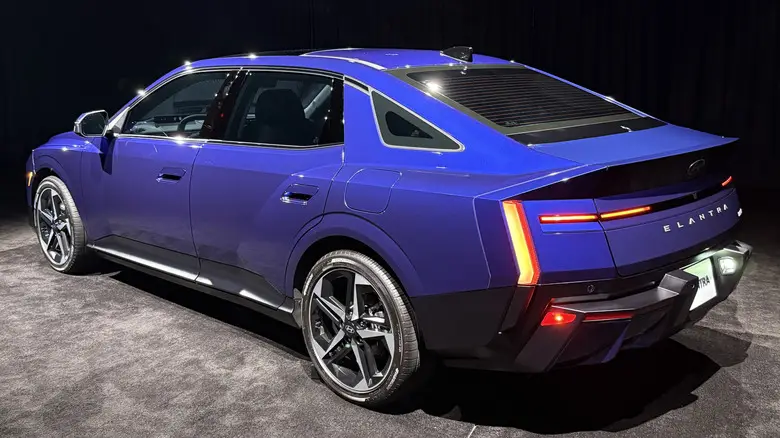
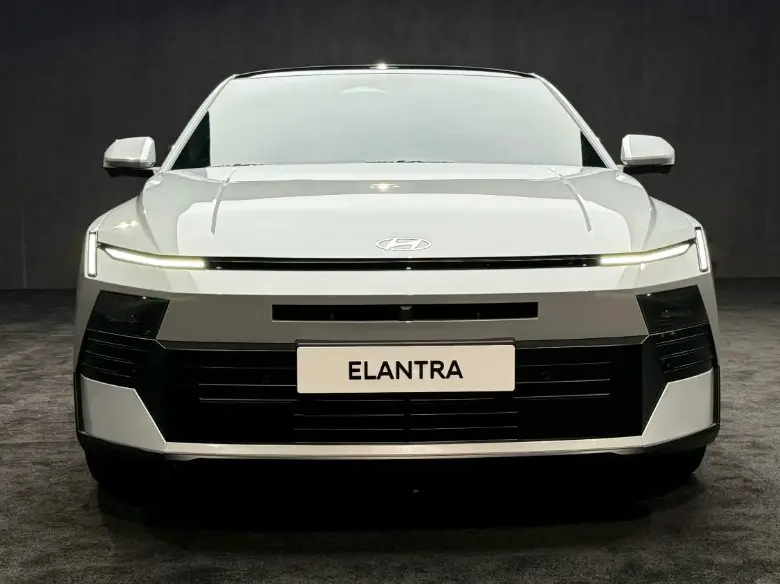
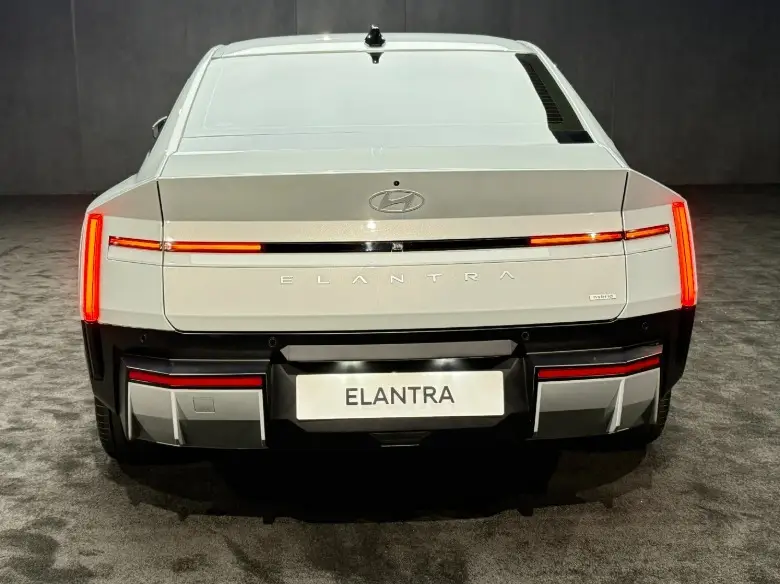
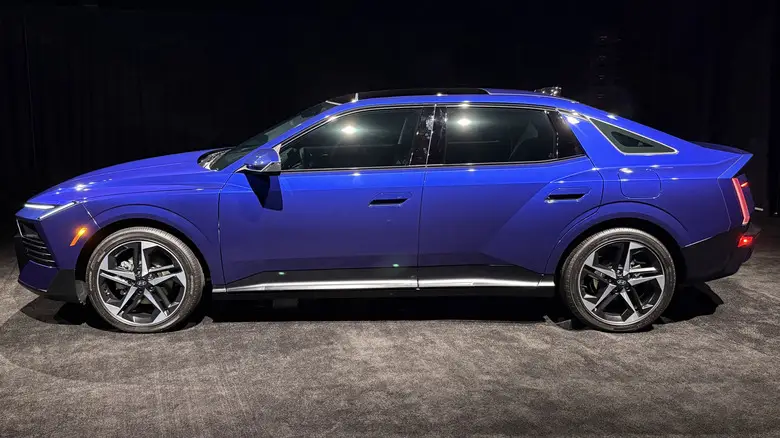
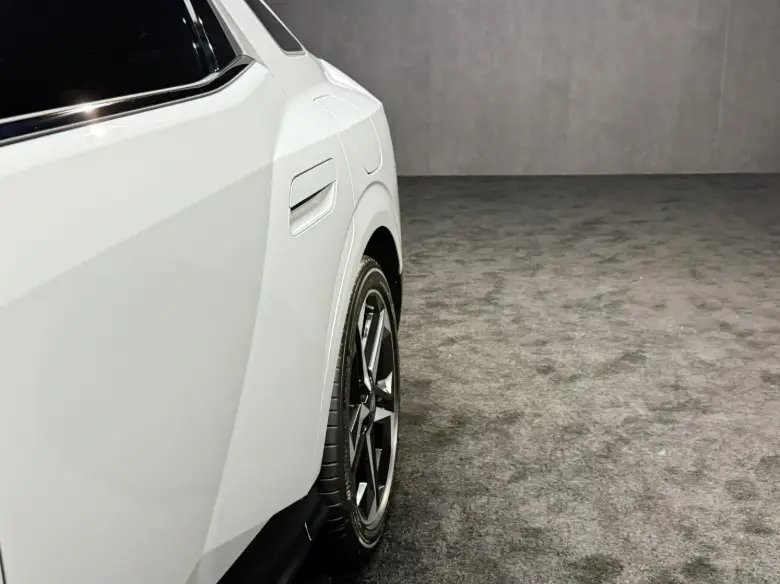
The exterior follows Hyundai's "Art of Steel" design language, which you've already seen on the China-only Ioniq V, the Boulder concept and the new Tucson. Hyundai says the Elantra also takes cues from the N Vision 74 concept, and you can see it most clearly in the wide rear fenders and the wedge-shaped nose. The sharp creases and H-shaped lighting are polarizing. Some people will love them and others will think they're trying too hard. Either way, it doesn't look like anything else in the compact sedan class, and that's rare at this price point.
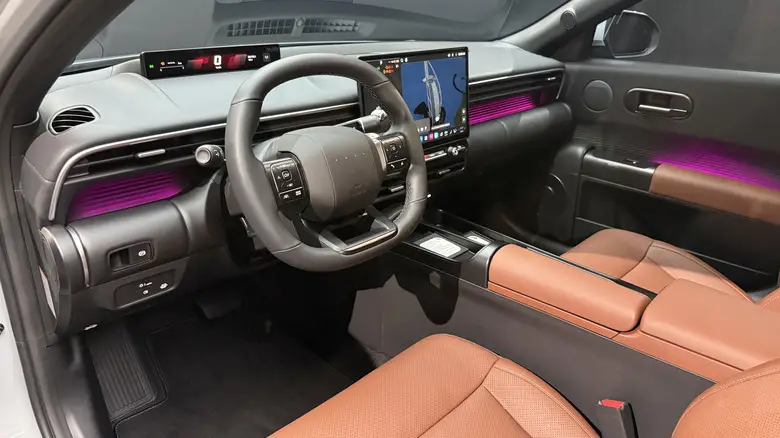
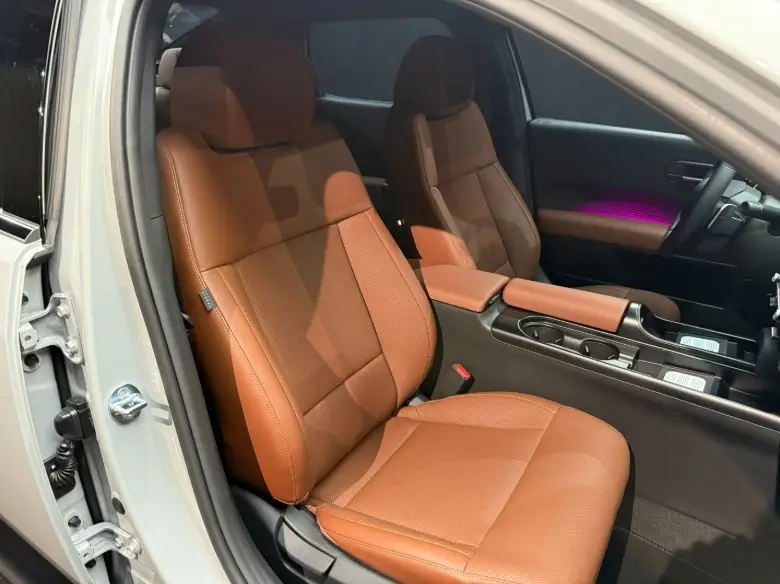
Inside, the mood changes completely. Hyundai calls the design approach "Curve of Upholstery," and the cabin is soft, rounded and comfortable. The materials and build quality feel well above what you'd expect from a car at this level. Plenty of rivals in the segment look and feel like they were designed to be as cheap as possible. This one doesn't.
Size, space and aero
The new Elantra is 3.4 inches longer and 1.2 inches wider, and its wheelbase grows by 1.2 inches. Hyundai says most of that extra length went to the rear seat. Rear legroom gains 1.1 inches, headroom grows 0.7 inches, and shoulder room improves too. The practical payoff is that a rear-facing child seat should fit more easily, which matters a lot to families shopping this segment.
Despite the added size and the angular styling, Hyundai quotes a 0.26 drag coefficient. The H-shaped daytime running lights and taillights are part of that story, along with the flush-mounted door handles. A slippery body helps fuel economy, and fuel economy is where this car has to earn its keep.
Powertrains and real-world running costs
The gas-only Elantra uses a 147-horsepower 2.0-liter four-cylinder paired with a CVT. Hyundai rates it at up to 35 mpg combined on 16-inch wheels. The hybrid uses a 1.6-liter four-cylinder producing 155 horsepower, a six-speed dual-clutch transmission and a 1.49-kWh battery. Hyundai claims up to 53 mpg combined for that setup, which is strong for a compact sedan and would make it one of the more efficient options in the class.
Hyundai hasn't released other performance figures yet. Based on the hardware, I wouldn't expect the hybrid to feel quick, and I'd be surprised if it's trying to be. The hybrid's Stay mode is a useful touch for ownership. It lets you run accessories from the hybrid battery while parked for longer periods, instead of keeping the engine running. That's the kind of feature people notice when they sit in a parked car with the air conditioning on.
Tech that punches above its class
The Elantra runs Hyundai's Pleos Connect operating system, and Hyundai describes the car as a "software-defined vehicle." That's unusual for a combustion car at this price. The centerpiece is a 12.9-inch touchscreen. The left side acts as a driver display for speed and other vehicle data, and the rest of the screen runs customizable widgets for media, navigation and apps. Pleos also lets owners download third-party apps, which could matter more over the car's life than the launch feature list suggests.
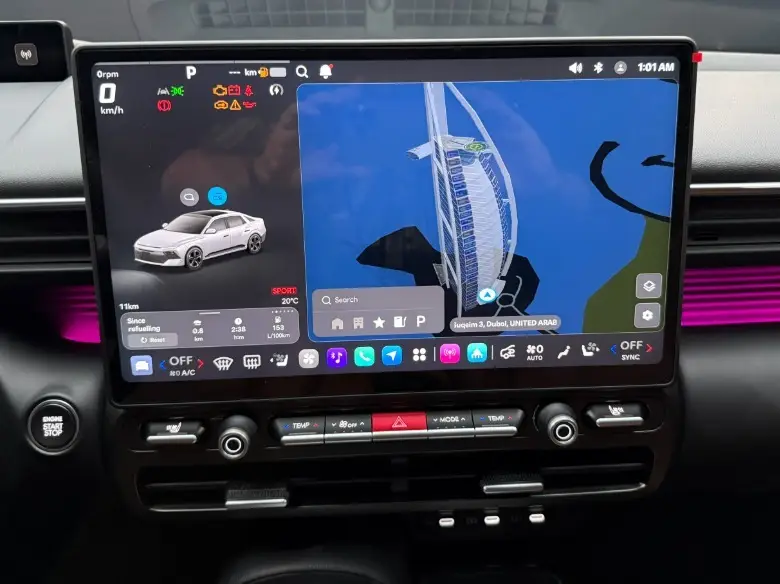
Below the screen you get dual wireless 15-watt Qi 2.0 chargers and 100-watt USB-C ports. An optional 12-speaker Bang & Olufsen audio system is available. Behind the steering wheel sits a 9.9-inch display meant to keep the driver's view clean, showing critical information and a few widgets. Both screens first appeared in the Tucson. Hyundai's SmartSense suite includes lane-keeping assist, lane centering, adaptive cruise control, forward collision avoidance and blind-spot monitoring. Those are the systems Hyundai has named, and I'd wait for independent testing before assuming how they perform in practice.
Trims, pricing and timing
The gas Elantra arrives in SE, SEL Sport and Limited trims. Even the base car gets the 12.9-inch screen, adaptive cruise control and push-button start, which is a generous standard list. The 2028 Elantra Hybrid follows with SE Blue, SEL Sport and Limited trims, adding dual-zone climate control and Stay mode as standard. Hyundai hasn't said when the hybrid will reach showrooms. Pricing hasn't been announced for either model, so I can't tell you where the Elantra will land against the Corolla, Civic and Mazda3 yet. The gas car is expected at U.S. dealers in early 2027.
Why this matters for the segment
Here's the thing: the Corolla, Civic and Mazda3 are all solid cars, but none of them are exciting to look at. The Elantra isn't trying to be a sport sedan, and it doesn't need to be. What it does is raise the bar on design, cabin feel and tech for a budget car. If it sells, expect rivals to spend more time on their interiors and styling, because buyers will start to notice the gap. The Elantra isn't perfect, and the polarizing exterior won't suit everyone. Still, distinctive and comfortable at this price is rare, and that's why I think it deserves more respect than the economy-car label usually gets.


