V10 Sedans: Volkswagen, BMW and Audi’s High-Power Four-Door Cars
- [email protected] (Chloe Clougher)
- 524 views
Volkswagen, BMW and Audi put V10 engines in production sedans, pairing standout performance with steep depreciation and costly repairs.
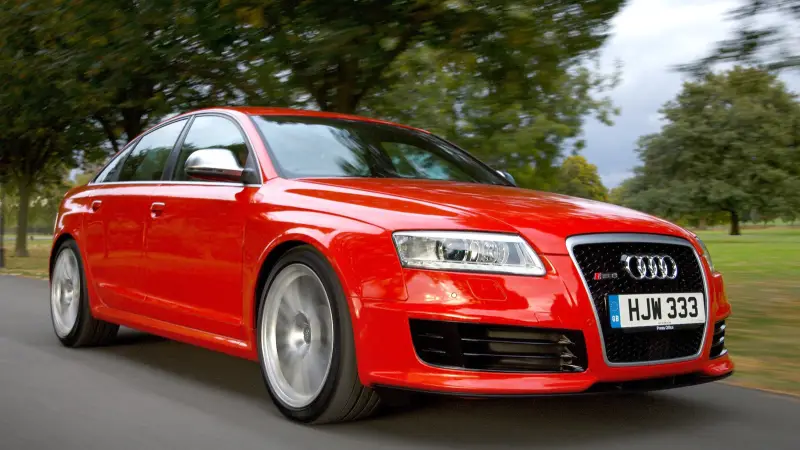
V10 sedans were a brief but memorable answer to a question few buyers were asking: what if a family-sized four-door had the engine of a supercar? In the 2000s, Volkswagen, BMW and Audi each put a ten-cylinder engine into production sedans. Their approaches ranged from a torque-rich diesel luxury car to a high-revving sports sedan and a twin-turbocharged performance flagship. The prices have since fallen sharply, but ownership costs can still reflect the engineering packed under their hoods.
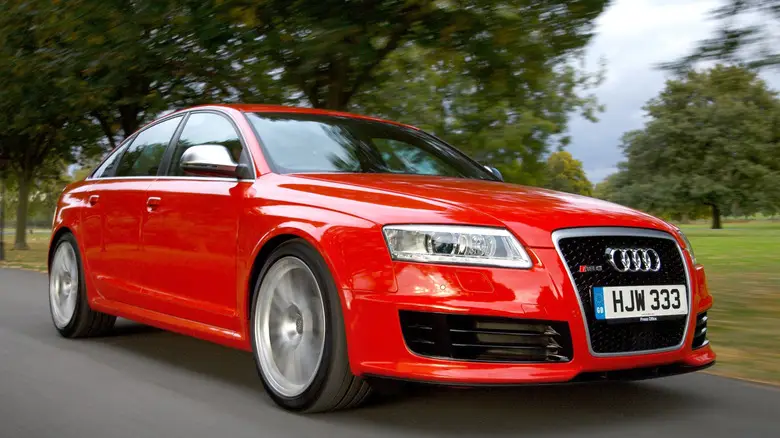
Volkswagen was first, with the Phaeton V10 TDI arriving in 2003. BMW followed with the 2005 model-year E60 M5, while Audi spread V10 power across the S6, S8 and RS6. The cars show how differently manufacturers interpreted the same basic idea—and why a modest used-car price doesn’t necessarily make one an inexpensive car to own.
Volkswagen Phaeton V10 TDI: luxury and torque
The Phaeton was designed to raise Volkswagen’s standing in the luxury market. Its equipment included air suspension, plush leather seats and an elaborate climate-control system. The range offered several engines, from a VR6 and a 4.2-liter V8 to a 6.0-liter W12. At the top sat a 4.9-liter V10 turbodiesel, producing 313 horsepower and 553 pound-feet of torque.
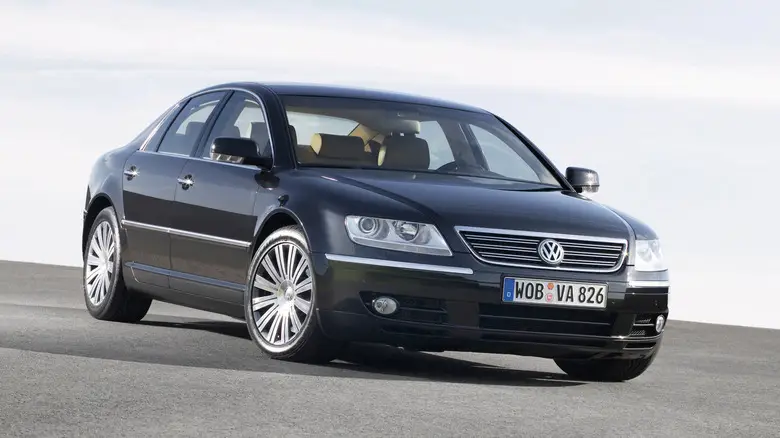
That diesel version wasn’t sold in the United States. In the U.K., it went on sale in early 2003 for £57,840, then equivalent to $95,574—about $175,000 in current dollars. Today, examples rarely exceed £10,000, or about $13,480. For context, U.S. Phaetons with the W12 engine commonly change hands for roughly $15,000 to $20,000, depending on mileage.
The gap between original price and current asking prices makes the V10 Phaeton look tempting, but cramped packaging complicates repairs. Some work, including turbocharger replacement, can require removing the engine. That means labor-intensive jobs and limited appeal for owners hoping to handle repairs themselves. The Phaeton offers discreet luxury, but its low resale value doesn’t remove the expense of servicing a complex flagship.
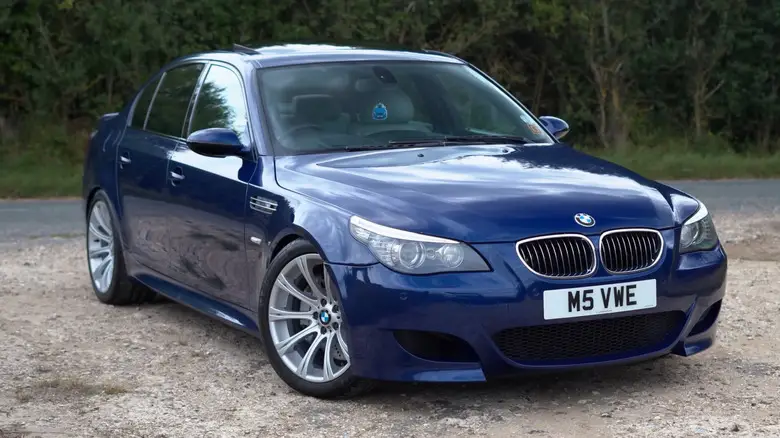
BMW M5: the high-revving choice
The E60-generation BMW M5 took a different route. Its naturally aspirated 5.0-liter S85 V10 makes 500 horsepower and 384 pound-feet of torque. A 12:1 compression ratio helped the engine reach 100 horsepower per liter, and it can rev to 8,250 rpm. It earned the International Engine of the Year award in 2005 and 2006, and remains a major part of the car’s appeal to enthusiasts.
New, the M5 cost $84,895. Values have dropped substantially over the years, though prices cited for the two transmission choices now differ markedly. Classic.com lists an average paid price of $25,555 for SMG-equipped cars, compared with $45,127 for six-speed manual examples. The manual premium reflects the appeal of a traditional gearbox, while the SMG automated manual has a reputation for expensive problems.
SMG hydraulic pump failures can cost thousands of dollars to fix. The engine has its own known weak points, including the oil pump, throttle-body actuators and rod bearings. Buyers drawn by the V10’s power delivery should weigh those repair risks against the M5’s ability to deliver a high-revving sports-car experience in a four-door body.
Audi’s V10 range: three sedans, two engine types
Audi offered more V10-powered sedans than Volkswagen or BMW. The C6 S6 and D3 S8 reached U.S. buyers as 2007 model-year cars; the C6 RS6 sedan, introduced for 2008, wasn’t sold in the United States. The S6 and S8 used a naturally aspirated 5.2-liter V10. Both made 398 pound-feet of torque, while output was 435 horsepower in the S6 and 450 in the S8.
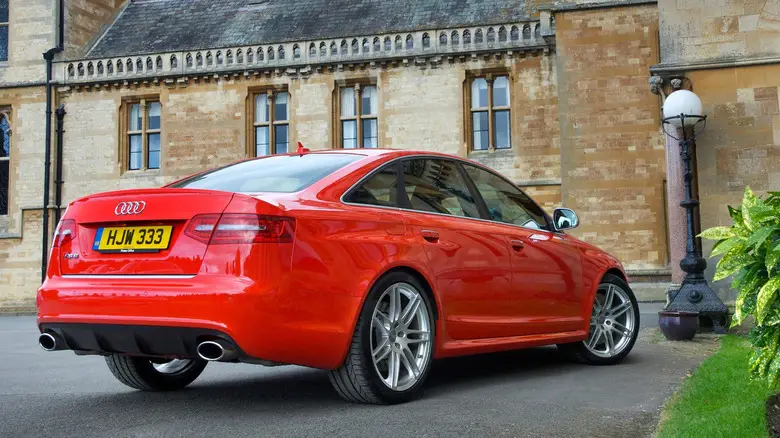
The RS6 was the more extreme version. Its 5.0-liter V10 used two turbochargers to produce 579 horsepower and 479 pound-feet of torque. At launch, it was Audi’s most powerful production car to date. A U.K. buyer paid £76,160 for the RS6 sedan—then around $150,000, or about $239,440 in current dollars. For comparison, the newer RS6 Avant cited here cost $122,995, though comparing a twin-turbo V10 sedan with a later wagon only goes so far.
Used U.S.-market S6 and S8 models can be found for under $10,000 with reasonable mileage. Yet even a relatively simple problem can produce a major bill: an oil-pump seal on the RS6 may require an engine-out repair costing thousands. As with the other V10 sedans, the purchase price is only one part of the calculation.
Two concepts that never reached production
Ford and Lamborghini also considered V10 sedans in the 2000s, but neither concept became a production car. Ford’s 427 Concept, shown in 2003, looked toward a traditional American luxury sedan. Its modular V10 displaced 427 cubic inches and was rated at 590 horsepower and 509 pound-feet of torque, sent to the rear wheels. Ford instead focused on other performance projects, including the 2005 Ford GT and S-197 Mustang.
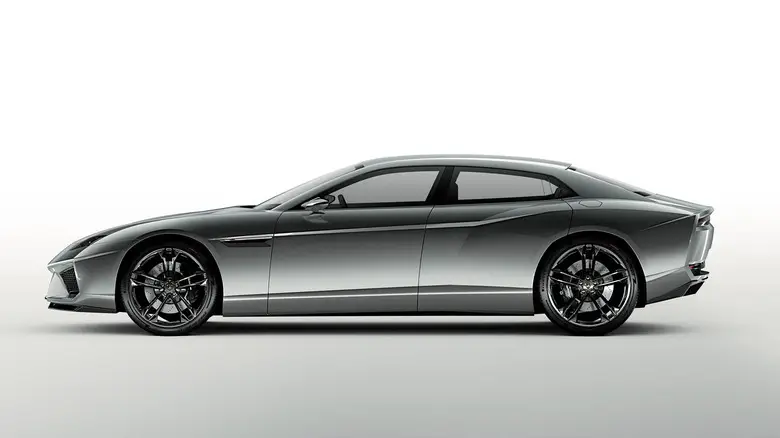
Lamborghini’s 2008 Estoque imagined a four-door car built for everyday use, with a version of the Gallardo’s V10 expected to make around 500 horsepower. The concept hinted at a more practical Lamborghini, but the model was shelved as the global recession reshaped the company’s plans. The later Urus took the brand in a different direction.
These cars remain unusual because they combine sedan practicality with engines and repair demands that belong to a much rarer class of performance machinery. Used prices can bring a V10 within reach; maintenance history and access to specialist repairs help determine whether the bargain lasts.


