9 Toyota Land Cruiser Alternatives That Cost Less, From the 4Runner to the Bronco Sport
- [email protected] (Joe Kucinski)
- 355 views
These nine SUVs and one pickup trade some Land Cruiser capability for lower prices, with options for trail use, family space and towing.
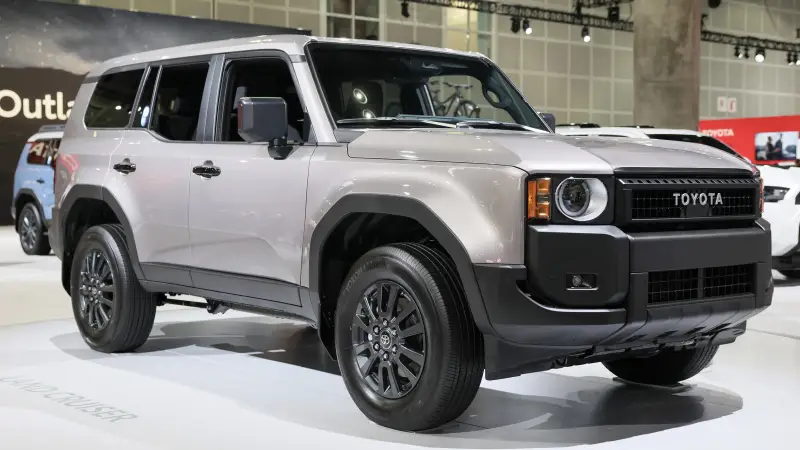
The Toyota Land Cruiser’s appeal comes from a blend of off-road hardware, family space and a long-standing reputation for durability. Its latest U.S. version costs less than the larger model it replaced, but its starting price still leaves room for alternatives that suit different priorities. Some are built for demanding trails; others favor passenger comfort, extra seating or a useful cargo bed.
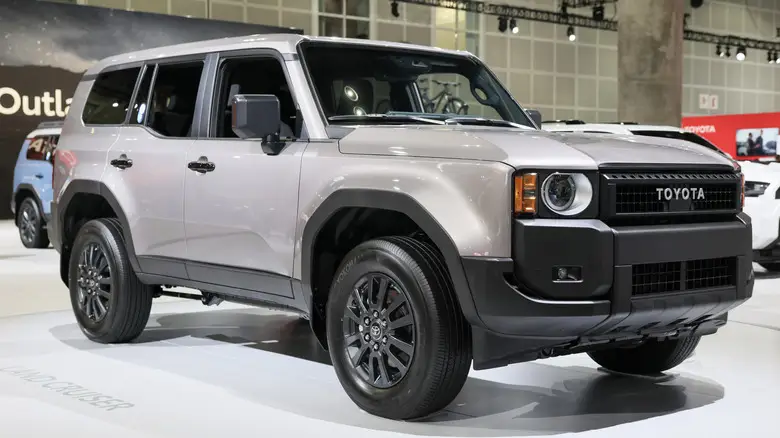
The 2027 Land Cruiser 1958 starts at $59,775, including delivery, processing and handling fees. Its hybrid 2.4-liter turbocharged i-Force Max powertrain makes a combined 326 horsepower and 465 pound-feet of torque. Full-time four-wheel drive, a two-speed transfer case and crawl control are standard. That’s a serious package, but not every buyer needs all of it. The nine options below are ranked from highest to lowest starting price, with cited MSRPs including handling and destination fees.
Toyota 4Runner TRD Off-Road i-Force Max: $55,085
The closest match comes from Toyota itself. The 4Runner TRD Off-Road i-Force Max shares the Land Cruiser’s hybrid powertrain and body-on-frame TNGA-F platform, along with a two-speed transfer case and crawl control. Its $55,085 starting price is $4,690 below the Land Cruiser 1958, while its 9.1 inches of ground clearance tops the Land Cruiser’s 8.1 inches.
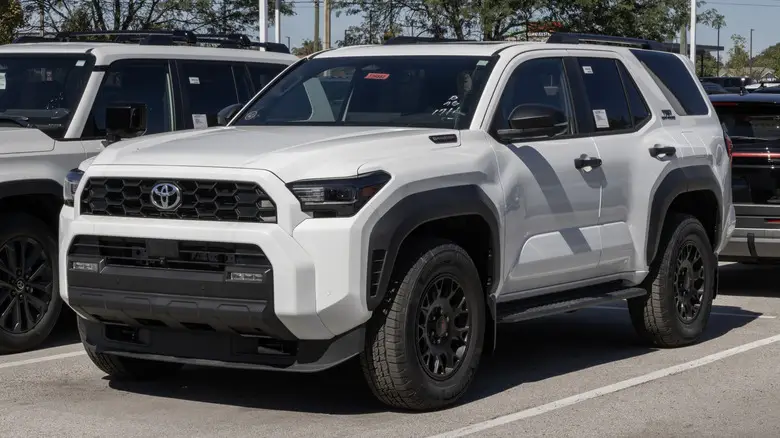
The Land Cruiser makes a stronger case for passengers and luggage. It offers more head, shoulder, hip and leg room, plus 46.2 cubic feet of cargo space behind the second row; the 4Runner TRD Off-Road i-Force Max has 42.6 cubic feet. The 4Runner’s power rear window is a practical perk, though, and the capability gap between these related SUVs looks small. For buyers choosing between them, cabin space and styling may matter more than trail performance.
A less expensive 4Runner can widen the price gap. A 2026 SR5 with the $2,000 part-time four-wheel-drive option costs $45,865. That version gives up the i-Force Max engine, two-speed transfer case and some other equipment, so it’s a different proposition. Still, it keeps four-wheel drive and offers a route into the 4Runner range for buyers who don’t need the top off-road hardware.
Jeep Wrangler Rubicon, four-door: $53,325
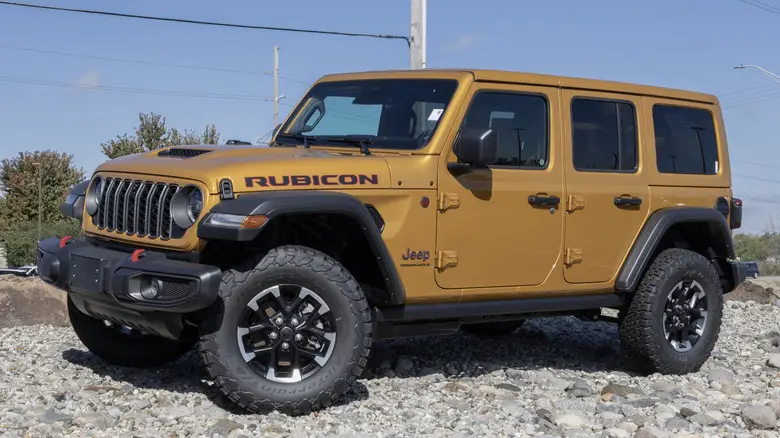
The Wrangler Rubicon puts trail equipment and open-air driving ahead of the Land Cruiser’s more polished family-SUV brief. The 2027 four-door starts at $53,325, saving $6,450. Its roof and doors come off, creating an experience neither the Toyota nor most other SUVs here can match.
Rubicon equipment includes front and rear electronic locking differentials, rock rails, skid plates, an electronic front sway-bar disconnect, Dana 44 solid axles and 33-inch all-terrain tires. A 285-horsepower 3.6-liter V6 sends power through a standard six-speed manual transmission. That output is below the Land Cruiser hybrid’s, but the manual gives drivers direct control that Toyota buyers don’t get from the listed powertrain.
The trade-offs show up on pavement and when towing. The Wrangler is less refined on-road, and its 3,500-pound tow rating is well below the Land Cruiser’s 6,000 pounds. For people who regularly tow or want a quieter, more accommodating daily driver, that difference matters. For trail-focused buyers who value removable body panels and serious hardware, the Rubicon delivers a distinctive alternative for less money.
Honda Passport TrailSport: $51,590
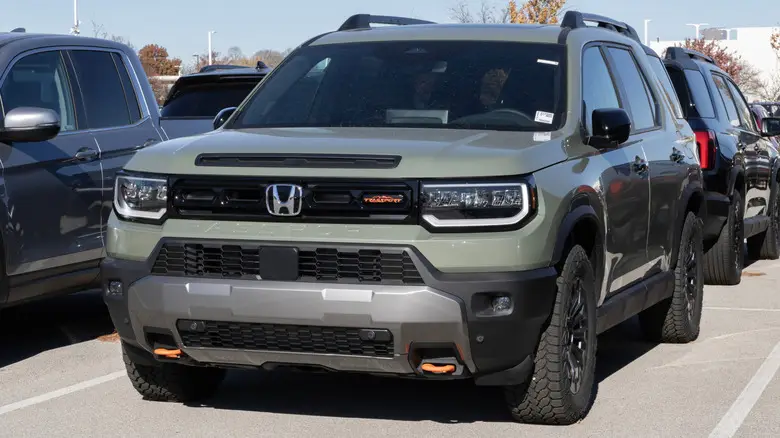
The Passport TrailSport shows how far a crossover can go without body-on-frame construction or a dedicated four-wheel-drive system. Its torque-vectoring all-wheel drive, 31-inch tires and 9.6 inches of ground clearance make it more than a styling package. At $51,590, it costs $4,800 more than the base Passport RTL, reflecting upgrades for buyers who expect to leave paved roads.
Those upgrades include all-terrain tires, off-road suspension, Honda’s TrailWatch camera system, recovery hooks and skid plates. The 3.5-liter V6 produces 285 horsepower and 262 pound-feet of torque, figures comparable to the Wrangler’s engine but short of the Land Cruiser’s hybrid output. Towing capacity is 5,000 pounds, a useful middle ground between the Toyota and the lower-rated Wrangler.
The Land Cruiser still has the advantage when the route gets rough enough to call for low range and more specialized off-road hardware. The question is whether a buyer will use that extra ability often enough to justify the price difference. For family use with occasional rough roads, the Passport TrailSport makes a persuasive case. Buyers who don’t need the trail upgrades can consider the 2027 Passport RTL at $46,790.
Jeep Grand Cherokee Limited: $48,315
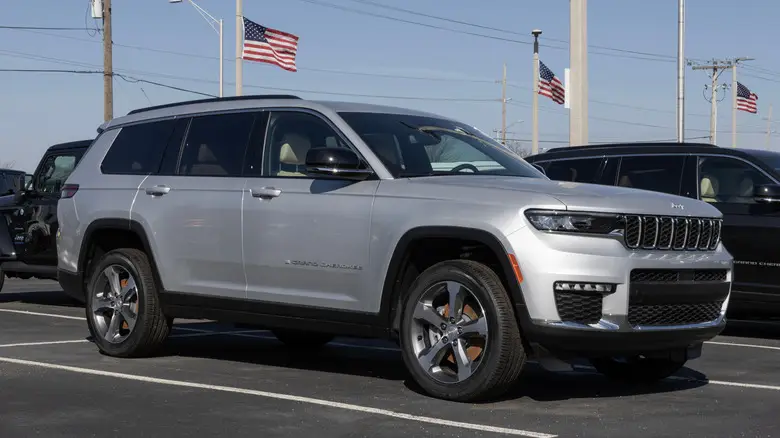
The two-row Grand Cherokee Limited is aimed at buyers who want comfort and some trail ability rather than maximum rock-crawling equipment. It starts at $48,315 with four-wheel drive, more than $10,000 below the Land Cruiser. The Grand Cherokee has long balanced on-road manners with off-pavement use, and this version keeps that mix while prioritizing everyday driving.
Its turbocharged 2.0-liter Hurricane four-cylinder makes 324 horsepower and 332 pound-feet of torque. The engine has been described as somewhat unrefined, but the Jeep’s 6,200-pound tow rating exceeds the Land Cruiser’s by 200 pounds. Cabin dimensions are close between the two: the Grand Cherokee has an advantage in some areas, including rear legroom, while the Toyota offers more overall interior and cargo space.
The more consequential difference is underneath. The Grand Cherokee’s unibody construction and lack of a two-speed transfer case or locking differentials limit its equipment for difficult trails. It can handle some off-road driving, but the Land Cruiser is the better pick when technical terrain is a regular part of the plan. The Jeep’s lower price and higher tow rating make it compelling for buyers whose priorities lean toward road comfort and hauling.
Nissan Pathfinder Rock Creek: $46,665
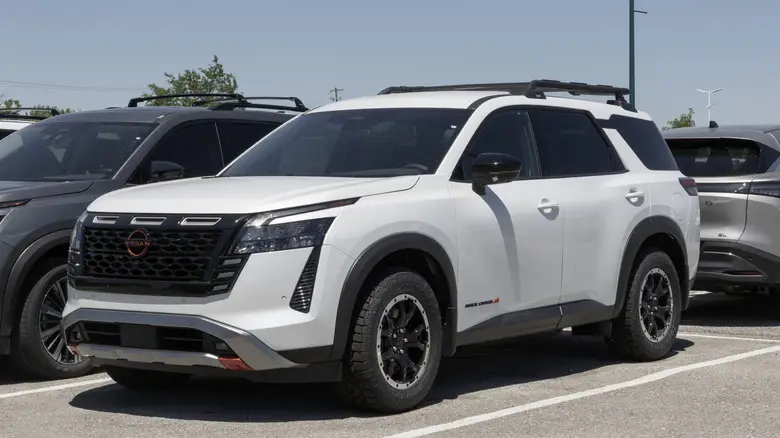
The Pathfinder’s history began with a body-on-frame design based on Nissan’s Hardbody pickup, but the current-generation approach puts ride comfort and family use first. Nissan introduced the Rock Creek package in 2019 and made it a separate trim in 2023. The 2026 Rock Creek costs $46,665 and adds modest off-road improvements to the three-row SUV.
Compared with other Pathfinder trims, Rock Creek sits 0.63 inches higher, wears wider all-terrain tires and includes hill descent control. Its 3.5-liter V6 is tuned for 295 horsepower and 270 pound-feet of torque, versus 284 horsepower and 259 pound-feet in other versions. These changes don’t turn it into a Land Cruiser, but they broaden where the Nissan can comfortably travel.
The base Pathfinder SV costs $3,100 less than Rock Creek, includes four-wheel drive and is more economical according to the stated combined ratings: 26 mpg versus 23 mpg. It also uses regular gasoline, while Rock Creek requires premium. The strongest reason to choose the Pathfinder may be its third row, which the Land Cruiser doesn’t offer. For families needing those extra seats and only moderate trail ability, the Nissan is a practical trade.
Subaru Outback Wilderness: $45,490
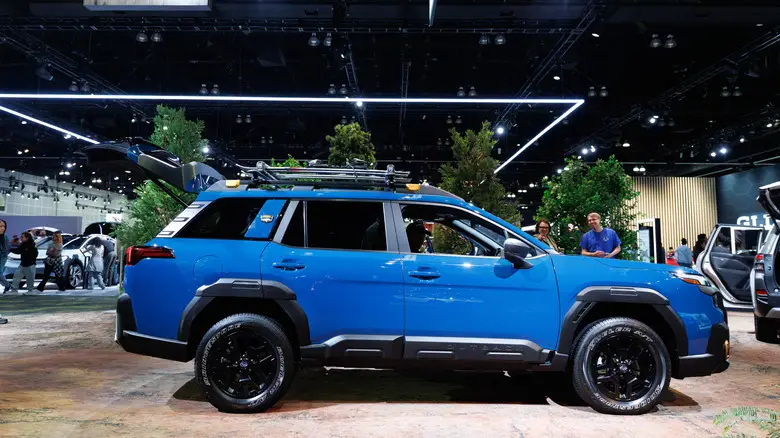
The Outback Wilderness costs $45,490, about 25% less than the Land Cruiser, and adds more trail-focused equipment to Subaru’s crossover. Its raised, four-wheel independent suspension uses electronically controlled dampers, and ground clearance measures 9.5 inches. The Wilderness also has underbody protection, all-terrain tires and high-clearance front and rear bumpers.
Power comes from a turbocharged 2.4-liter boxer-four producing 260 horsepower. Its 3,500-pound tow rating is 800 pounds higher than the base Outback’s. The standard Outback starts at $34,490 and uses a 2.5-liter boxer-four rated at 180 horsepower and 178 pound-feet of torque, with symmetrical all-wheel drive, X-Mode and hill descent control. The Wilderness costs more, but brings the extra clearance, protection and power that make it the more relevant Land Cruiser alternative.
Some buyers may want more cabin equipment, too. The $2,090 OP22 package adds a 12.1-inch touchscreen, a 360-degree surround-view system and a power moonroof. The $4,090 OP23 package also includes Nappa leather, ventilated front seats and power-folding exterior mirrors. Even with either package, the Outback remains below the Toyota’s starting price. It won’t match the Land Cruiser’s capability on the hardest terrain, but its equipment should cover many owners’ everyday adventures.
Ford Bronco, four-door: $43,290
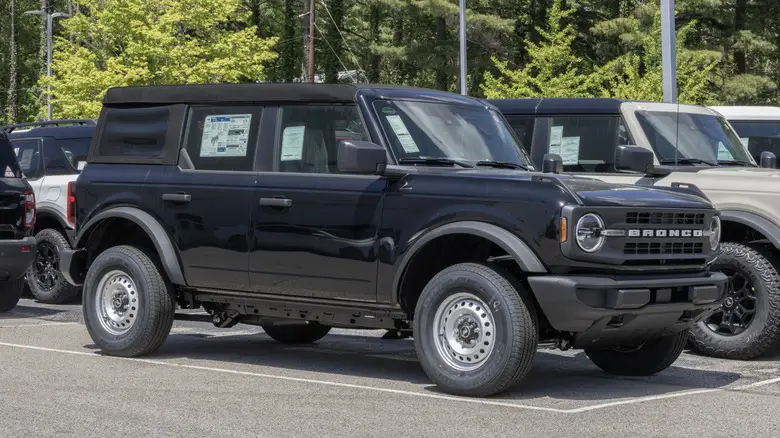
The four-door Bronco starts at $43,290 and pairs body-on-frame construction with a removable roof and doors. Like the Wrangler, it offers open-air driving as part of its appeal. Its character is rougher than the Land Cruiser’s, but the price leaves $16,485 between the base Bronco and the Toyota.
A 2.3-liter EcoBoost turbocharged inline-four is standard, with 300 horsepower and 325 pound-feet of torque. It comes with a seven-speed manual transmission; a 10-speed automatic costs $1,795 extra. The base model is capable enough for many owners, while the $50,885 Badlands trim adds electronic locking differentials, a disconnecting front stabilizer bar and Bilstein position-sensitive dampers for more demanding off-road use.
The Bronco’s main practical limit is towing: its rating is 3,500 pounds, compared with 6,000 for the Land Cruiser. That makes the Toyota better suited to heavier trailers. Buyers who don’t need the extra towing capacity and value a removable top, manual transmission or trail equipment can save substantially with the Ford.
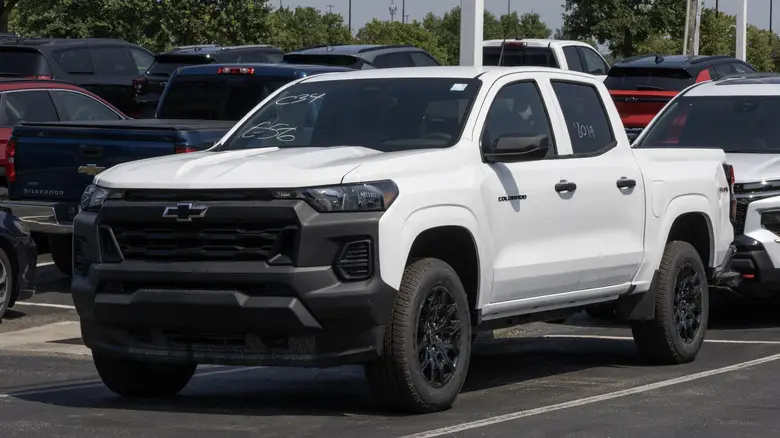
Chevrolet Colorado WT 4WD: $36,795
A pickup may seem like an unusual substitute for a family SUV, but the Colorado WT 4WD brings body-on-frame construction, four doors and a major price advantage. Its stated price is $36,795, which is $21,980 below the Land Cruiser. Ground clearance is 7.9 inches, slightly less than the Toyota’s, but adding the $945 Advanced Trailering Package raises maximum towing capacity to 7,700 pounds.
The Colorado’s turbocharged 2.7-liter TurboMax inline-four makes 310 horsepower and 430 pound-feet of torque, close to the Land Cruiser’s output. It seats five, and interior dimensions are described as very similar despite the truck being about two feet longer overall. The five-foot bed brings the biggest difference: it can handle work gear and bulky loads without taking up enclosed cabin space.
That open bed also means the Colorado lacks the Land Cruiser’s enclosed cargo area. A $1,295 hard folding lockable tonneau cover can help secure items, though it doesn’t turn the truck into an SUV. Buyers who need one vehicle for both family trips and work may find the bed more useful than a closed cargo compartment. Those who regularly carry passengers and luggage inside will likely prefer the Toyota’s format.
Ford Bronco Sport Big Bend: $33,690
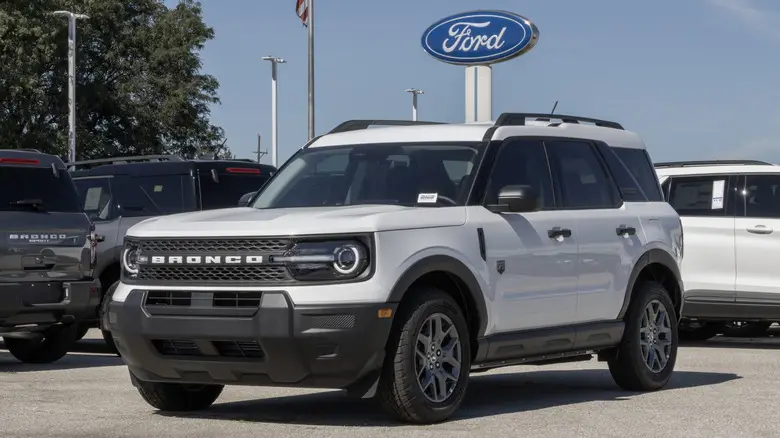
At $33,690, the Bronco Sport Big Bend is the least expensive alternative here and costs less than the Land Cruiser by more than $26,000. It’s a unibody SUV, but the Big Bend includes HOSS off-road suspension and a 4x4 system. It lacks the larger Bronco’s removable doors and roof, and it isn’t built to match the Land Cruiser’s heavy-duty equipment. Still, its lower price and practical cabin make it worth a look.
A turbocharged 1.5-liter EcoBoost three-cylinder produces 180 horsepower and 200 pound-feet of torque. Towing capacity is 2,200 pounds, so the Bronco Sport is a poor fit for owners with heavier trailers. Its boxy shape provides more front and rear headroom than the Land Cruiser 1958 when the Ford isn’t fitted with a moonroof, and front and rear legroom are nearly identical. The Toyota has at least 16.9 cubic feet more maximum cargo capacity.
Buyers who want more off-road ability can look higher in the Bronco Sport range: the Badlands with the Sasquatch Badlands Package is described as capable of going farther off-road than most owners will need. But the Big Bend already offers a substantial price saving and equipment for moderate outings. Choose it if your plans center on daily driving, passengers and manageable trails; choose the Land Cruiser if towing, cargo capacity and tougher terrain are regular requirements.


