Jaguar XJ220’s Twin-Turbo V6 Was Tested in a Ford Transit Van
- [email protected] (Simon Stark)
- 871 views
A disguised Transit carried the XJ220’s 540-hp V6 during development, then went on to deliver parts for Benetton and appear at Goodwood.
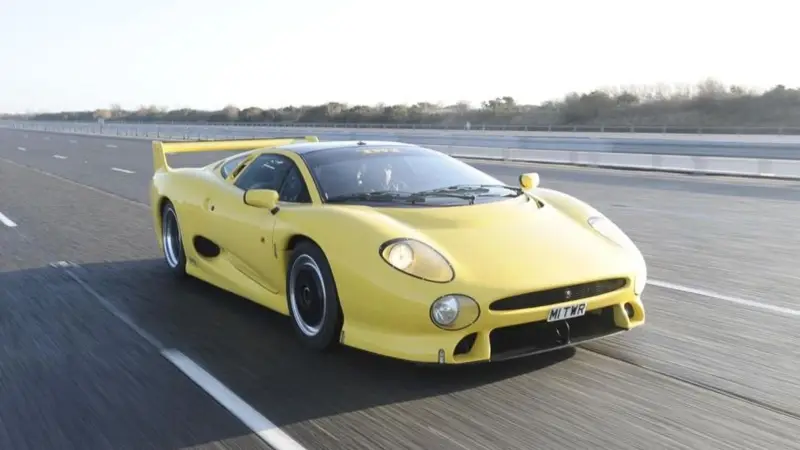
The Jaguar XJ220’s development story has an unlikely workhorse at its center: a long-wheelbase Ford Transit fitted with the supercar’s twin-turbo V6. Jaguar and Tom Walkinshaw Racing used the van to test the engine while keeping the project discreet. Its plain exterior hid a powertrain that would help the XJ220 reach a reported 217 mph and become the world’s fastest production car in 1992.
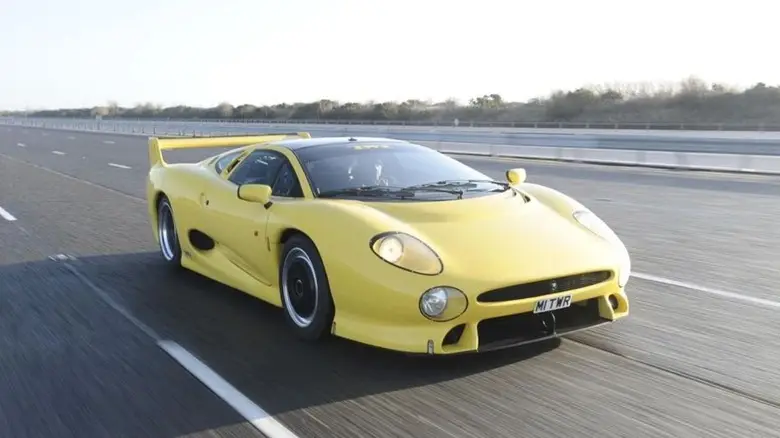
That contrast captures the XJ220’s unusual place in Jaguar history. The car began with a different vision, including a V12 and all-wheel drive, before a late change brought a twin-turbo V6 and rear-wheel drive. The Transit belongs to the engineering story behind that change: a practical test vehicle for a remarkable engine, rather than a close preview of the finished supercar.
A work van with supercar hardware
The test mule was based on a 1989 long-wheelbase Ford Transit. From the outside, it looked much like a slightly worn example of the familiar commercial van. Its ZR performance tires and alloy wheels matching those later fitted to the XJ220 offered clues, but the most striking parts were out of sight.
Under the van’s cargo area sat the 3.5-liter twin-turbo V6, initially rated at 540 horsepower, along with running gear positioned low in the vehicle. The setup gave TWR a way to run engine tests without putting the XJ220’s shape on display. A van was an effective disguise precisely because it was so ordinary: there was little reason for passersby to connect it with a future supercar.
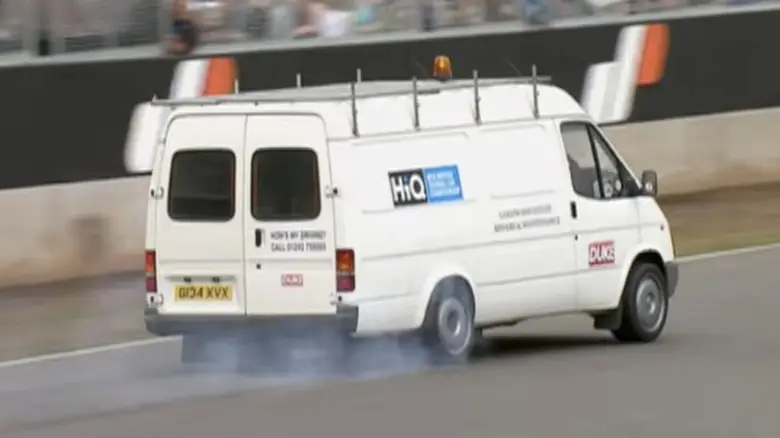
That choice also shows what a test mule needs to do. It has to carry the components engineers want to evaluate and allow them to run practical development checks. The vehicle around those parts can be unconventional, provided it helps conceal the work and supports the testing. In this case, a Transit’s cargo area offered space for a high-performance powertrain while its familiar body kept attention elsewhere.
The van’s unlikely engine had a family connection to the MG 6R4, a rally car developed for Group B. That competition category ended in 1986, leaving MG with less use for its six-cylinder engine design. The design and related infrastructure were reportedly sold to TWR, which later developed the engine for the XJ220. The link ties the Jaguar’s road-going supercar to a separate chapter of high-performance engineering.
The engine’s role in the XJ220
The Transit helped develop an engine for a car whose production specification departed sharply from its early concept. Jaguar switched from the planned V12 to the twin-turbo V6 and changed the drive layout from all-wheel drive to rear-wheel drive. Those decisions made the finished XJ220 a different proposition from the car some customers had expected, and placed it in a field that included the Bugatti EB110 and Ferrari F40.
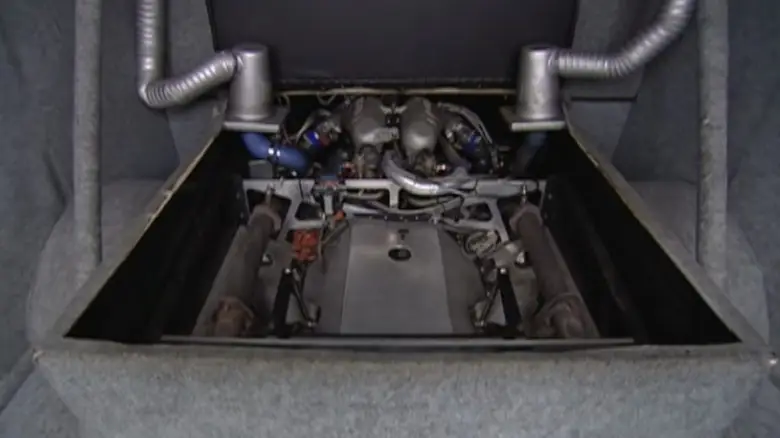
Yet the V6 delivered the performance that made the XJ220 difficult to dismiss. Its 217-mph top speed in 1992 gave Jaguar a headline achievement, despite the debate over the changes from the original concept. The engine’s development route is part of that result: before it powered the sleek production car, it was tested in a van whose appearance suggested deliveries rather than speed records.
The Transit also puts the XJ220’s engineering in perspective. A production supercar can be judged by its design, speed and place among rivals, but getting there depends on development work that may look nothing like the finished product. Here, a plain commercial vehicle carried the hardware needed to explore the engine’s performance. The incongruity is memorable, but the practical logic is clear: keep the project discreet and give the powertrain somewhere to run.
From development mule to parts runner
When TWR finished using the Transit for development, its working life continued. Benetton’s Formula 1 team acquired it and used it to deliver parts. That later job suited the van’s original shape, even though its cargo area had once housed equipment tied to one of Jaguar’s most ambitious road cars.
The Transit was reportedly close to being scrapped after Benetton was done with it. Don Law Racing, a specialist known for its work with the XJ220, then took over the vehicle and restored it to working condition. Its history gives the firm an unusual connection to the car it specializes in: the van had helped test the XJ220’s engine before later reappearing as a surviving piece of that development program.
After its restoration, the Transit appeared at the Goodwood Festival of Speed and made multiple runs up the hill. Spectators seeing it there could encounter the XJ220 story in an unexpected form: not as a low, purpose-built supercar, but as a familiar Ford van carrying extraordinary engineering history.
The Transit’s appeal rests on that combination of utility and performance. Its job was to hide and test the XJ220’s twin-turbo V6; its later roles took it from parts delivery to public displays. For anyone weighing the XJ220 against its period rivals, the van doesn’t change the car’s figures or specification. It does reveal how much of the car’s story began far from the polished bodywork.


