Chevrolet Impala SS Horsepower: Five Generations Ranked
- [email protected] (Dave Goldberg)
- 997 views
The Impala SS ranged from 240 hp in its supercharged V6 era to 425 gross hp in the 1960s, with big differences in layout and character.
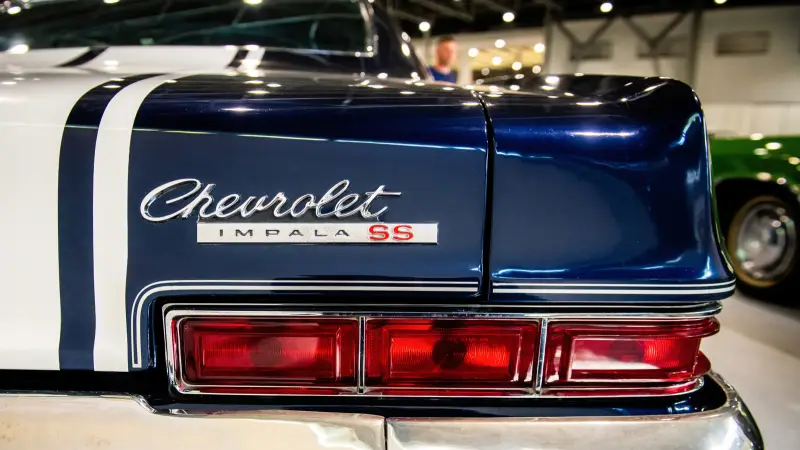
The Impala SS’s peak horsepower belongs to its 1960s V8s, but the name has covered very different kinds of performance car. Across five production eras, output runs from 240 hp in a front-wheel-drive supercharged V6 to 425 gross hp in big-block V8 models. The later cars brought their own strengths, though: the 1990s SS paired a 260-hp V8 with rear-wheel drive, while the final version reached 303 hp with a naturally aspirated V8.
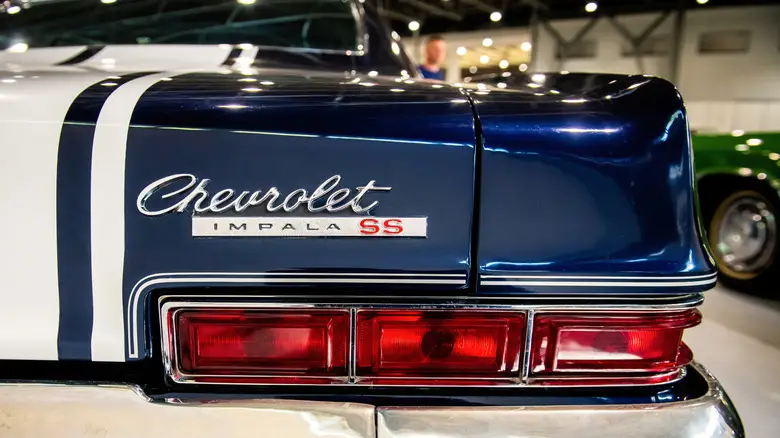
The figures need context. The 1960s ratings use gross horsepower, measured without accounting for the intake, exhaust and accessory loads present in a running car. By the 1972 model year, automakers had shifted to net ratings that better represented engines in their installed configuration. Both methods measure power at the crankshaft, not at the wheels, and there’s no consistent conversion between them. The ranking below uses each regular-production SS generation’s highest advertised rating; modified cars and special race versions don’t count.
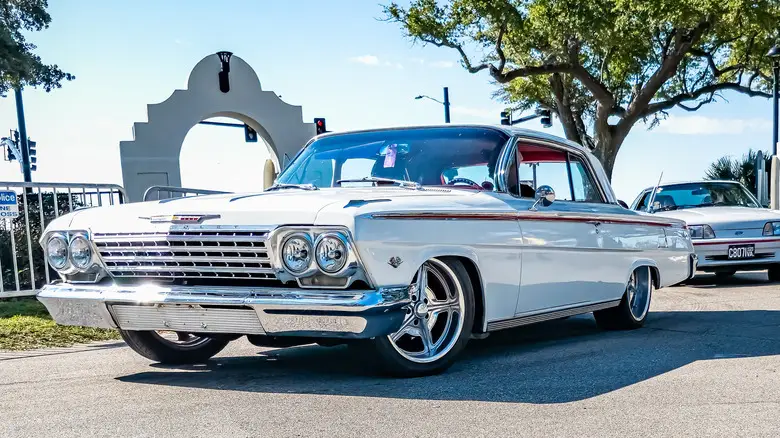
1. 1961–1964: 425 hp
The SS first appeared in 1961, two years after the Impala became a standalone model. Its initial engine range included 348-cubic-inch V8s rated at 305, 340 or 350 hp, plus a 409-cubic-inch V8 rated at 360 hp. For 1962, Chevrolet offered the 409 with dual four-barrel carburetors, raising its rating to 409 hp. The following year, solid lifters, dual exhausts and an 11:1 compression ratio helped take the 409 to 425 gross hp. The 1964 SS kept that engine.
A separate 1963 lightweight Impala built for drag racing used a 430-hp 427-cubic-inch V8, but it wasn’t an SS or a regular-production model. Only 57 were made, so it sits outside this comparison. The 409 remains the defining high-water mark for the first SS era.
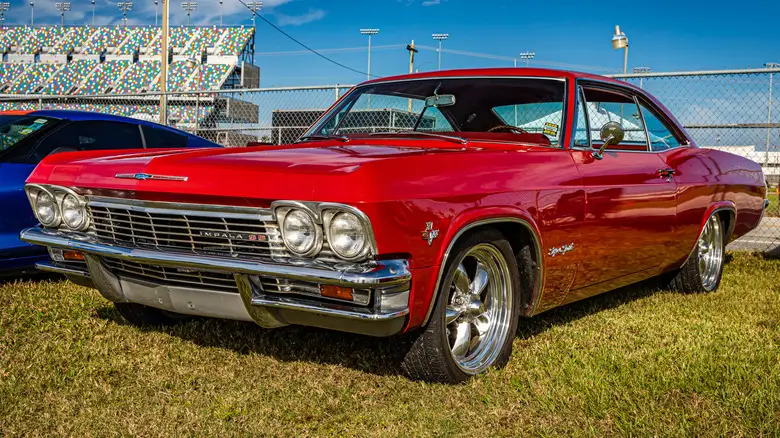
2. 1965–1969: 425 hp
The next Impala brought a sleeker body and a perimeter frame in place of the earlier X-shaped architecture. It also became a sales standout: Chevrolet sold 1,046,514 Impalas in 1965, and roughly 23% were SS models. Examples from this generation still draw attention among enthusiasts, as seen in [continued interest in Impala SS listings].
The 1965 SS could be ordered with the L78 396-cubic-inch V8, rated at 425 gross hp. A year later, the L72 427 joined the options list with the same peak rating. Its forged crankshaft and pistons, solid lifters and dual exhausts reflected the hardware behind that output. The SS 427 carried on into 1967 and 1968 with the L36 427, rated at 385 hp, then rose to 390 hp for 1969. The generation matched the earlier car’s peak, although its engine lineup and outputs changed over time.
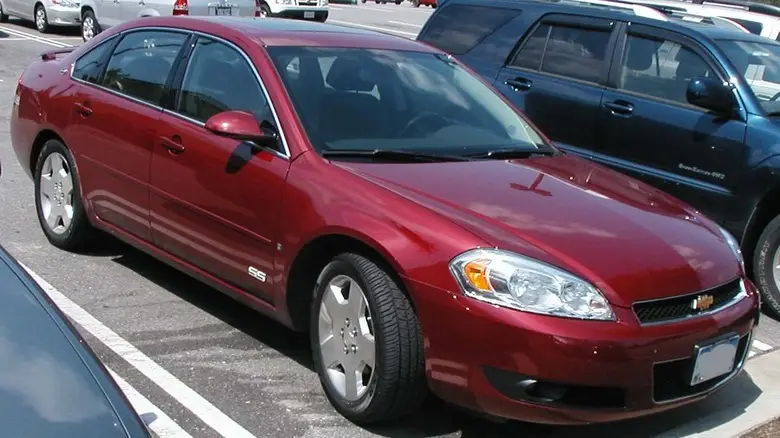
3. 2006–2009: 303 hp
The last Impala SS reached 303 hp from a naturally aspirated 5.3-liter LS4 V8. It replaced the supercharged V6 used in the previous SS, and Chevrolet claimed a 0-to-60-mph time of 5.6 seconds. That made this the most powerful modern Impala SS, though the numbers came with a very different layout from the rear-drive cars of the 1960s and 1990s.
The ninth-generation sedan sent its power through the front wheels and a heavy-duty four-speed automatic. Chevrolet also upgraded the suspension, giving the SS more hardware than a standard Impala. Period reviews questioned whether the car made enough of that performance. In a 2006 road test, Car and Driver wrote that the SS seemed built to produce impressive figures on paper with little regard for driver enjoyment. The model continued through 2009.
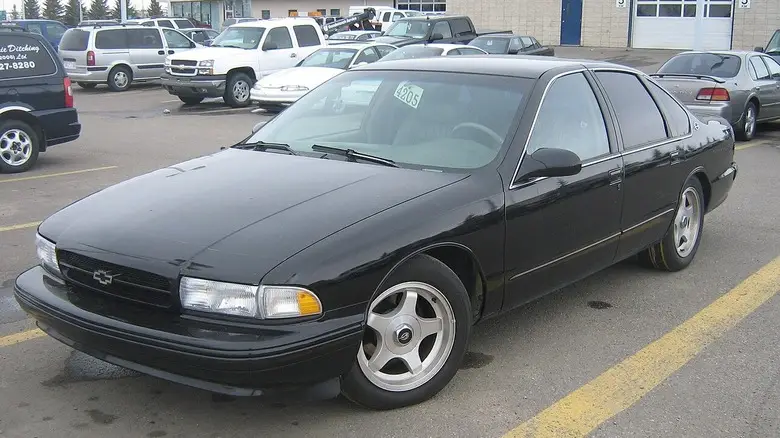
4. 1994–1996: 260 hp
After a 25-year break, the Impala SS returned for 1994 as a rear-wheel-drive sedan with a 5.7-liter LT1 V8 rated at 260 hp and 330 lb-ft of torque. The engine also appeared in the Camaro and Corvette, but the Impala’s version used cast-iron cylinder heads and a different camshaft. Its tuning emphasized torque, useful in a car that weighed about 4,300 pounds. A roughly seven-second 0-to-60-mph run looks modest now, but the large sedan’s appeal came from its V8 and rear-drive character as much as outright acceleration.
Based on the full-size Caprice, the SS had upgraded suspension, improved cooling, larger disc brakes and a limited-slip differential. Five-spoke aluminum wheels, restrained chrome trim and leather upholstery separated it from its workhorse relatives. For 1996, Chevrolet moved the shifter from the steering column to the center console and added a tachometer. Low-mileage examples from that final year continue to attract collector interest, including [a notably low-mileage 1996 car].
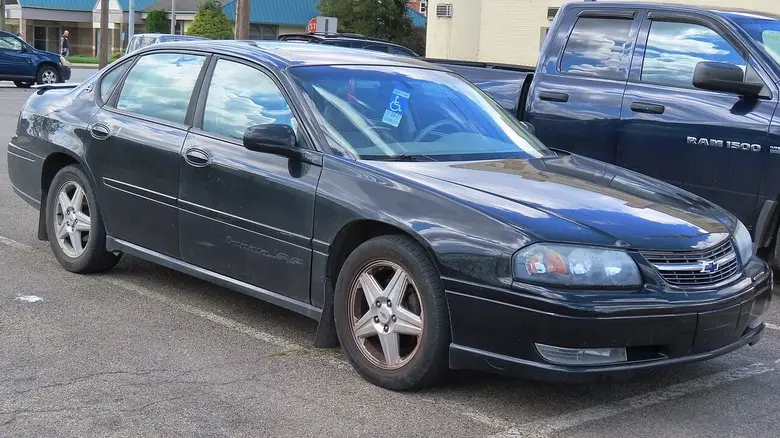
5. 2004–2005: 240 hp
The brief eighth-generation SS is the only one powered by a V6. Its 3.8-liter Series II engine used an Eaton supercharger and produced 240 hp. Chevrolet added the SS to the front-wheel-drive Impala lineup in 2004, pairing the engine with an upgraded four-speed automatic. Revised springs, larger anti-roll bars and Goodyear performance tires supported a claimed 0-to-60-mph time of 6.5 seconds.
Black paint was the only exterior color, and the SS also received a small rear spoiler, leather upholstery, extra badging and four round taillights described as Corvette-inspired. The model ended after 2005, when the V8-powered SS arrived. Its lower peak rating puts it last by horsepower, but its supercharged torque and distinct V6 configuration make it an unusual chapter in the nameplate’s history.
On paper, the two 1960s generations tie at 425 hp. The later SS models deliver smaller numbers, but their front- and rear-wheel-drive layouts, engine choices and weight give each a distinct character. The useful comparison is not horsepower alone: the SS badge has marked everything from a big-block muscle car to a supercharged family sedan.


