Why Honda Ended Its Diesel Engines After Two Decades
- [email protected] (Viraaj Bhatnagar)
- 610 views
Honda’s diesel range spanned the Civic, Accord and CR-V, but tougher emissions requirements and falling demand made continued development harder to justify.
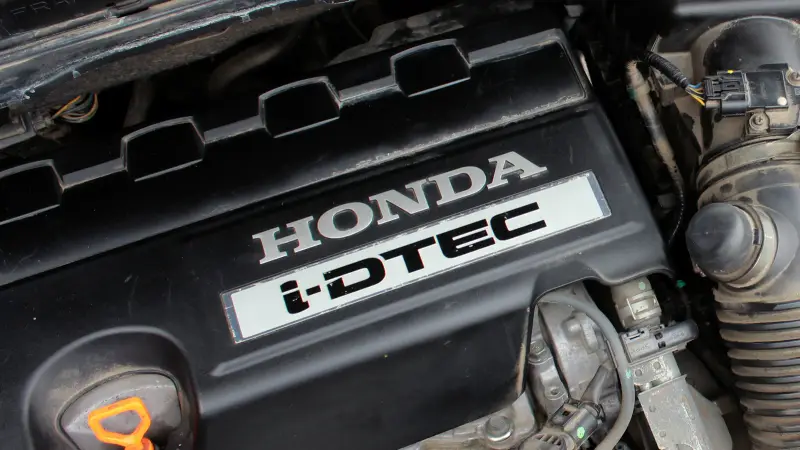
Honda’s diesel engines once powered familiar models including the Civic, Accord, CR-V and City. Their exit came after roughly two decades, as the cost of meeting tougher emissions requirements rose while customer demand shifted toward gasoline and hybrid cars. Honda’s decision looks less like a verdict on the engines’ durability than a change in the business case for developing them.
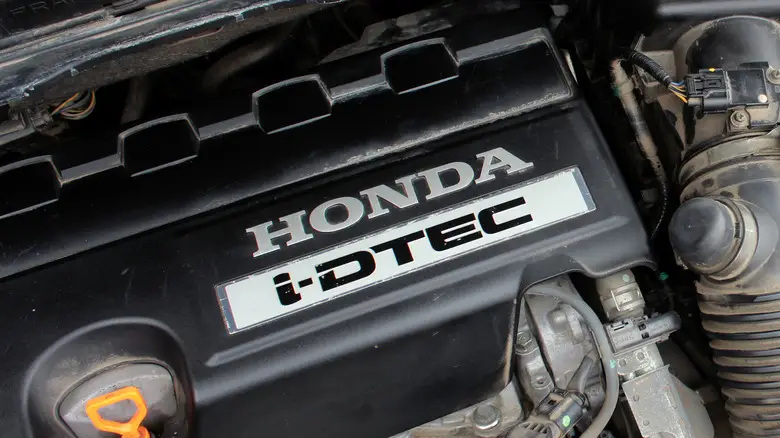
The company entered diesel development even though Kenichi Nagahiro, its former senior chief engineer, disliked the noise and smell of diesels at the time. With demand for diesel cars growing in Europe in the early 2000s, Nagahiro led work on Honda’s first in-house diesel: the 2.2-liter i-CTDi. The aim was to make an engine that met his standards, rather than simply follow the prevailing formula.
Honda later expanded its diesel offering with smaller engines for European and Indian buyers. The lineup included three families: the 2.2-liter i-CTDi and i-DTEC, the 1.6-liter i-DTEC, and the India-focused 1.5-liter i-DTEC. Together, they covered several body styles and markets, but each faced the same underlying challenge as emissions requirements tightened: keeping a diesel competitive meant continued engineering work and added exhaust-system complexity.
From a 2.2-liter pioneer to smaller diesels
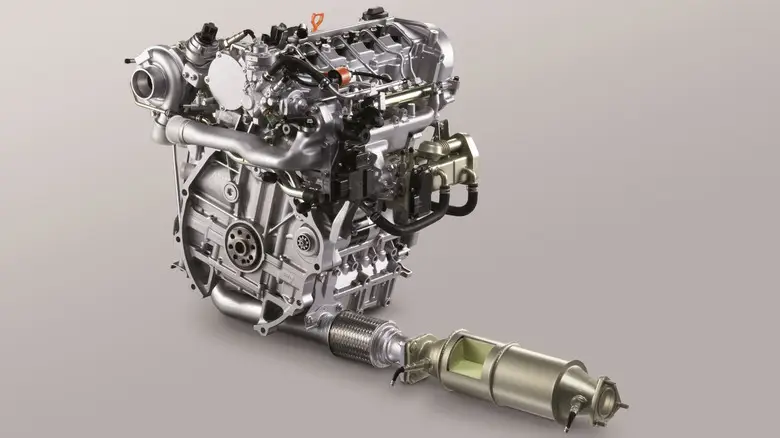
The 2.2-liter, four-cylinder i-CTDi arrived in 2003. European versions of the Accord received it first, followed by the Civic, CR-V and FR-V. It met Euro 4 requirements and produced 138 hp and 251 lb-ft of torque. Honda quoted 43.5 mpg on Europe’s test cycle, equivalent to 52.3 mpg in imperial gallons.
In 2007, Honda brought out the Euro 5-compliant 2.2-liter i-DTEC. It went into the Accord, Civic and CR-V in several markets, with output varying by application from 147 to 178 hp and from 258 to 280 lb-ft of torque. That spread shows how the same engine family served different vehicles and configurations; the figures shouldn’t be treated as one specification for every model.
A smaller 1.6-liter i-DTEC followed in 2012 as part of Honda’s “Earth Dreams” engine line. Honda said it weighed more than 100 pounds less than the 2.2-liter i-DTEC and delivered better fuel economy. In the Civic, the stated figure was 65.4 mpg, or 78.5 mpg in imperial gallons. In Europe, its carbon dioxide emissions fell below 100 grams per kilometer, a threshold that meant lower taxes there.
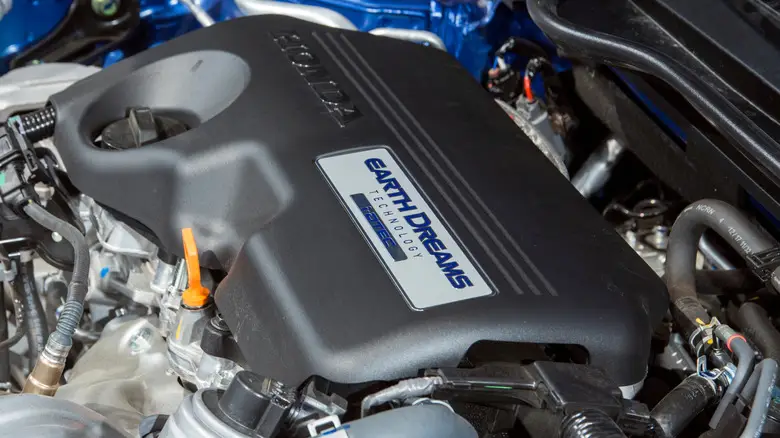
The 1.6-liter engine powered the Civic, CR-V and HR-V in Europe. It also appeared in the Civic and CR-V in India, with the CR-V version sold in Thailand and the Philippines. Depending on application, output ranged from 118 to 158 hp, with torque from 221 to 258 lb-ft. That breadth gave Honda a smaller diesel option for several vehicle sizes and markets.
India became the final market for Honda diesels
Honda’s last in-house diesel was the four-cylinder 1.5-liter i-DTEC, introduced in 2013 for India. It was a downsized relative of the 1.6-liter engine and debuted in the first-generation Amaze. Honda later offered it in the Indian-market City, Mobilio, Jazz, BR-V and WR-V.
The 1.5-liter produced 100 hp and 148 lb-ft of torque. Honda rated its fuel efficiency at up to 27.4 kilometers per liter, equivalent to 64.4 mpg on India’s test cycle. Those figures made it a fuel-conscious option for buyers, but strong economy alone couldn’t settle the question of whether further investment made sense.
By 2019, Honda had begun phasing out diesel cars in Europe, with the withdrawal completed by 2021. India continued to get Honda diesels for longer, but the company ended production there by early 2023. India was the final location where Honda built diesel engines, including the 1.6-liter unit exported for CR-Vs sold in Thailand and the Philippines.
Why the economics stopped adding up
Diesel engines generally need more elaborate exhaust after-treatment equipment than gasoline engines to control emissions. When requirements tighten, manufacturers may need to update that hardware, develop and validate changes, and certify each affected vehicle. Those steps add cost, and they become harder to justify when fewer customers choose diesel.
In Europe, closer scrutiny of diesel cars after Volkswagen’s Dieselgate scandal coincided with stricter Euro 6 requirements and real-world emissions testing. Honda said in 2019 that it would end diesel sales in Europe by 2021 as it shifted toward electrified vehicles. The decision followed a broader change in the market: the engineering burden was rising just as Honda’s powertrain priorities were moving elsewhere.
India’s transition also changed the calculation for Honda. Bharat Stage 6 requirements took effect in April 2020, increasing the work needed to update diesel engines. Real-driving emissions requirements followed in April 2023. Honda judged that upgrading its 1.5-liter i-DTEC would not be justified by its sales.
Diesel accounted for 7% of Honda India’s sales, down from 21% after the 2020 transition. Honda also told Autocar Professional that gasoline cars made up more than 90% of its overall Indian sales. Across India’s passenger-vehicle market, diesel’s share had fallen to 20% by 2022, from a peak of 54% in the preceding decade.
Honda’s withdrawal therefore reflects a mix of rising compliance costs, shrinking demand and a move toward electrified powertrains. The engines had served popular models across multiple regions, and their exit wasn’t attributed to reliability. For buyers comparing used Hondas, the practical takeaway is that diesel availability depends on the model and market: Honda’s diesel chapter ended, but its engines left a substantial footprint across the Civic, Accord, CR-V and several India-focused cars.


