1969 Chevrolet Camaro SS for Sale: 396 V8, Restoration and $58,900 Price
- [email protected] (Aakash Badree)
- 930 views
This Ontario orange 1969 Camaro SS pairs a modified 396 V8 with a body-up restoration and a $58,900 asking price. Its true output is unknown.
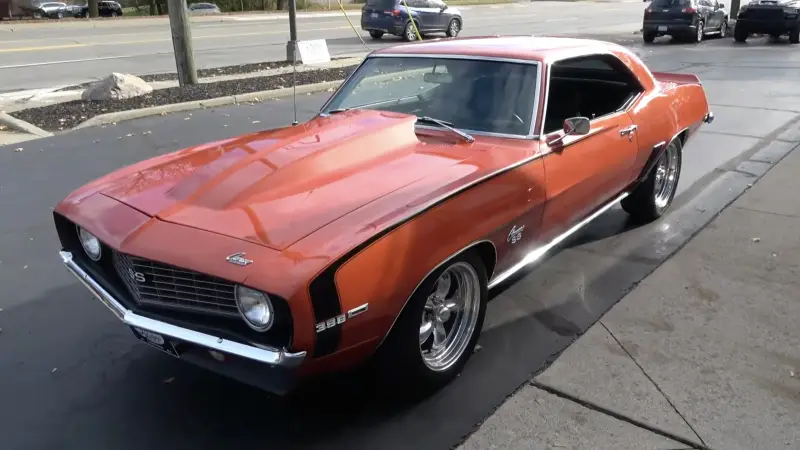
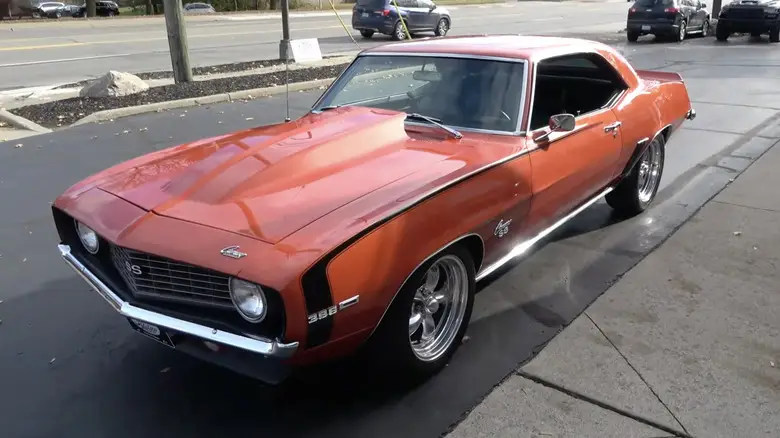
A modified 396 V8 and a body-up restoration make this 1969 Chevrolet Camaro SS an appealing example for buyers who want classic muscle with some updated hardware. Listed by a Clarkston, Michigan dealer for $58,900, the Ontario orange coupe shows 10,000 miles on its odometer. That figure describes what the odometer displays; it doesn’t establish the car’s total mileage or the mileage since restoration.
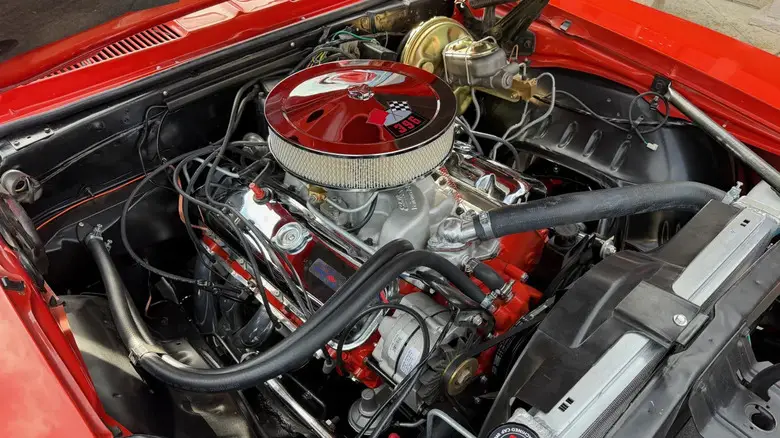
The engine’s output is also an open question. The Hemmings listing and dealer walkaround don’t provide horsepower or torque figures, and the modifications mean the factory ratings can’t simply be applied to this car. Its big-block has an Edelbrock Performer aluminum intake, ceramic headers, a mild camshaft and a Flame Thrower high-energy ignition distributor. Chrome valve covers and an air cleaner complete the visible engine dress-up.
[https://www.youtube.com/watch?v=j-bnQtJsNGQ]
What the 396 tells us—and what it doesn’t
Chevrolet offered three 396 V8 versions in the 1969 Camaro SS, rated at 325, 350 and 375 horsepower. Their published torque figures ranged from 410 to 415 pound-feet. The top-rated L78 made 375 horsepower at 5,600 rpm, but there’s no dyno result or build documentation here to show how this car’s modified engine compares with those factory versions.
That distinction matters to buyers drawn by the 396 badge. The intake, headers and camshaft indicate changes from stock, but parts alone don’t establish a finished engine’s output, drivability or state of tune. A dyno sheet would answer the power question more directly; the listing doesn’t supply one. The transmission is a Turbo-Hydramatic 400 automatic, and a 10-bolt rear axle with 3.23 gears completes the stated drivetrain setup.
Period ratings didn’t settle the muscle-car contest
Factory horsepower was only part of the story when the Camaro’s rivals met the road. Chevrolet’s 375-horsepower L78 rating exceeded the 345 horsepower claimed for Pontiac’s Ram Air IV Firebird and the 335 horsepower listed for Ford’s Mustang Mach 1 with the 428 Cobra Jet. Even the Camaro SS 396 rated at 325 horsepower came within 10 horsepower of the Ford figure.
Period testing produced a more complicated comparison. Car Life recorded a showroom-stock Camaro SS 396 L78 reaching 60 mph in 6.8 seconds and covering the quarter-mile in 14.77 seconds at 98.7 mph. In the same set of figures, the Mach 1 428 ran to 60 mph in 5.5 seconds and completed the quarter-mile in 13.9 seconds at 103.3 mph.
Other rivals also posted quicker quarter-mile times than the L78 Camaro: the Plymouth ’Cuda 440 ran 14.01 seconds, and the Boss 429 Mustang took 14.09 seconds. The Boss was slower to 60 mph, at 7.1 seconds. Those results show why peak horsepower figures don’t tell the whole story. Bias-ply tires could struggle to put big-block torque down, making traction a factor in how the cars performed off the line.
Chassis, cabin and everyday details
This Camaro’s presentation combines period cues with larger modern wheels and updated suspension components. The orange metallic paint is paired with a black hockey stripe, front and rear spoilers, a cowl hood and dual chrome mirrors. American Racing Torque Thrust wheels measure 17 inches; Dunlop tires are sized 255/45ZR17 at the rear and 235/40R17 at the front.
The listed hardware includes tubular upper and lower control arms, an aluminum radiator and power steering. Power front disc brakes use slotted and drilled rotors. Those details help describe how the car is equipped, but they don’t establish its ride, handling or braking performance. A walkaround can show the visible parts; assessing the restoration, mechanical condition and how the car behaves requires a closer inspection.
Inside, the cabin has black vinyl upholstery, factory bucket seats, a center console, a sport steering wheel and a Retrosound radio. That keeps the basic layout rooted in the Camaro’s original character while adding a contemporary audio unit. For someone weighing this against another classic muscle car, the appeal comes down to the particular combination: an automatic transmission, a modified 396, updated chassis pieces and a restored body.
At $58,900, this is a specific build rather than a clean reference point for every 1969 SS 396. The asking price, displayed mileage and listed equipment give buyers useful starting details, while the engine’s actual output and the restoration’s condition remain questions to resolve in person. The strongest next step is to verify the car’s documentation and mechanical condition before judging it by its badges or equipment list.