2027 Subaru Forester Wilderness Hybrid: 515-Mile Range and More Off-Road Torque
- [email protected] (Andy Kalmowitz)
- 324 views
The Wilderness Hybrid adds power, fuel economy and a 515-mile estimated range, while keeping the gas model’s trail hardware and cargo space.
More range and torque for the Wilderness
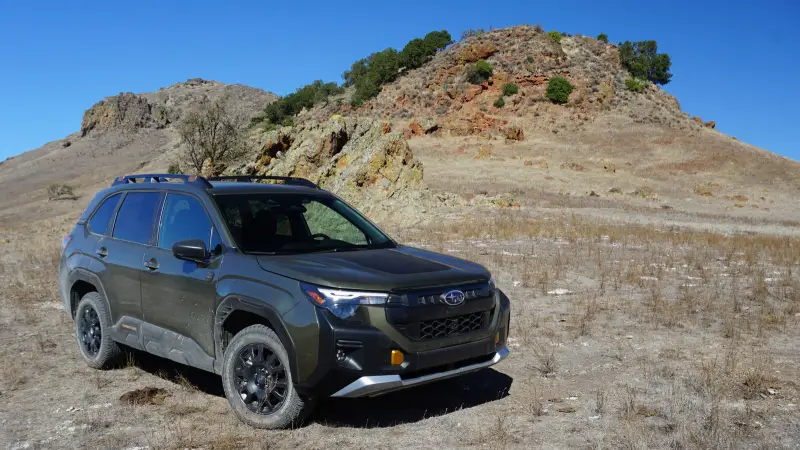
The 2027 Subaru Forester Wilderness Hybrid pairs the Wilderness trim’s extra ground clearance and all-terrain hardware with a more powerful, more efficient hybrid drivetrain. Subaru says it starts at $41,970, including destination, just $1,000 above the gas-only Forester Wilderness. The added efficiency and lower fuel use could make that premium easier to justify for drivers who cover plenty of miles, while the electric motor’s added torque has a practical role on rough ground.
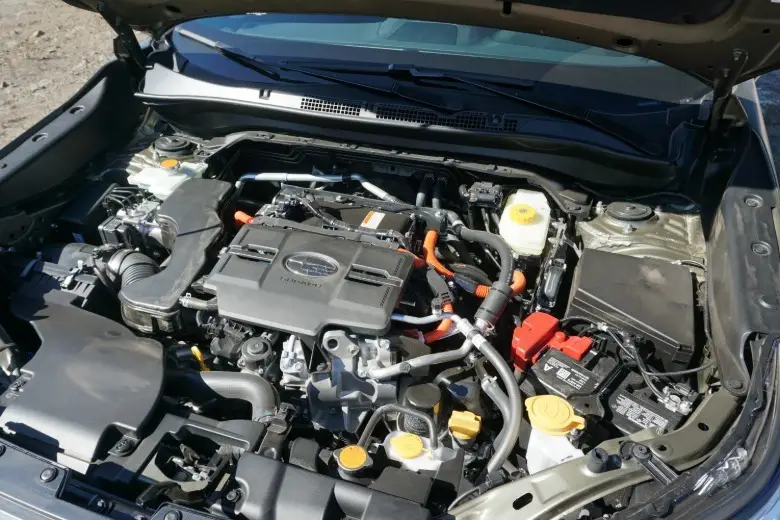
The hybrid system combines an Atkinson-Miller-cycle 2.5-liter boxer four-cylinder with two motor-generator units housed in the continuously variable transmission. One motor-generator starts and stops the engine and charges the battery; the other recovers energy during braking and supplies drive power to all four wheels. A 1.1-kWh battery sits beneath the cargo floor, in the space normally occupied by a spare tire. Subaru says that arrangement preserves the regular Forester’s rear cargo capacity, though drivers who want to carry a spare may see the battery’s location as a drawback.
Combined output is 194 horsepower, 14 hp more than the gas Wilderness. Subaru doesn’t provide a combined torque figure. The gasoline engine makes 154 lb-ft, while the electric motor produces 199 lb-ft; the gas-only model is rated at 178 lb-ft. Those separate figures don’t add up to a stated system total, but the extra electric assistance is noticeable in the way it helps the SUV keep moving over difficult sections.
Subaru’s symmetrical all-wheel-drive system sends engine power mechanically to all four wheels. That differs from the Toyota RAV4 setup described in the test, where there’s no mechanical connection between the front and rear wheels. For drivers who regularly leave pavement, that distinction may matter as much as the extra torque: the Forester retains a direct mechanical route for engine power to reach both axles.
Fuel economy is another clear step forward. EPA figures for the Wilderness Hybrid are 33 mpg in the city, 29 mpg on the highway and 31 mpg combined. Subaru’s comparison with the gas Wilderness shows improvements of 9 mpg in city driving, 1 mpg on the highway and 5 mpg combined. Estimated driving range rises from 432 miles to 515 miles, reducing the need to stop for fuel on longer trips.
Trail equipment stays intact
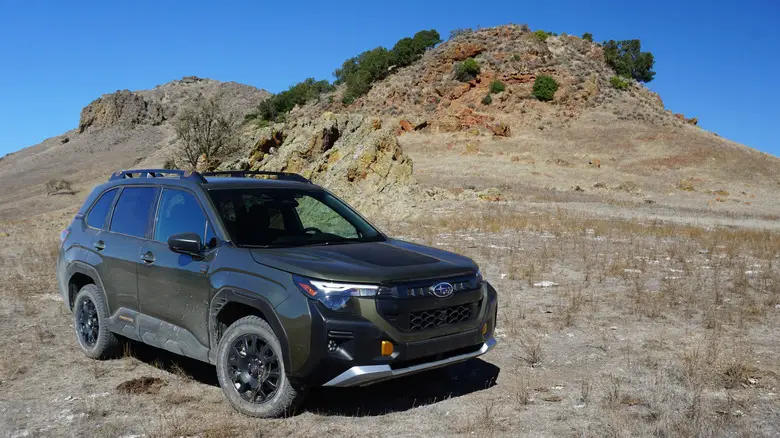
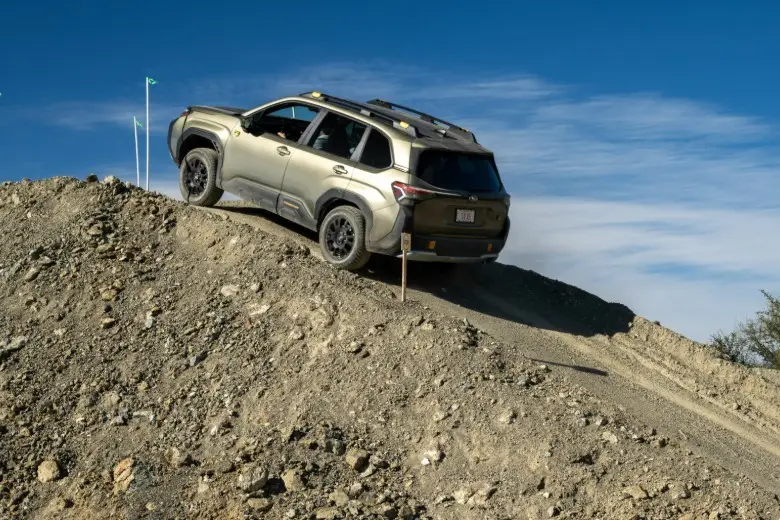
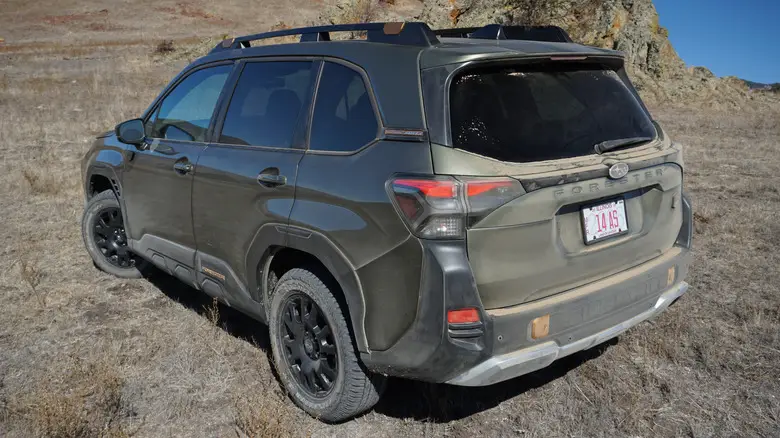
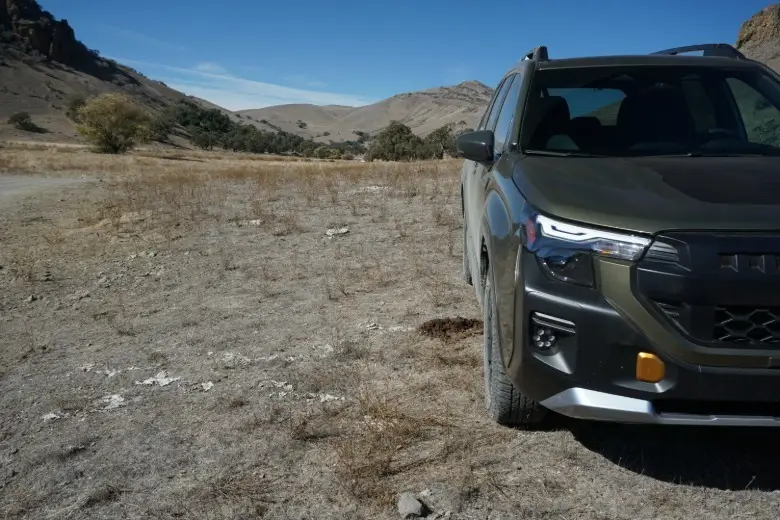
The hybrid keeps the Wilderness model’s 9.3 inches of ground clearance, 235/60R17 Yokohama Geolander all-terrain tires and raised roof rails, which have a stated capacity of 800 pounds. Redesigned front and rear bumpers provide improved approach, departure and breakover angles. Bronze accents inside and out preserve the trim’s distinctive appearance, while more protective exterior panels and underbody protection are part of the Wilderness package.
Hill descent control and Subaru’s X-Mode system add support on loose or steep terrain. X-Mode includes Snow/Dirt and Deep Snow/Mud settings, which adjust the vehicle’s response for changing surfaces. The driver’s front-view monitor covers 180 degrees and can help show where the front wheels are headed when visibility from the seat is limited. In the test drive, the system was useful on rough ground, though its image resolution could be sharper.
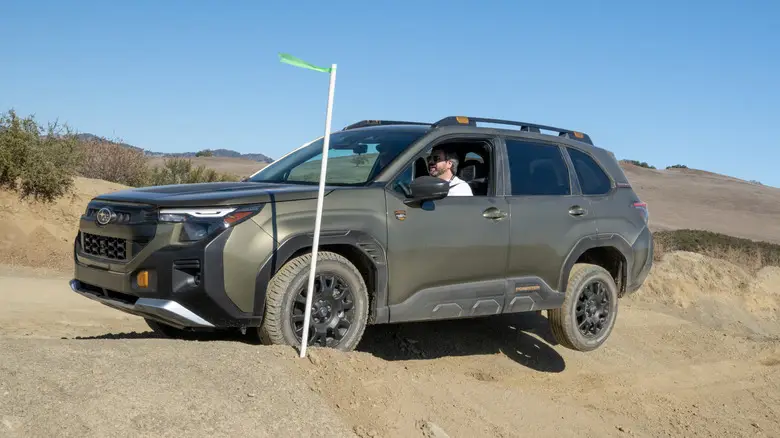
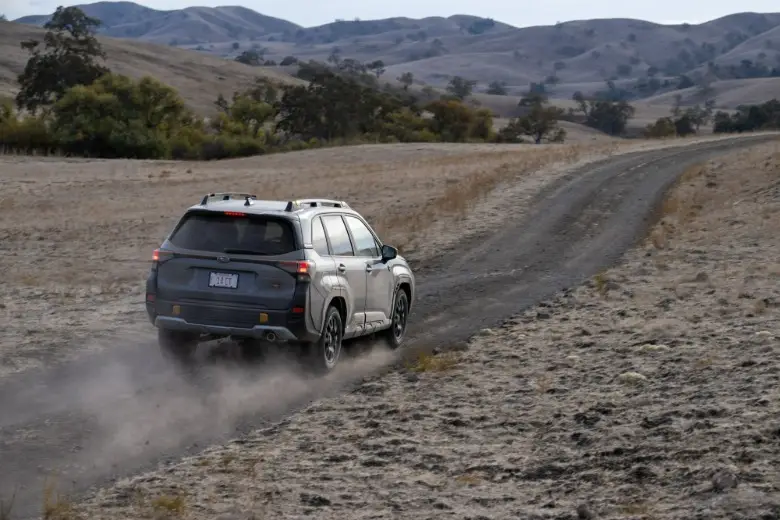
On a large stretch of private land in central California, the Forester handled a range of obstacles without much drama. When it bogged down more than expected, a little throttle brought the electric motor’s added torque into play and helped pull it clear. The drive suggested a capable compact crossover for uneven tracks and outdoor access, even though it lacks a locking rear differential. Its ease over those routes may also mean that drivers need to pay attention to the terrain instead of assuming the vehicle will stop where a less capable crossover might.
Comfortable daily driving, familiar cabin drawbacks
Most Wilderness Hybrids will spend more time on paved roads than on trails, and the model appears well suited to that split. The cabin is insulated against much of the road noise and boxer-engine sound, and the stronger drivetrain makes it feel less strained when accelerating than the gas Wilderness. That added refinement complements the improved fuel economy and longer range, making the hybrid’s benefits relevant even for everyday commuting.
Subaru’s EyeSight driver-assistance suite is standard. Listed features include emergency lane-keeping assist, emergency steering assist, blind-spot detection, rear cross-traffic alert, reverse automatic braking and full-speed adaptive cruise control. These systems add convenience and assistance in routine driving, while the model’s off-road equipment remains available for weekends and longer trips.
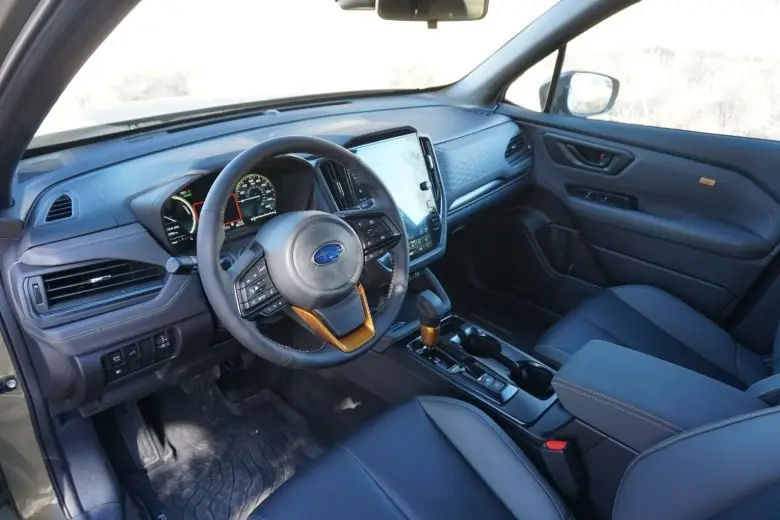
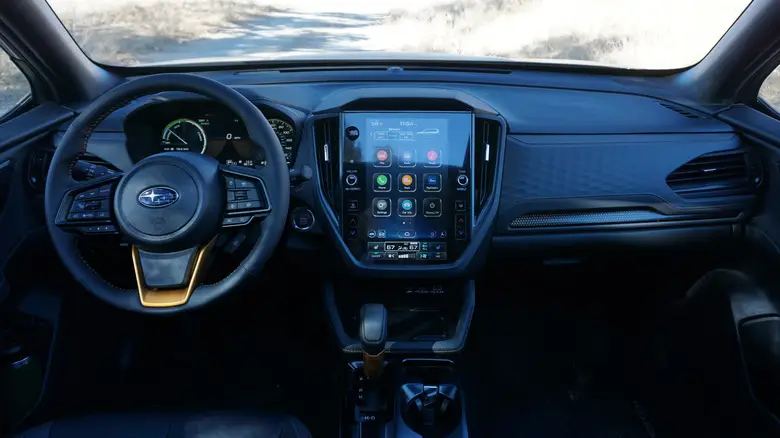
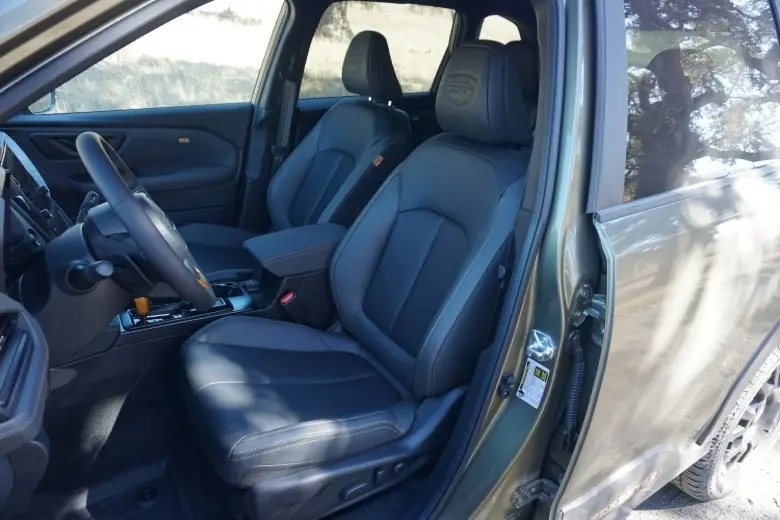
Inside, the layout carries over with a 10-way power-adjustable driver’s seat, a 12.3-inch digital instrument display and an 11.6-inch vertical infotainment screen. The instrument display can show a full-screen map. Wireless Apple CarPlay and Android Auto are included, but the screen interface and phone connections felt laggy during the drive, and glare made the center display harder to see in bright sun. Those are everyday usability shortcomings in a cabin otherwise equipped for long journeys.
Standard equipment includes dual-zone climate control, a panoramic-style sunroof, TomTom navigation, a heated steering wheel, heated front and rear seats, a power tailgate, all-weather floor mats and an 11-speaker Harman/Kardon audio system. The interior uses animal-free materials, and the mix of surfaces and trim gives the cabin a well-equipped feel for the class.
Space is a strong point. A 6-foot-1 driver found enough room to sit comfortably behind their own position. The cargo area measures 33.1 cubic feet behind the second row and expands to 64.1 cubic feet with the rear seats folded. The roof rails can carry up to 800 pounds when the vehicle is stationary, adding room for bulky outdoor gear that won’t fit inside.
A straightforward price and equipment package
The 2027 Forester Wilderness Hybrid starts at $41,970 with destination included. Pricing is essentially a single-step choice: aside from a few optional paint colors, Subaru doesn’t offer packages for this trim. The gas Wilderness costs $1,000 less, so the decision comes down to whether the hybrid’s added power, improved fuel economy and 83-mile increase in estimated range fit the buyer’s driving.
There’s little change to the Wilderness formula beyond the powertrain, but that’s the point. The hybrid retains the clearance, tires, roof capacity and trail modes that make this Forester useful away from pavement, while making it quieter and more capable in ordinary driving. Its infotainment system remains the clearest cabin weakness, and the battery location means there’s no spare tire in its usual space. For drivers who want a compact crossover to handle both daily miles and rough access roads, the combination of 31 mpg combined, a 515-mile estimated range and familiar Wilderness hardware gives the new model a persuasive case.


