Polestar 4 Software Update Adds V2L, Camping Mode and Android Digital Key
- Matt Robinson
- 785 views
The Polestar 4’s P4 3.0 update adds 3.3kW vehicle-to-load power, a camping mode and broader digital key support.
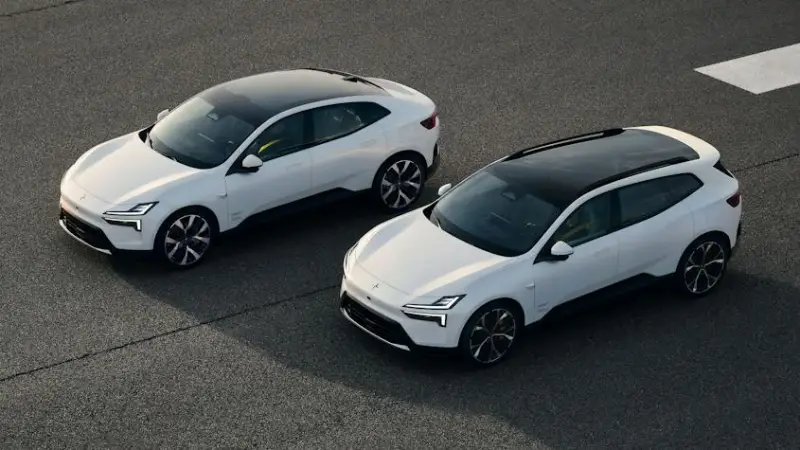
More ways to use the Polestar 4 when parked
The Polestar 4’s latest software update adds features that change what owners can do with the car when it’s stationary. Called P4 3.0, the update brings vehicle-to-load (V2L) power, a Camping mode and digital key access for compatible Android phones, alongside an upgrade to Android Automotive OS 15.
V2L lets the car’s high-voltage battery supply up to 3.3kW to external devices. Owners will need an adapter to connect equipment, which could include tools or camping gear. That output makes the battery a power source as well as the means of driving the car, though using it for external devices draws energy from the same pack used for the journey.
Camping mode is designed for time spent stopped. It keeps cabin functions and infotainment available, and maintains power to “key power outlets,” so connected devices can remain charged. The feature gives the Polestar 4 a more useful role at a campsite or during an overnight stop. The update doesn’t specify how long the mode can run or how much energy it uses, so owners will need to manage battery charge around their plans.
Android 15 and expanded phone access
Android Automotive OS 15 is another central part of P4 3.0. Polestar says the system should respond more quickly and start up faster. Google Maps also gains energy estimation, while the home screen gets additional shortcuts. Those changes target everyday interactions: quicker access to frequently used controls and more information when planning a route.
The update also “enhanced” the climate controls, although Polestar hasn’t described what has changed. That leaves the practical effect unclear for now; the other listed software changes have more specific functions owners can identify.
Digital key support is expanding beyond Apple iOS. Compatible Google and Samsung Android phones can now be used to lock, unlock and start the Polestar 4. Compatibility is limited to supported phones, so Android ownership alone doesn’t guarantee access. For drivers with a compatible device, the phone can handle the basic access tasks without relying on a separate key fob.
Parking and access features depend on equipment
Some driver assistance and access functions have narrower availability. Polestar says 2026 and 2027 model year cars equipped with the Pilot pack will be able to steer and brake into perpendicular parking spaces. That feature is tied to both model year and pack, so it won’t apply to every Polestar 4 receiving the software update.
A new Valet mode can lock the glovebox, set a speed limit and restrict access to the car. Those controls are intended to limit what someone can do while using the vehicle, while leaving it available for the task at hand. Polestar hasn’t provided further detail on how access restrictions are configured.
A software update with practical additions
The update follows features introduced on the recently revised Polestar 3, extending some of that model’s software capabilities to the Polestar 4. Polestar product management boss Johanna Bergh said the company had focused on customer-requested additions, including V2L, Camping mode, digital key and Android 15. The update is delivered over the air, allowing the car’s software to gain functions after delivery.
For owners, the most tangible change may be the new access to battery power outside the car, provided they have the required adapter and keep an eye on remaining charge. Camping mode builds on that use by keeping selected cabin features and outlets active while parked. The software and phone changes address daily convenience, while perpendicular parking assistance is restricted to specified model years with the Pilot pack.
P4 3.0 broadens the Polestar 4’s uses without changing its hardware: the battery can power external equipment, the cabin can stay active during a stop, and compatible phones can take on key duties. The details that matter most in practice are whether a phone is supported, whether a car has the required pack and model year, and how much battery charge an owner is willing to reserve for parked use.


