Tesla Robotaxi Expands Austin Coverage to 443 Square Miles, Starts Rides at 5 a.m.
- William Jones
- 422 views
Austin’s Robotaxi zone grows 63% to about 443 square miles as service hours extend to 5 a.m.; overnight Cybercab sightings remain unconfirmed.
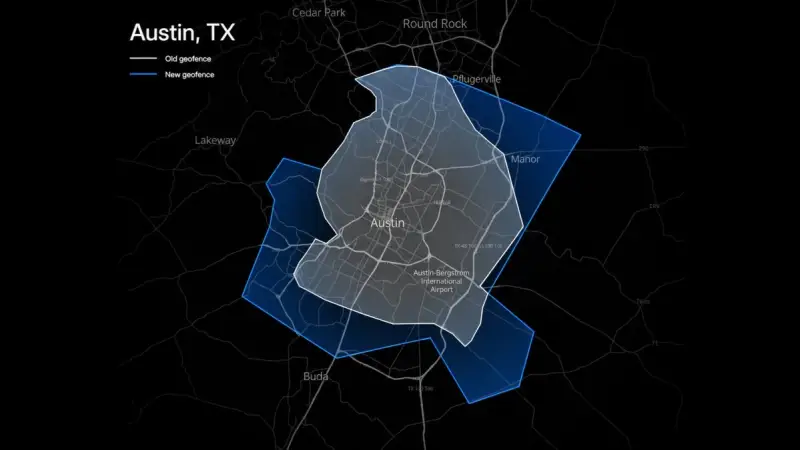
Tesla has widened its Austin Robotaxi zone to about 443 square miles and moved the service’s daily start time to 5 a.m. The changes give riders a larger advertised footprint and a 21-hour operating window, though the map’s boundaries don’t necessarily show where every pickup and drop-off is available.

A larger zone, with limits on the map
The expansion adds about 171 square miles, a 63% increase from Austin’s previous 272-square-mile zone. The boundary grows in most directions. To the north, it remains roughly where it was, short of Round Rock and Cedar Park.
On the eastern side, the mapped area now extends past Pflugerville toward Manor. In the southeast, it reaches beyond Austin-Bergstrom International Airport and TX-130. The zone pushes southwest toward the TX-45 toll road near Buda, and west toward Lakeway.
At 443 square miles, Austin is Tesla’s largest unsupervised Robotaxi market by the figures provided. San Antonio follows at 274 square miles, then Houston at 254. Fort Worth covers 143 square miles, Dallas 81, Miami 31, Orlando 26 and Tampa 24.
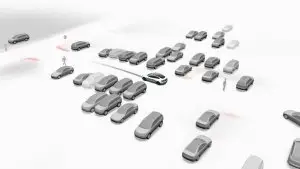
Those advertised boundaries are a useful measure of the service’s intended reach, but they don’t guarantee a ride can begin or end at every point inside them. A recent analysis of Tesla’s Texas zones found that Austin’s usable area had been about 41% smaller than its advertised footprint, with much of the difference on the east side. How much of the newly added territory is open to riders remains unclear.
Service now begins an hour earlier
Tesla has also shifted Austin’s Robotaxi schedule to 5 a.m.–2 a.m. The earlier start took effect over the weekend, according to a screenshot shared by former Tesla intern Ethan McKanna. The company had extended the end of service to 2 a.m. a few weeks earlier; the new start time adds another hour to the daily schedule, bringing it to 21 hours.

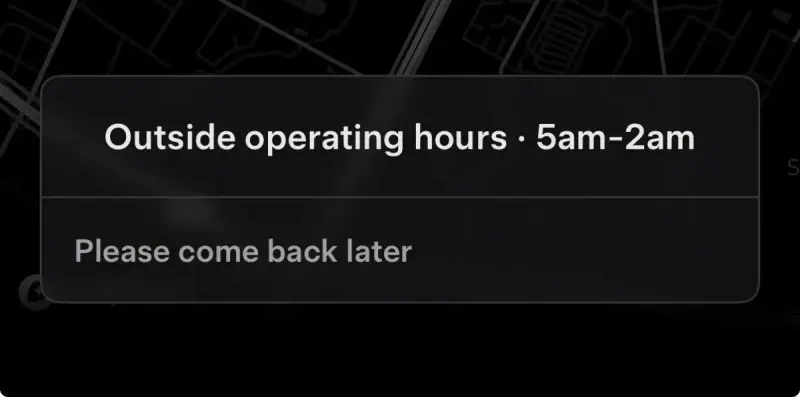
The remaining three hours have drawn attention because McKanna said he saw what appeared to be unsupervised Cybercabs driving in Austin between 2 a.m. and 6 a.m. That observation doesn’t establish that passenger service runs around the clock. Tesla and the Robotaxi app have not confirmed 24-hour operations, and the vehicles could have been travelling to charging hubs during the service gap.
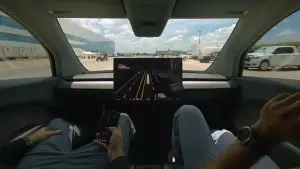
For riders, the posted schedule is the clearest indication of when the service is available. Overnight vehicle sightings may point to testing or fleet movements, but they don’t show that customers can request rides during those hours. A full 24-hour schedule would require a further change to the published operating window.

Austin remains the fleet’s main test bed
Austin is home to more than 300 Cybercabs already giving rides, making the wider zone and longer schedule a significant expansion of Tesla’s activity in the city. The combination tests more than map coverage: a larger service area and earlier departures also require vehicles to be available across more of the day and across a wider spread of locations. The source provides no fleet utilization, wait-time or ride availability figures, so the practical effect for passengers is still difficult to gauge.

Tesla’s service has recently expanded into Fort Worth and San Antonio, with San Antonio’s 274-square-mile zone now second in size among the listed markets. Dallas is expected to become the next Cybercab market sometime this month. Las Vegas, Phoenix and Jacksonville are also on Tesla’s list of upcoming cities, though no launch dates are given.

The Austin expansion stands out for its scale, but the next useful measure will be how much of the new boundary riders can actually use. For now, the map reaches farther, the app’s schedule starts earlier, and reports of overnight driving leave open whether Tesla is preparing to extend service beyond its current 21-hour window.