Tesla Explores Laser Cleaning for Cybercab Camera Glass
- Joseph Miller
- 397 views
Tesla’s Lars Moravy says focused lasers could clear the windshield area in front of a Cybercab camera, potentially reducing wiper maintenance.
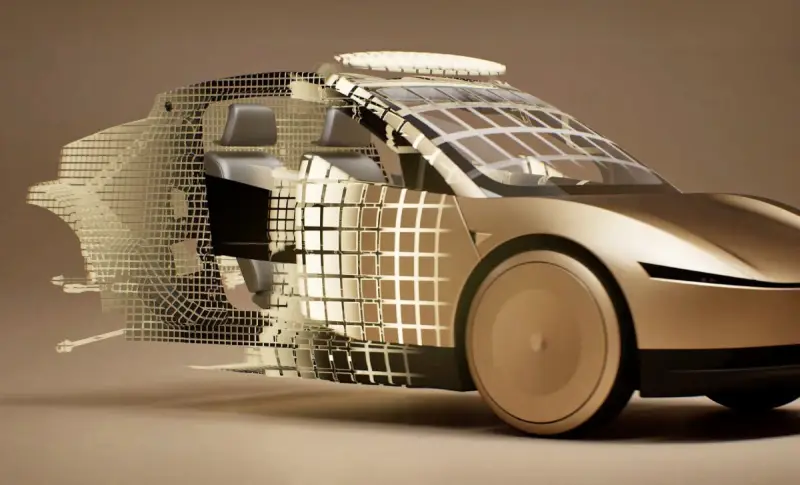
A laser system aimed at a robotaxi’s camera could solve a narrower problem than replacing windshield wipers: keeping the part of the glass the vehicle relies on clear. Tesla vice president of vehicle engineering Lars Moravy described that possibility in a Jay Leno’s Garage interview, raising the Cybercab as a potential application for an idea the company has explored for years.

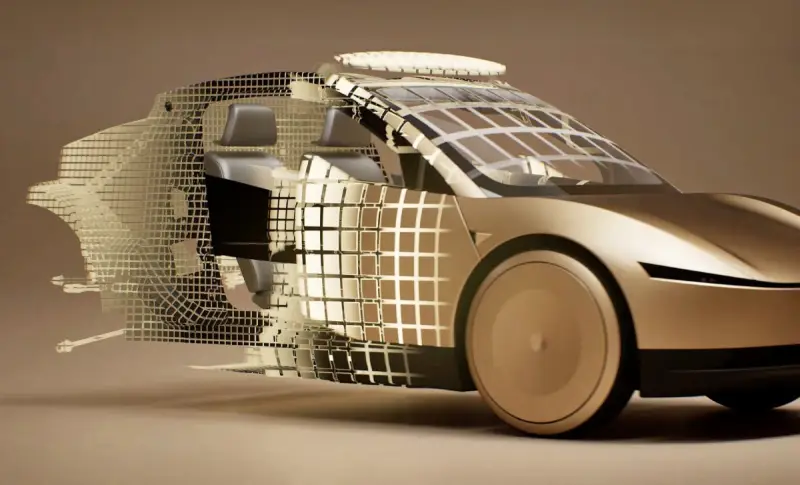
Clear the camera’s view, not the whole windshield
Tesla has a patent for using lasers to remove material from windshield glass. Moravy’s point was that applying the concept across an entire windshield would require too many lasers to make practical sense. Concentrating the cleaning action on the area directly in front of a camera changes the proposition: a small patch of unobstructed glass may matter more to an autonomous vehicle than a fully cleared windshield.
That distinction makes the Cybercab a more plausible setting for the idea than a conventional passenger car. A human driver needs a broad, clear view through the windshield. A vehicle relying on cameras needs its sensors’ views to remain usable. If only a defined section needs attention, the cleaning equipment could focus on that zone instead of trying to do the job of a full-width wiper.
There’s a practical question behind the engineering: how well can the system identify what is obscuring the view and respond to it? Tesla’s updated patent describes detecting debris, identifying its type and adjusting the laser pulses accordingly. It also describes limiting beam penetration to less than the thickness of the glass. Those details sketch out a system designed to target contamination while controlling how the laser interacts with the windshield.
An old concept with a different application
The laser-wiper idea surfaced during Cybertruck development. Elon Musk joked about laser wipers in 2021, but Tesla chose a large 48-inch wiper for the production truck. The company’s later patent activity suggests it has continued to explore laser cleaning, with an updated patent granted on March 31 of the year described in the interview coverage.
The Cybertruck’s conventional wiper illustrates the challenge of replacing a familiar component. A physical blade clears a large area through direct contact, and its performance is easy for a driver to assess. A laser system would need to show that it can handle the kinds of water and debris that interfere with a camera, while working reliably across the conditions a vehicle encounters. The patent describes a possible mechanism; it does not establish that Tesla has put the system into production or confirmed it for the Cybercab.
For owners of current Teslas, the laser concept also doesn’t address the familiar complaints about automatic wipers. Drivers have reported that the system can wipe dry glass or respond inadequately to light rain. Those issues concern when and how quickly the car decides to operate its wipers. A laser directed at camera glass would have a different job: clearing a sensor’s view. Moravy’s comments point toward a robotaxi use case, not a fix for the auto-wiper behavior in consumer models.
Why a robotaxi may suit the design
A contactless cleaner could appeal in a vehicle expected to operate without a driver at the wheel. A conventional wiper has moving parts and a blade that wears; Tesla recommends replacing its wiper blades annually. A laser system could reduce some of that physical maintenance if it can keep the camera area clear without a blade. The potential benefit is especially easy to understand for a Cybercab between rides, when there may be no one available to check the windshield or deal with a wiper problem.
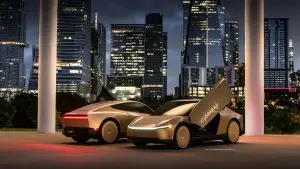
That benefit remains conditional. A robotaxi still needs a clear camera view in rain and when debris collects on the glass, and the proposed system would have to cope with those conditions consistently. The available description doesn’t provide performance figures, operating limits, maintenance intervals or a production timetable. It also doesn’t establish whether a laser cleaner could replace conventional wipers entirely or would work alongside them.
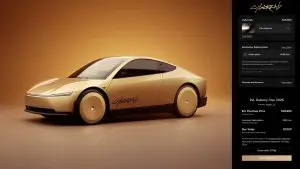
The idea fits Tesla’s stated preference for reducing hardware, often summed up by Musk as “the best part is no part.” Fewer moving components could mean less routine service, but a new system also brings its own sensors, controls and failure modes to engineer and maintain. Whether it simplifies ownership depends on how well it works over time, not just on the absence of a wiper blade.
For now, the Cybercab is a possible destination for the technology, not a confirmed one. Moravy’s explanation gives the laser concept a clearer purpose: keep a camera’s viewing patch clean, rather than wipe an entire windshield. The next meaningful sign will be evidence that Tesla has developed that focused approach into hardware capable of handling real driving conditions.