Tesla Cybercab Personal Orders Open at $29,990, With $299 Monthly Subscription
- Thomas Jones
- 943 views
Select buyers can order Tesla’s two-seat Cybercab for $29,990, but access requires a $299 monthly subscription and a supported service area.
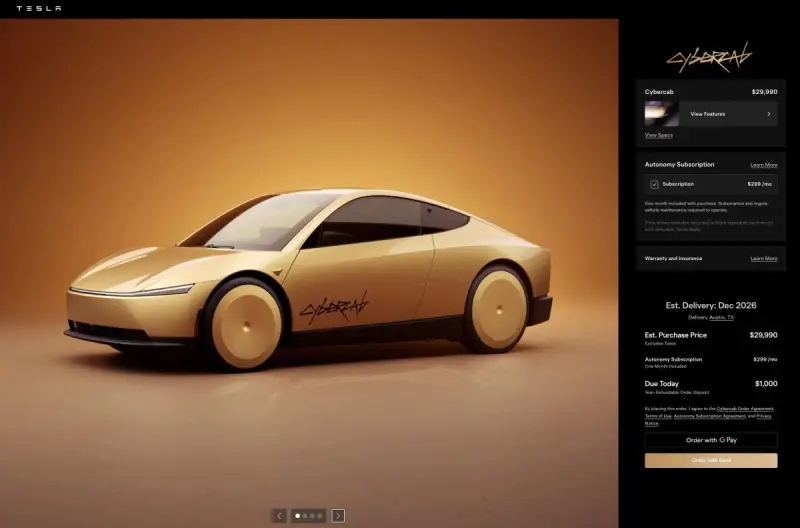
Tesla is extending the Cybercab beyond fleet plans and its Robotaxi service: select customers can now order the two-seat vehicle for personal use. The listed price is $29,990 before taxes, but private ownership comes with a required $299 monthly autonomy subscription and limited operating areas. Estimated deliveries are set for December 2026.
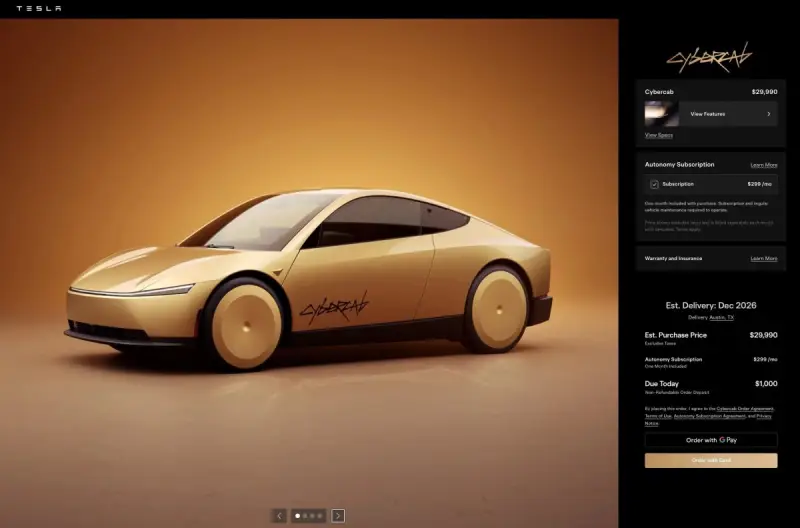
That combination makes the Cybercab’s purchase price only part of the cost picture. Tesla includes one month of the subscription, then owners must pay to keep using the vehicle as intended. The order also requires a $1,000 nonrefundable deposit, and Tesla says regular vehicle maintenance is required for operation. The company’s order information does not specify how the subscription price might change over time.

Price, subscription and delivery
Item 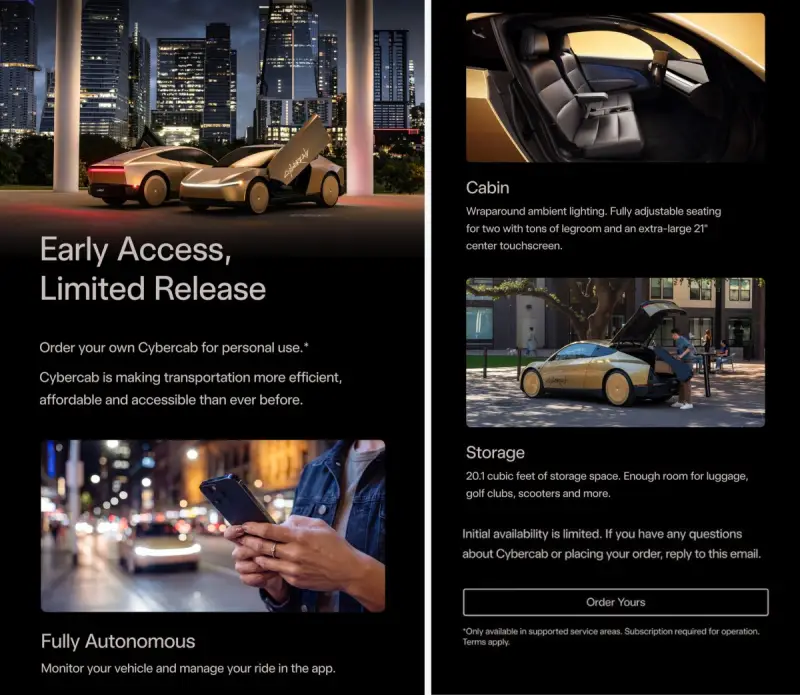 | Details  |
|---|---|
Vehicle price  | $29,990 before taxes  |
Monthly autonomy subscription 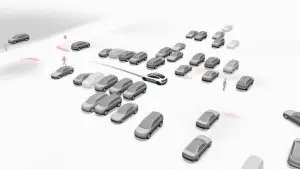 | $299  |
Subscription included  | One month 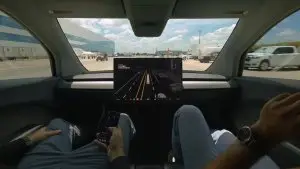 |
Order deposit  | $1,000, nonrefundable  |
Estimated delivery  | December 2026 |
The subscription is central to the offer, rather than an optional add-on. Tesla identifies it as the autonomy subscription needed to operate the Cybercab. For buyers weighing the car against a conventional vehicle, that recurring charge changes the ownership calculation: the sticker price alone doesn’t represent the cost of continued use. How much the service is worth will depend in part on where the Cybercab can drive and what functions Tesla makes available in those areas.
Tesla had previously said it expected to sell the Cybercab for less than $30,000. The newly listed price lands just below that threshold. The $299 monthly fee is the first disclosed price for the subscription associated with the Cybercab’s unsupervised operation, though the available order details don’t describe how the fee relates to other Tesla driver-assistance offerings.
Personal driving, within a limited area
Offering the vehicle for personal use means buyers can use it for their own trips without paying Robotaxi fares. The distinction matters: the Cybercab is no longer presented solely as a vehicle for Tesla’s ride service or for fleet buyers. At the same time, the order information limits operation to supported service areas. The source identifies Austin, Texas, as the only current location for Tesla Cybercabs, so the initial ownership opportunity appears tied to that operating footprint.
That restriction is likely to shape the vehicle’s practical appeal. A car that depends on a defined service area may not fit the routines of customers who regularly travel outside it. Tesla says the supported areas will expand as Cybercab production ramps, but it hasn’t provided a broader availability schedule in the order details. Buyers will need clarity on the boundaries and how they affect everyday trips before the vehicle’s personal-use role can be judged fully.
Tesla also says owners will be able to monitor the Cybercab and manage rides through an app. The order information doesn’t identify whether that will be the Robotaxi app or the standard Tesla app. That detail will matter for day-to-day use, especially if managing the vehicle depends on services or controls not typically associated with a privately owned car.
Two seats and 20.1 cubic feet of storage
The Cybercab is listed with 20.1 cubic feet of storage. Tesla’s Model 3 is cited with 24.1 cubic feet across its front trunk and rear trunk, giving the sedan a stated 4.0 cubic feet more combined storage. The comparison is useful for shoppers thinking about bags and cargo, though the Cybercab’s two-seat layout and smaller, lighter body make it a different proposition from a four-door sedan.
The vehicle’s visible layout includes seating for two, ambient lighting and a 21-inch screen. Those details suggest a cabin built around a compact passenger experience, with less room for people than a conventional sedan. The available information doesn’t give a more detailed breakdown of the 20.1 cubic feet or explain how cargo access is arranged, so the capacity figure alone can’t answer how easily larger items will fit.
From fleet interest to individual orders
The move follows Tesla’s September invitation for businesses to register interest in buying Cybercab fleets. On its Q3 2026 earnings call, the company targeted initial customer deliveries by year-end as production ramps. Tesla CEO Elon Musk also said the company expected to own the vast majority of Cybercabs, which had pointed toward a fleet-centered rollout. Select personal orders now add another route to ownership, although the limited service area and subscription keep the first offer tightly defined.
At least one customer has shared an order confirmation showing that Tesla will follow up through an advisor. Tesla says access is initially limited, so an open order page does not necessarily mean the vehicle is broadly available. The key details still to emerge are how quickly supported areas will grow, what owners can manage through the app and how the Cybercab performs as a personal vehicle in everyday use. Those answers will determine whether its sub-$30,000 purchase price offsets the ongoing fee and narrow initial footprint.


