Tesla Cybercab Nationwide Sales Depend on Approval as Musk Questions $299 Monthly Fee
- William Miller
- 1,005 views
Tesla's $29,990 Cybercab requires a $299 monthly autonomy subscription, but Musk says the fee should be closer to $115. Wider sales await approval.
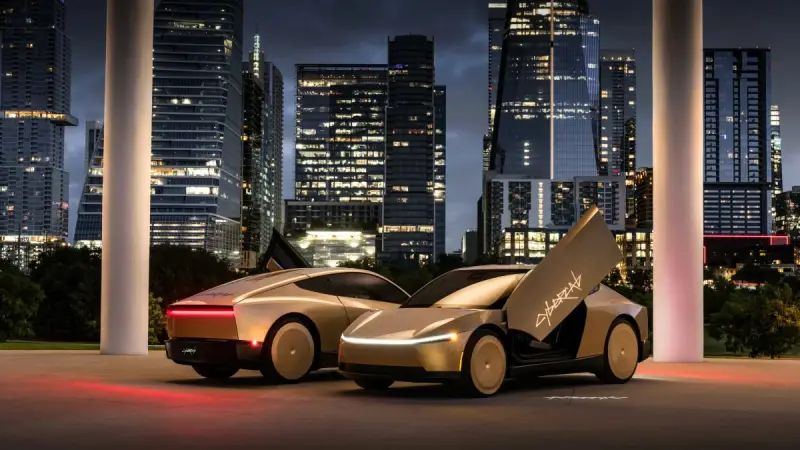
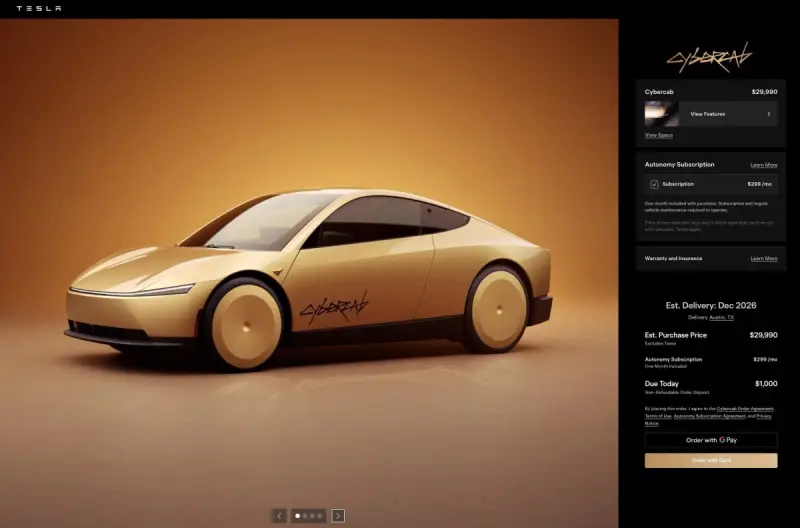
Tesla has begun taking personal-use Cybercab orders, but the vehicle's reach will depend on two unsettled issues: where it can operate and what owners will pay each month. Elon Musk says sales will expand nationwide as approvals allow, while he has also called the required $299 monthly autonomy subscription too expensive.
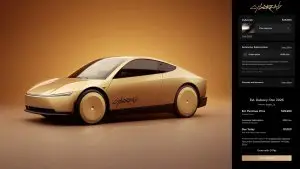
The pricing question matters because the subscription is part of the Cybercab's ownership cost, not an optional add-on for buyers who want autonomous driving. Tesla lists the vehicle at $29,990, requires a nonrefundable $1,000 deposit, and includes the first subscription month at no charge. After that, the stated fee adds $299 each month.

A substantial monthly cost on top of the purchase price
In a reply on X about the order launch, Musk said the subscription should be closer to the combined cost of Tesla's Full Self-Driving (Supervised) service and Premium Connectivity on other models: about $115 per month. That would bring the Cybercab's recurring fee down by more than half, although Tesla has not announced a revised price.
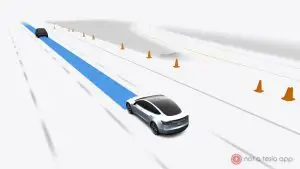
The comparison gives buyers a useful reference point. FSD (Supervised) currently costs $99 monthly, while Premium Connectivity costs $9.99 a month or $99 a year, plus applicable taxes. Together, those prices come to roughly the $115 figure Musk cited. The Cybercab's $299 fee is therefore about three times that benchmark, and the difference compounds for owners who keep the vehicle for several years.
At the current listed rate, a full year of the subscription would cost $3,588 after the included first month. A buyer would also have paid the $29,990 vehicle price and the $1,000 deposit, which is nonrefundable. That makes the monthly charge central to evaluating the Cybercab's total cost of ownership. The source does not specify whether the subscription can be paused, transferred, or purchased for a longer term, so buyers will need Tesla's final terms to understand how the ongoing cost works in practice.
Musk's comments also set the Cybercab apart from Tesla's pricing stance for FSD on its other vehicles. He has said the $99 monthly FSD price could rise as the system's capabilities improve, particularly with unsupervised operation expected to roll out to customers next year. For the Cybercab, by contrast, he has signaled that the autonomy fee should come down. The two positions may reflect different product economics, but Tesla has not explained the reasoning or said whether the proposed lower rate would apply to every owner.
Sales plans extend beyond current operating areas
Tesla opened orders for personal use to a select group of invited customers on Friday, with deliveries estimated for December. For now, Cybercabs can operate only in the company's Robotaxi service areas in Texas: Austin, Houston, Dallas, Fort Worth and San Antonio. Musk's statement points to a broader sales footprint over time, with expansion tied to the approvals needed for the vehicle to operate in each area.
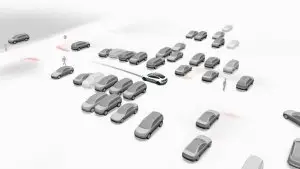
That distinction is important for prospective buyers. Nationwide sales would not necessarily mean that every owner could use the Cybercab everywhere immediately. The vehicle has no steering wheel, pedals or side mirrors, so its operation depends on permission for this specific configuration. Tesla has not provided a timetable for availability outside the current Texas areas, and Musk's comment offered no sequence of locations or delivery schedule beyond the initial estimate.
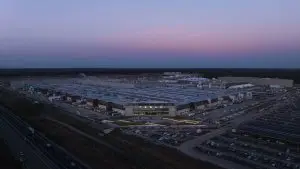
Manufacturing capacity appears less pressing than the expansion process. During a tour of the Cybercab production line at Giga Texas, Munro Live heard from Tesla's Lars Moravy and Eric Earley that the line was already producing vehicles faster than Robotaxi deployments were growing, and did not need to run every day. That suggests the near-term constraint is not simply the number of vehicles coming off the line. More production alone would not make the model usable in additional places.

What buyers still need to learn
The Cybercab is an unusual retail proposition: a $29,990 vehicle whose core autonomous operation carries a large recurring charge, sold before broad geographic access is established. A lower subscription would improve the ownership calculation, while a wider operating footprint would make the vehicle relevant to more prospective buyers. Neither change has been confirmed.
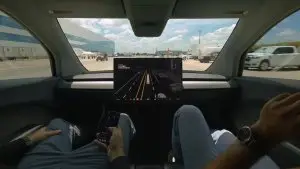
Tesla has not yet changed the $299 monthly price, and the first deliveries are estimated for December. Buyers will need clarity on the subscription terms and where the vehicle can operate before they can judge its day-to-day usefulness and long-term cost. For now, Musk has sketched out a nationwide sales ambition and a lower target fee; Tesla's next pricing and availability details will show how close the Cybercab comes to either.