Tesla Researcher Maps Switch 2 Controls to Steering, Brakes and Other Functions
- William Martinez
- 766 views
Matthew KuKanich’s custom Switch 2 app sends commands to a parked Tesla over its CAN bus, extending his earlier Xbox and Wii controller experiments.
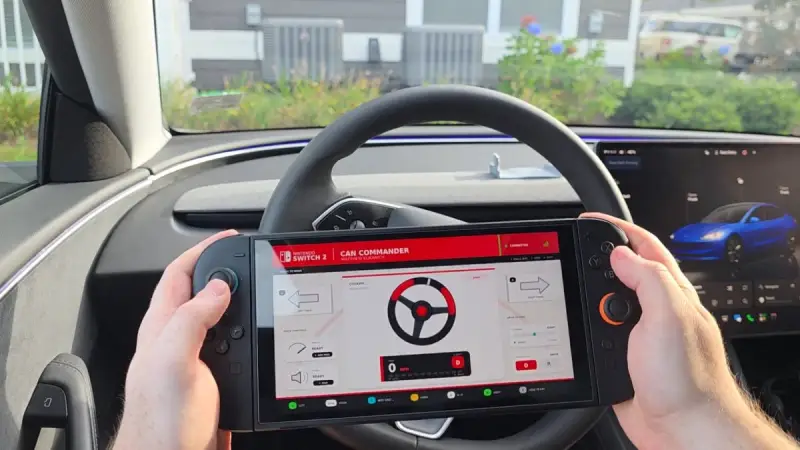
A Nintendo Switch 2 can steer a parked Tesla in automotive security researcher Matthew KuKanich’s latest controller experiment. His custom app maps the console’s inputs to vehicle functions through the car’s CAN bus, giving the project a broader reach than a novelty steering demo: it also addresses acceleration, braking, signals and other controls.

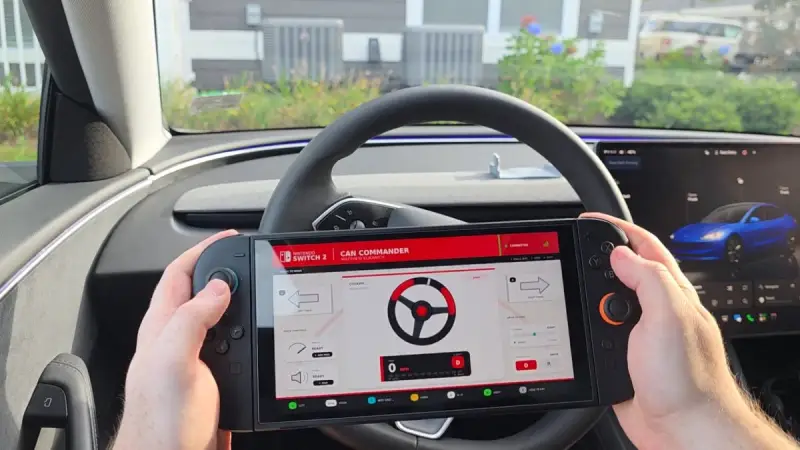
Controls routed through the car’s internal network
KuKanich jailbroke a Switch 2 and built an app called CAN Commander, along with an external CAN control system for his Tesla. The CAN bus is the vehicle’s internal network for communication among components. His setup sends commands over that network; he says he did not hack the Tesla itself.
In a post on X, KuKanich described the project as custom Switch 2 software paired with an external control system. He has also shared a video on Reddit. The demonstration shows how the console’s inputs are translated into commands the car can carry out.
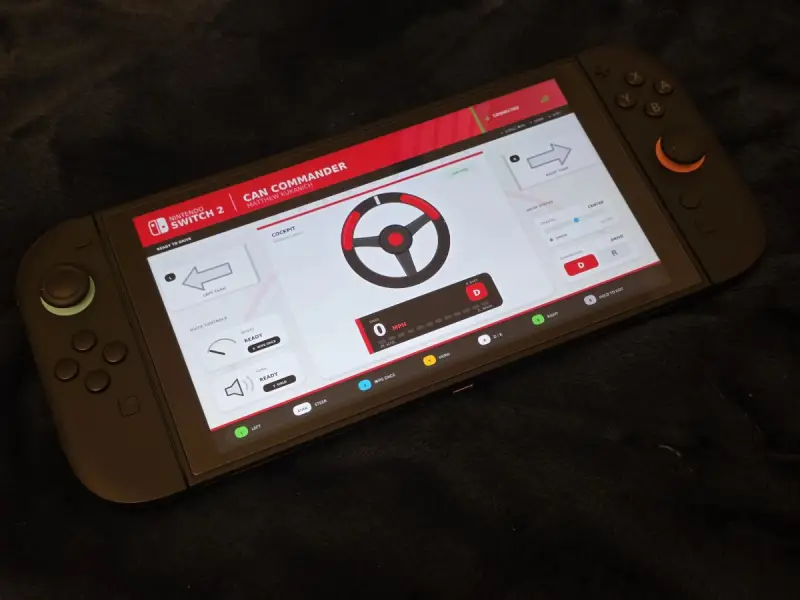
The left stick turns the steering wheel, while ZR and ZL are assigned to the accelerator and brake. The A button changes between Drive and Reverse. L and R operate the turn signals; X triggers one windshield wipe, and Y sounds the horn. That layout makes the app more than a remote steering input: it places several everyday vehicle controls on the same handheld interface.
CAN Commander also displays live vehicle information, including speed, steering angle, selected gear and connection status. KuKanich says the software has safety features, and exiting requires holding B. The available demonstration gives a limited view of how the system behaves: the Tesla remains parked as he moves the left stick, and the steering wheel follows. The signals also blink when activated.
Driving my Car with a Switch 2
by u/Martarts in switch2hacks
A third controller experiment
The Switch 2 setup builds on KuKanich’s earlier work with an Xbox controller and a Wii Remote. The Wii controller added motion input: tilting it moved the Tesla’s steering wheel. Some of those earlier videos show his controller experiments on the road, though the Switch 2 demonstration described here keeps the vehicle stationary.
That distinction matters. A parked-car video can show that a command reaches a control, but it doesn’t establish how the setup would respond during driving or across different conditions. KuKanich says the app has safety measures, but the source provides no further detail about their design or performance. The project should be read as a technical demonstration, rather than as evidence that a handheld controller is suitable for ordinary driving.
Not a released tool for owners
KuKanich hasn’t released CAN Commander’s code. He has said he may upload it to his GitHub page, which would give others a chance to inspect the software and learn more about the setup. Until then, the details available are the mapped controls, the displayed vehicle data and the parked-car demonstration.
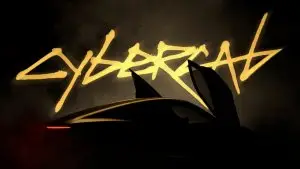
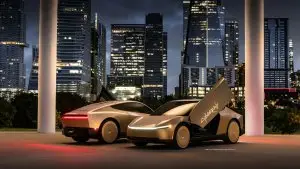
The project also sits against a broader shift in Tesla’s product direction. The company is developing vehicles and services around automated driving, while the purpose-built Cybercab is designed without a steering wheel. KuKanich’s work points in the opposite direction: it explores what a person can operate when vehicle functions are routed through a custom interface. For drivers, the useful takeaway is less about replacing the wheel with a gamepad and more about the access that a vehicle’s internal network can provide to someone who builds a working control system.
There’s an obvious practical limit to the controller itself: a joystick can wear, and stick drift could make precise inputs harder. More fundamentally, the video doesn’t show the system being used in traffic or establish how it handles faults, delayed commands or a lost connection. Any future code release could clarify the engineering, but the current demonstration remains a parked Tesla responding to a custom-built interface.