Tesla Robotaxi Miami Coverage Expands to 59 Square Miles, Reaching Downtown
- Robert Jones
- 667 views
Tesla has expanded Miami Robotaxi coverage from about 31 to 59 square miles, adding Downtown and Brickell as the service moves to round-the-clock operation.
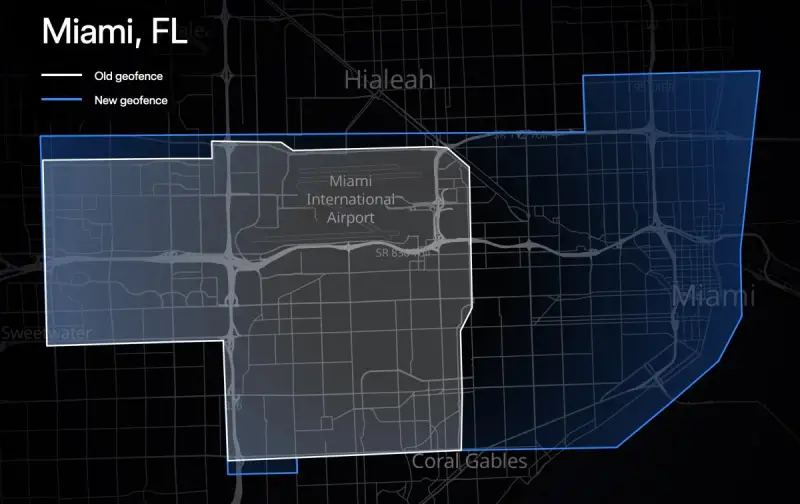
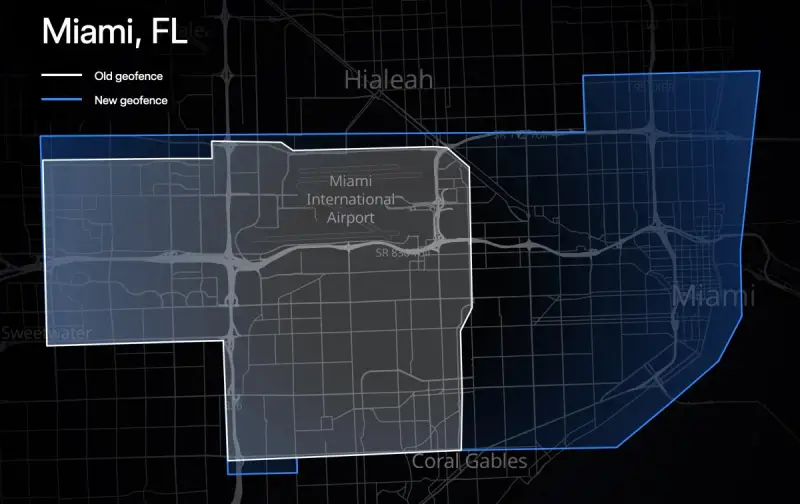
Tesla’s Miami Robotaxi network now reaches farther into the city. Its mapped service area has grown from roughly 31 square miles to 59, adding Downtown Miami and Brickell. That gives riders more potential trip origins and destinations, while the service’s recent move to 24-hour availability adds a second practical change: trips can now be requested during hours that were previously outside the operating window. The map still stops short of Miami Beach.

Downtown added to a larger Miami footprint
The expanded boundary adds approximately 28 square miles to Tesla’s previous Miami coverage, an increase of about 92%, based on Robotaxi Tracker’s Miami coverage figures. Tesla’s Robotaxi account shared the updated service-area map on November 16, 2026. The percentage makes the change sound dramatic, though it describes mapped territory rather than the number of cars available to serve it.

The new footprint extends east toward Downtown, Brickell and Biscayne Bay. Existing coverage around Miami International Airport, Doral and Coral Gables remains within the service area. The map also takes in some waterfront locations, but it doesn’t cross to Miami Beach, leaving a visible gap between the newly covered central neighborhoods and that major destination.
That boundary matters for anyone trying to judge the service by more than its headline area. A larger geofence can bring more trip origins and destinations within reach, but the map alone doesn’t show how many trips Tesla can complete, how quickly a car will arrive or whether a particular pickup point is covered. For riders, the clearest change is that central neighborhoods now sit inside the mapped area, creating more possible journeys within Miami’s existing footprint. The coverage figure is useful; it’s also only a starting point.

Coverage growth follows longer operating hours
The Miami map update comes days after Tesla began offering Robotaxi rides around the clock across all eight of its unsupervised markets, including Miami. The company announced the schedule change on November 12. That followed a gradual extension of operating hours during October and November, so the 24-hour schedule marks the end of a staged expansion in availability rather than an isolated map change.
About three months earlier, service ran from 6 a.m. to 10 p.m., a 16-hour daily window. Moving to 24/7 availability changes the potential usefulness of the network: a rider can consider a trip outside the old operating period, while a larger service area brings more locations within the mapped boundary. Those are meaningful changes in access on paper. The available information doesn’t provide trip volumes, wait times or vehicle availability by neighborhood, so it can’t establish how often the broader promise translates into a completed ride.
For a driver comparing ride options, those details are the next practical measures to watch. Geofence size describes where a service is offered, and scheduled hours indicate when it’s open. Neither measure, on its own, tells you whether a vehicle can be booked reliably at a particular address or whether service is consistent at different times of day. If you’re working in this space, that distinction matters: access is a product of the map, operating hours and the service customers can actually get.

Part of a multi-city expansion
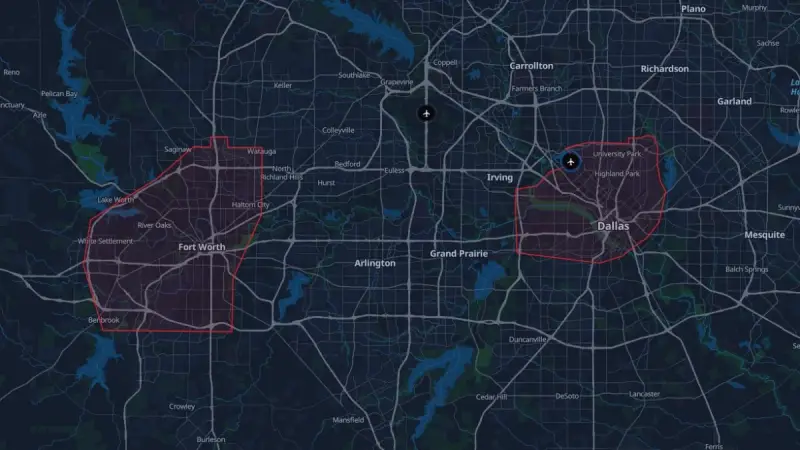
Miami’s extension is one of several recent changes to Tesla’s Robotaxi network. In Austin, the mapped area grew by 63% last week, from approximately 272 to 443 square miles. Houston’s service area expanded in late October from around 25 square miles to 254. Tesla has also started driverless service in Fort Worth and San Antonio. The pace of these changes points to a company widening where riders may be served across several markets, while leaving the size and day-to-day performance of each operation as separate questions.
Those figures show a rapid broadening of the network’s mapped reach across several Texas markets and Miami. They don’t establish that each city has the same operating schedule, fleet size or rider experience. The reported hours change applies to all eight unsupervised markets, while the specific area figures describe separate city footprints. Putting those measures side by side can suggest a broad rollout, but it doesn’t make the markets directly comparable.

Miami’s unsupervised Robotaxi service began on July 3, using Model Y vehicles. The Cybercab remains limited to Austin, so Miami’s expansion is a change in where the existing vehicle-based service operates, rather than a new vehicle launch in the city. That distinction keeps the local story focused on access and operating reach, not a change in the vehicle offered to riders.

What the expansion will show
This is more significant than it looks for customers whose trips start or end in central Miami: the addition of Downtown and Brickell changes which journeys can fit inside the service area, and the round-the-clock schedule removes the former overnight cutoff. But the expansion’s value depends on what happens after a rider opens the app. A larger boundary can increase the number of possible trips without telling us whether demand can be served promptly or consistently.

And this is the part most people overlook: a geofence is a statement of where service may be offered, not a report card on the service itself. For now, the available facts establish a wider mapped area and longer operating hours, while leaving the rider experience by neighborhood unclear. The next visible test is whether Tesla develops both the boundaries and the service experience around the newly covered locations.
More central Miami journeys are now within reach on the map. Miami Beach remains outside the current boundary. For riders, that’s the clearest limit—and the clearest marker of what this expansion has yet to cover.