Ford’s Role in Red Bull’s F1 Engine Goes Far Beyond Its Name
- Scott Mitchell-Malm
- 757 views
Ford supplied engineering expertise, embedded staff and manufacturing capacity as Red Bull developed its own power unit. The partnership also sharpened Ford’s processes.
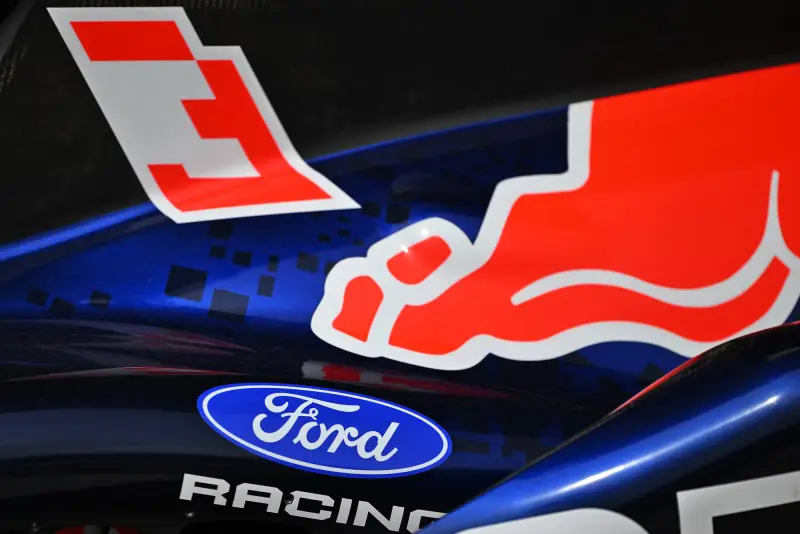
Ford’s contribution to Red Bull’s Formula 1 power unit is less about designing the engine than helping make its development work. Its engineers, manufacturing resources and access to specialists have supported Red Bull Powertrains from an early stage, while the demands of F1 have pushed Ford to improve its own production standards.
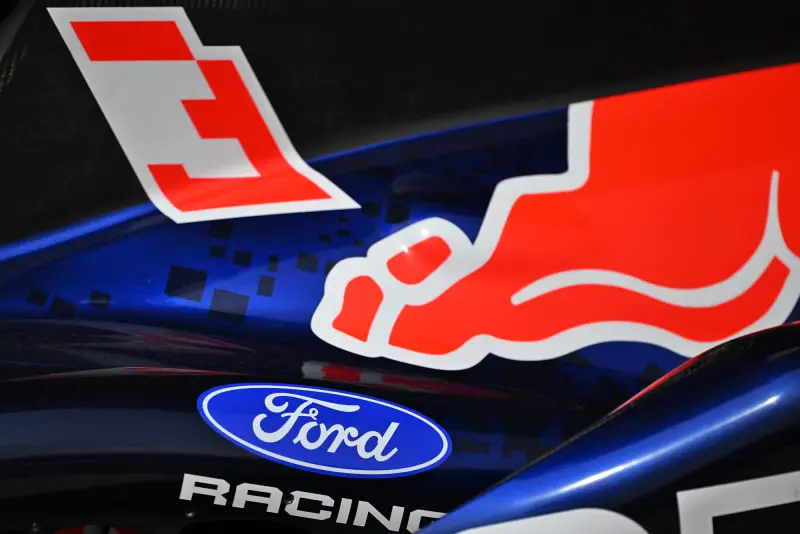
That distinction matters. Red Bull built the engine, which topped the FIA’s grading of manufacturers’ internal combustion engines and won three grands prix in its first season. Ford’s name on the Red Bull Ford Powertrains project reflects a technical partnership with practical input, rather than authorship of the complete power unit.
“What we’ve achieved over the last five years to get to this position is remarkable,” says Phil Prew, Red Bull Ford Powertrains’ engineering director. “We shouldn’t underestimate just what we’ve achieved in a short period of time, which truly wouldn’t have been possible without [Ford].”
A partnership formed during development
Ford joined while Red Bull Powertrains was still taking shape. Red Bull had moved from a standing start to building a full engine facility in just over a year, and Ford entered the project before the power unit was complete. That gave the company room to contribute, but also made coordination important: a large manufacturer’s processes could have slowed a small, fast-moving operation if the fit had been poor.
The discussions began in 2022. Mark Rushbrook, Ford Racing’s global director, visited Milton Keynes in September and saw Red Bull’s first engine. The two sides met again at the United States Grand Prix the following month, and announced a deal in February 2023. They began identifying areas for joint work before signing.
“When I came in October of 2022 and [Red Bull Powertrains boss] Ben Hodgkinson was here, we were sitting down, it was almost as if we assumed it was natural, we’re going to be partners,” Rushbrook says. The teams had not finalized a contract, but they already had a list of places where Ford might help—and started work on some of them.
Ford had been expected to focus chiefly on electrification, including battery cell chemistry and cells, along with software controls and calibration. Those areas matched Ford’s expertise and its interest in learning more about electrification. The contribution expanded as Red Bull identified other needs.
Prew points to Ford’s reach into specialist engineering as a particularly useful resource. When Red Bull encounters a technical problem, it can ask Ford whether the right expertise exists within the company. Prew says that within half an hour, the teams can be talking with specialists in the relevant field. The value, he says, isn’t limited to one discipline such as bearings; it’s the breadth of experience available across Ford.
Some assistance has been more tangible. While Red Bull was building its facilities, it needed a gas turbine stand to test the turbo. Ford already had one. Rushbrook says the company’s 123 years as a carmaker leave it with equipment and resources that can be put to work on the F1 programme.
Ford also has a hand-picked group of engineers embedded at Milton Keynes. They bring experience directly into the day-to-day work, while learning from the speed and pressure of an F1 development programme. Prew describes Ford as a large business that has still been able to respond with the agility the project needs.
Manufacturing became a major contribution
The scale of Ford’s role in manufacturing surprised both sides. By early 2025, Ford said it had produced around 1,000 metal and polymer parts using 3D printing for the project. The parts included battery cold plates, and Ford tested them using methods borrowed from aerospace.
Rushbrook says the partnership initially treated additive manufacturing as a straightforward way to make parts Red Bull needed. The pace soon became clear: components were being made and shipped daily, with designs changing just as quickly. Meeting that cycle required careful control of materials, machines, dimensional accuracy and quality.
That work raised the bar for Ford’s own processes. F1 teams routinely revise designs and timings, so a supplier must be able to respond rapidly without losing precision. Rushbrook says the early conversations about quality control were difficult, but they helped Ford improve what it could deliver.
The exchange now runs in both directions. Red Bull develops designs at Milton Keynes and shares performance requirements with Ford. Ford can then identify changes that would make a part easier to manufacture, and the teams work through those adjustments at increasing speed. Prew says the quality has improved as the project has moved into racing.
Ford says it isn’t using F1 to sell cars or parts in the way it might use its off-road racing programmes. Its stated gains are technical: learning about advanced electrification, improving manufacturing processes and developing its people. The arrangement has therefore created value beyond the engine programme, even as Ford’s production work responds to Red Bull’s immediate needs.
Track running created a second development cycle
The team’s work changed once the power unit reached the track. Before the Barcelona test earlier in the year, development had relied on simulation, dynos and rigs. Red Bull Ford Powertrains had to make assumptions based on prior experience and available data, without putting the 2026 power unit into a car on track.
Some assumptions held up; others had to be revisited. Barcelona was followed by further tests and racing, and the engineering task list grew as the team gathered real-world feedback. Rushbrook describes the response as rapid adaptation. Prew’s short version: “The job list got longer!”
Energy deployment has been a major area of learning. The team has worked to balance power output, fuel consumption, energy harvesting and deployment strategies, using track running, driver feedback and circuit-specific demands to refine calibration. Prew says the initial framework gave the engineers a basis for making changes quickly as they learned more.
That learning now feeds into development alongside the demands of racing. Prew says the development phase continued through March 2026, with further work planned for 2027 and 2028. Testing and manufacturing programmes continue while the team races, and he says at least two projects are running at the same time.
This is a different operating rhythm from the one the organization faced a year earlier. It must support a race programme while developing future versions of the power unit and applying lessons from each event. Ford’s access to specialists and production capacity can help Red Bull respond to that workload, while its own teams gain experience from the same rapid cycle.
Room for Ford’s role to expand
The partnership runs until at least 2030. Rushbrook says communication is constant, and Ford can provide support for an hour, a day or several weeks, depending on what the programme requires. As the technical demands change, that flexible access gives the two sides room to adjust the scale and focus of their work together.
There’s a clear boundary to the claim: Red Bull designed and built the engine, while Ford contributed expertise, engineers, equipment and manufacturing capacity. Ford hasn’t presented itself as the engine’s designer. Its influence is visible in how the project gets technical problems solved and parts made to the required pace and precision.
Prew expects the partnership to keep developing. Red Bull’s stated target is to win championships, and meeting that ambition will mean sustaining parallel racing and development work. Ford’s contribution is already broader than the electrification focus expected at the outset; its future scope will depend on what the powertrain programme needs next.


