F1’s Planned Driver Biometrics Split Verstappen, Russell and Leclerc
- Edd Straw
- 336 views
F1 plans to bring driver biometrics into broadcasts. Verstappen opts out, while Russell questions comparisons and Leclerc supports the idea.
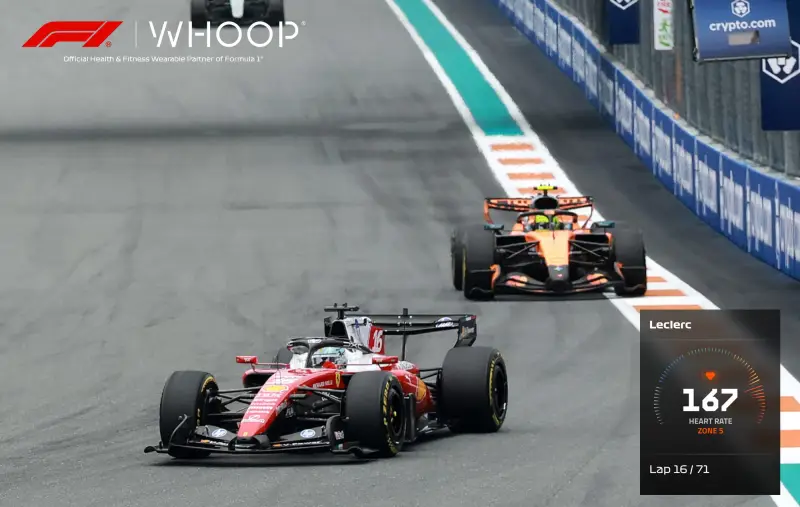
Formula 1 is preparing to make driver biometrics part of its broadcast storytelling, but the idea has already exposed a divide over privacy and how much a single number can explain. Max Verstappen won’t take part: he doesn’t use wearable trackers and doesn’t want his personal data shown. George Russell is open to the experiment, though he doubts heart-rate comparisons will add much context. Charles Leclerc, a Whoop user and ambassador, sees value in sharing information he already tracks.
What F1 could show
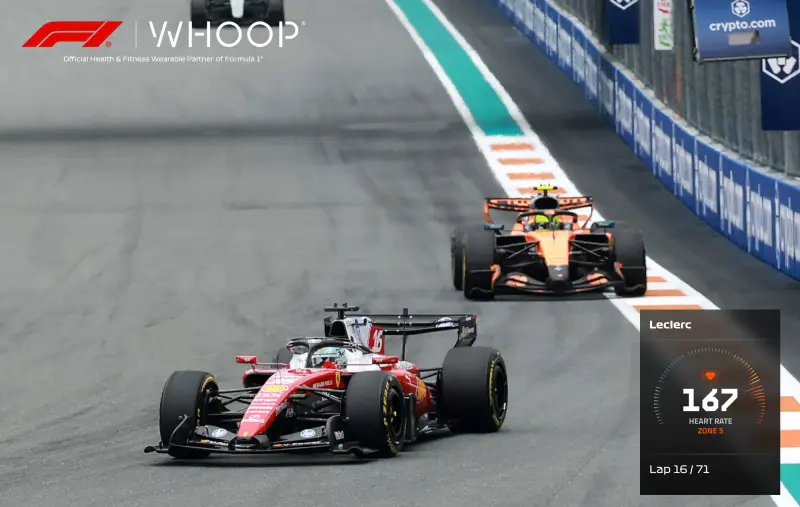
The partnership with wearable technology company Whoop is intended to bring biometric information into F1 coverage. Demonstrations showed how heart-rate data could appear on screen, drawing on Charles Leclerc’s information from the British Grand Prix and Liam Lawson’s from Brazil.
Whoop devices collect several types of biometric information. The material shown so far included the amount of time a driver spent in different heart-rate zones, offering one measure of the physical stress experienced during a race. Whoop has also pointed to sleep and recovery trends, and how those patterns might relate to performance, as possible subjects for broadcast coverage.
The full range of information that might be shown publicly hasn’t been defined. Drivers must agree to the use of their data, making participation a personal choice rather than a requirement for the entire grid. The proposal therefore raises two separate questions: whether drivers want to share these details, and whether viewers can interpret them fairly.
Verstappen draws a privacy line
Verstappen said he doesn’t use wearable devices, including for training. His decision reflects a preference not to be tracked and his confidence in judging his own fatigue. “I don’t like to be tracked and I know when I’m tired,” he said.
He also doesn’t want fans to see this kind of personal information. That objection doesn’t extend to other drivers choosing to participate: Verstappen said they should be free to share their data if they wish. His position is that public access to biometric information isn’t something he wants for himself.
That distinction matters for a broadcast concept built around comparing people under pressure. A driver’s choice to wear a device for personal training doesn’t automatically mean they want the same measurements presented to a large audience. With consent required, F1’s coverage will depend on which drivers opt in and what information they agree to share.
Russell questions the comparisons
Russell said he could understand the appeal from a viewer’s perspective and wasn’t opposed to taking part. His concern is that a live heart-rate figure could invite conclusions that don’t account for normal differences between individuals.
He pointed to age as one factor: a 45-year-old could have a lower heart rate than an 18-year-old, potentially leading viewers to describe the older driver as calmer on the grid. Russell also noted that people of the same age can have different heart rates. A lower reading, then, doesn’t automatically mean a driver is less tense, while a higher one doesn’t establish that someone is struggling.
Russell said he considers his own heart rate to be relatively low, but stressed that other drivers may naturally sit 20 beats per minute higher. The same display could create a flattering impression for one driver and an unfair one for another, even when neither reading tells the full story. His question is whether the graphic would meaningfully improve the broadcast, given the limits of comparing measurements across people.
Leclerc sees personal value
Leclerc supports the idea, while noting that he is a Whoop ambassador. He has used the device for some time to monitor sleep and recovery as well as his measurements in the car. He said the data is useful to him and that he has no particular concern about making it public, though the details of what is shared remain a separate discussion.
Leclerc also said drivers now have access to a device certified by the FIA for use while driving, so they can wear it in the car. That makes it possible to collect information during a race without concealing the equipment. For a driver already using the technology, a broadcast graphic could extend an existing training tool into a way to help viewers follow the physical demands of a race.
Live data has appeared before
F1 coverage has included heart-rate information in the past. Ayrton Senna’s data appeared during the 1994 Brazilian Grand Prix; two years earlier, at the same race, coverage included information from Minardi driver Christian Fittipaldi.
The planned approach would mark the first systematic use of biometric data in live F1 coverage. Its usefulness will depend on how the information is presented: viewers need enough context to understand what a reading measures, and comparisons should account for individual differences. For now, the clearest signal is that driver participation will vary, with privacy preferences and the value each driver finds in tracking their own performance shaping what makes it to the screen.


