Ford Parts Case Raises Questions About Factory Inventory Controls
- [email protected] (Andy Kalmowitz)
- 375 views
Four men face charges over parts allegedly taken from Ford’s Rouge Complex and sold through a Detroit repair shop and eBay. The full value remains unclear.
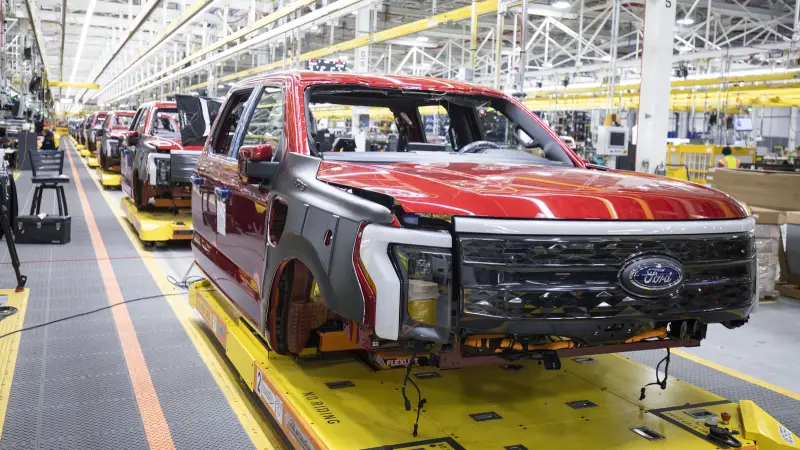
The Ford parts case in Dearborn points to a practical challenge for automakers: factory inventory can be difficult to reconcile when components are diverted over time and later resold through multiple channels. Prosecutors say a Ford employee supplied parts to a Detroit repair shop for six weeks in spring 2025, with some items allegedly sold on eBay. The value listed in the charges exceeds $80,000, while investigators say the full total may be much higher.
Wissam Faraj, 35, worked at Ford’s Rouge Complex, where prosecutors say he took parts and delivered them to Badr Kahil, 63, and Kahil’s sons Aiman, 25, and Firas, 36. The parts reportedly went through Stratec Auto, a Detroit shop, and were sold there or online. The four men face charges connected to the alleged theft. They have not been described here as having been convicted.
The reported arrangement was direct: one of the Kahils would request parts, and Faraj would allegedly obtain and deliver them. That method could make individual transactions look like ordinary parts orders until missing inventory draws attention. Prosecutor Kym Worthy characterized the alleged operation as “lucrative, shameless and absolutely illegal.”
How investigators traced the parts
The inquiry began after employees at the plant noticed that parts were disappearing. Ford’s security team then investigated and notified Dearborn police, who arranged a controlled purchase intended to document another transaction. Investigators also reviewed thousands of texts, emails, photos and videos, along with activity on online accounts, according to FOX 2 Detroit.
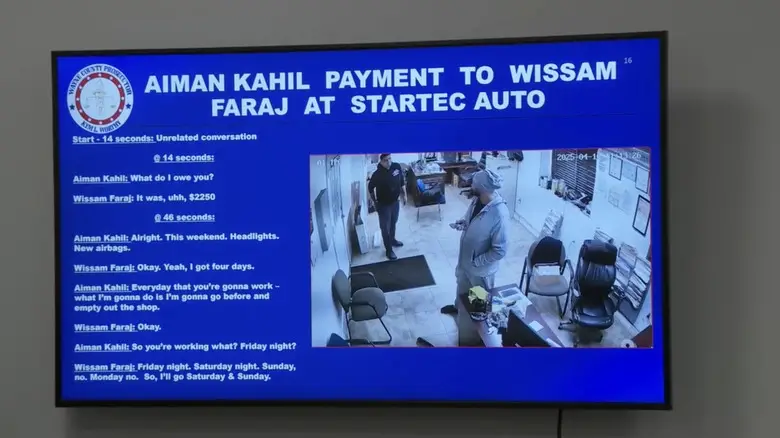
That volume of digital material suggests the case involves more than identifying a single missing shipment. A parts investigation can require matching requests, deliveries and resale listings against factory records, while establishing which components moved through each step. Here, the reported messages included details about at least one order, giving investigators a specific transaction to examine alongside the broader inventory shortfall.
Worthy cited a message from Faraj referring to 128 sets of headlights valued at $22,400. That example alone is a substantial parts order, but it does not establish the final value of everything allegedly taken. Prosecutors say it is difficult to account for every item, and FOX 2 reported that the total could reach into the millions. Worthy described the amount as “a very large amount of money.” The millions figure remains a possibility, rather than a confirmed valuation.
Why the final total is uncertain
Parts can be harder to count than finished vehicles or a single shipment of goods. Different components may leave a facility at different times, and a resale trail can span a repair shop and online listings. If records do not identify every item or sale, investigators may need to compare physical inventory gaps with messages, transactions and other evidence before arriving at a fuller estimate.
That uncertainty matters to buyers and repair businesses because the case concerns new factory parts moving into a local resale market. The available account does not identify the parts beyond the headlights example, explain how many customers bought them, or say whether any parts have been recovered. It also does not give a final accounting of the alleged losses. Those details would help clarify the scale of the operation and whether the transactions affected parts availability for ordinary repairs.
Ford told FOX 2 Detroit that its Global Security team began a review after being notified of suspected theft and unauthorized sales at two manufacturing facilities. The company said it had taken corrective steps to strengthen site security and would continue cooperating with local authorities. Ford also said it would not comment on individual personnel matters. Faraj was fired in 2025.
The reported activity lasted six weeks, with deliveries arriving on Saturday nights, before Ford security detected the missing parts. That timeline leaves open how much of the alleged resale network investigators have been able to document and whether the final valuation will exceed the amount in the charges. For now, the clearest measure is the cited headlight order: 128 sets worth $22,400. The broader figure remains unresolved as the case proceeds.


