1993 Porsche 911 RS America: From Cheaper Than a Carrera 2 to a Collector Favorite
- [email protected] (Chloe Clougher)
- 931 views
The RS America cost less than a Carrera 2 when new. Its low production and stripped-down setup have since helped lift its market benchmark well above the Carrera’s.
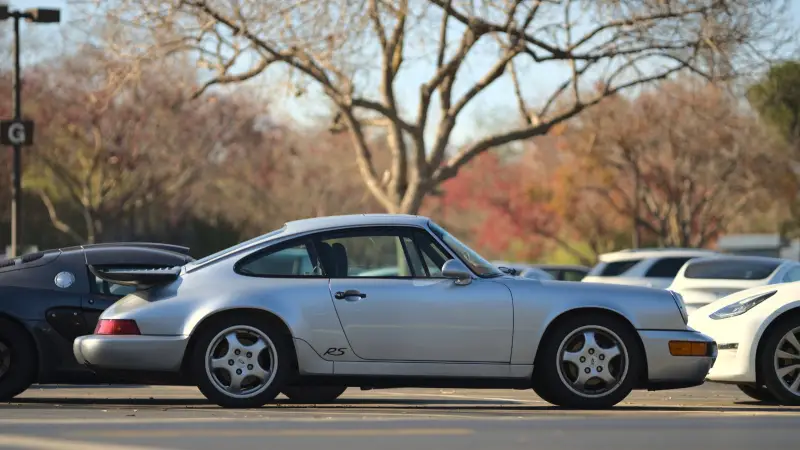
The 1993 Porsche 911 RS America has turned its original price position on its head. It entered the U.S. range below the Carrera 2, but today its market benchmark is substantially higher. The shift reflects what collectors value in a 964: limited production, lower weight and a more focused setup, even when those qualities came with fewer comfort features.
That contrast stands out against today’s 911 prices. The entry Carrera is listed at $137,850, including a $2,350 destination fee. The Carrera T costs $12,500 more, the Carrera S adds $20,700, and the GT3 is priced at $238,150. Porsche’s current performance models can make a focused 911 feel like an expensive proposition. The RS America’s story shows that Porsche once placed a lightweight special at the bottom of the range instead.
A lower price, with a narrower brief
For the 1993 model year, the RS America cost $55,525 including destination, equivalent to $128,411 today. The Carrera 2 listed for $65,715, or $151,978 in today’s dollars. That made the RS America the least expensive 911 grade, despite its track-oriented equipment.
The price gap came with clear tradeoffs. The RS America had no rear seats, less sound deadening and no power steering. It used a fixed ducktail spoiler instead of the Carrera 2’s motorized rear spoiler, and its wheel and suspension setup favored sharper driving. Depending on factory options, it weighed about 80 pounds less. Both models used the same 3.6-liter engine, so the RS America’s appeal wasn’t extra power. It was a simpler, lighter package built around the familiar Carrera 2 mechanical base.
Production rarity changed the comparison
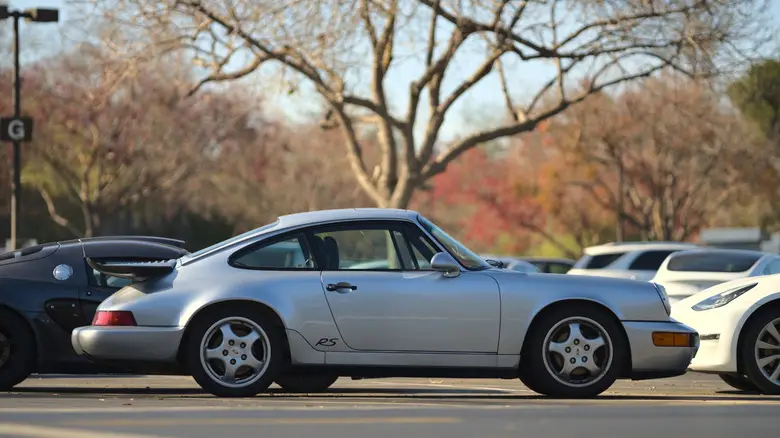
The RS America was Porsche’s U.S. answer to demand for a more performance-focused 964. The company didn’t sell the European-market 964 Carrera RS in the United States; instead, it gave American buyers a distinct lightweight model. Porsche built 701 RS Americas over two years, a small run that now helps set the car apart from the broader Carrera 2 population.
Classic.com places the RS America’s market benchmark at almost $175,000. Particularly desirable examples are listed above $300,000. Those figures put the model well beyond its original $55,525 sticker price, even after accounting for inflation. The benchmark for a 1993 911 is reported at $2.8 million, illustrating how exceptional valuations can rise far beyond the RS America’s already elevated market level.
The Carrera 2 presents a different picture. Classic.com’s benchmark for a 1993 manual coupe is $112,993, while Targa and Cabriolet versions sit at $93,750. These are market benchmarks, not fixed asking prices, and individual cars can vary. Still, the gap is striking: the RS America began as the cheaper model, yet its current benchmark is about $62,000 above that of a manual Carrera 2 coupe.
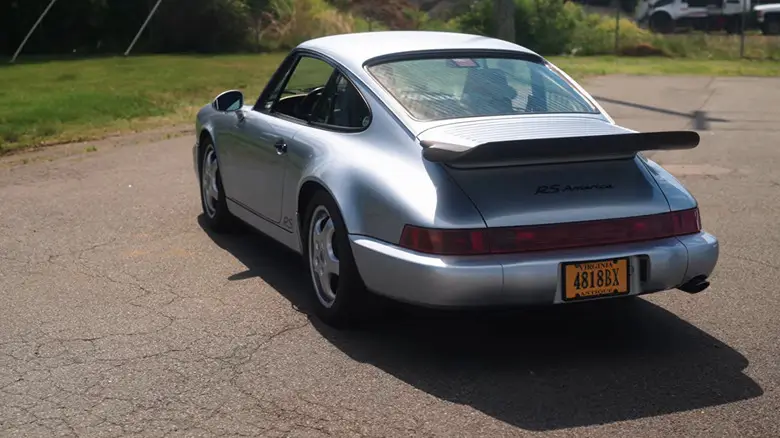 Image: CDOC Historics and CDOC92/YouTube
Performance equipment without more power
For 1993, the RS America’s 3.6-liter engine produced 247 horsepower and 228 pound-feet of torque. It paired with the Carrera 2’s G50 five-speed manual transmission. A limited-slip differential was the only performance-oriented option listed for buyers, keeping the specification focused rather than offering a long menu of upgrades.
Porsche added Brembo brake calipers, an M030 sports suspension package, powered Recaro seats and 17-inch alloy wheels. Those parts gave the RS America a stronger performance identity without changing its basic engine output. The car’s character came from its reduced equipment and chassis setup, not a higher power figure.
That distinction matters for anyone comparing it with a conventional Carrera 2. The Carrera offered power steering, door bins, rear seats and a motorized spoiler, features that made it more accommodating for everyday use. The RS America asked buyers to give up some convenience for a more direct, pared-back 911. Its original lower price reflected that narrower remit; collector demand has since put greater weight on the model’s rarity and specification.
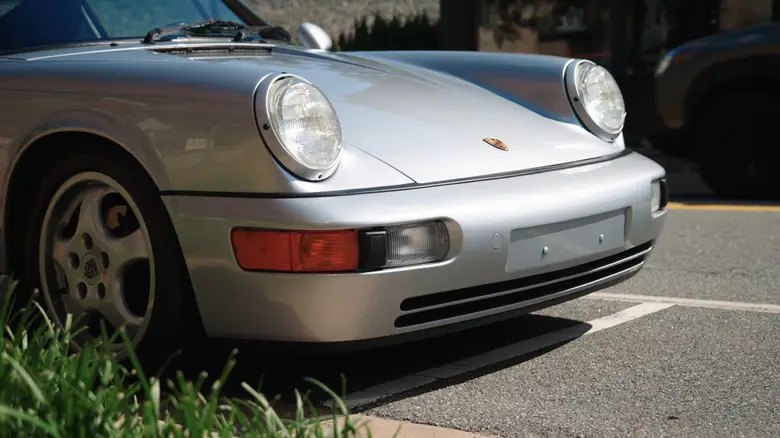 Image: CDOC Historics and CDOC92/YouTube
A gap in the U.S. lightweight lineup
After Porsche ended RS America production, North American buyers missed out on the lightweight 993 Carrera RS and GT2 offered in other markets. A comparable factory-built special didn’t return to U.S. shores until the 996.2 GT3, which debuted for the 2004 model year. That gap gives the RS America a distinct place in the sequence of U.S.-market performance 911s.
For buyers weighing one today, its appeal comes with a practical compromise: the same features that help distinguish it from a Carrera 2 can make it less comfortable as a regular-use car. The rear-seat delete, reduced sound insulation and lack of power steering are part of the model’s identity, while its six-figure benchmark puts condition and specification firmly in focus. The central reversal is clear: the RS America’s original discount has disappeared, and the traits that once made it less equipped now help make it more sought after.



