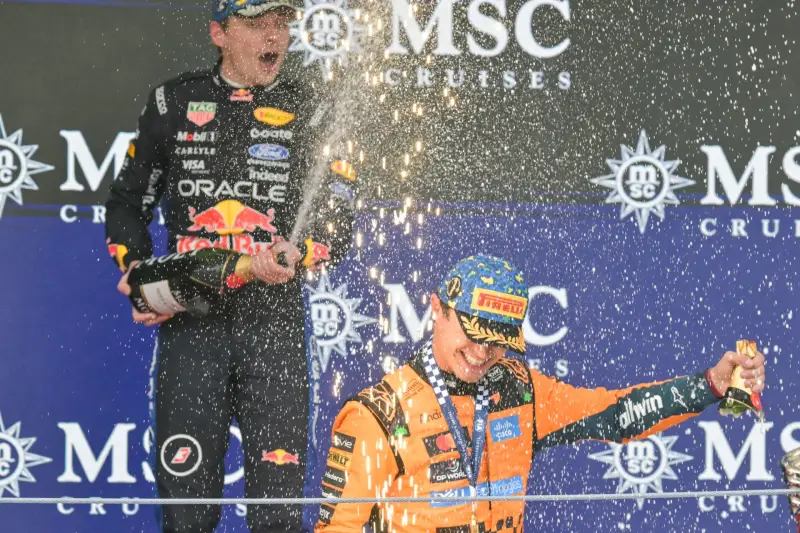
Lando Norris’ 2026 Sao Paulo GP Pace Left Max Verstappen With a Tough Challenge
- Kyle Archer
- 559 views
Jolyon Palmer says Norris had the pace to beat Verstappen in Brazil even if the Red Bull driver had started near the front.
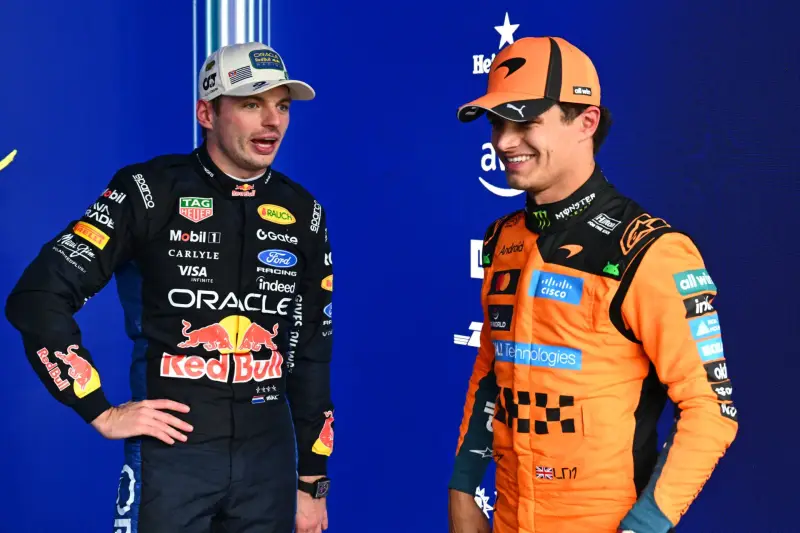
Lando Norris’ win at Interlagos was built on more than a recovery from a poor start. Jolyon Palmer’s assessment is that the McLaren driver had enough pace to beat Max Verstappen even if the Red Bull driver had begun near the front, a view supported by Norris’ control of the race once he reached the lead. Verstappen’s charge from 21st to second was remarkable, but it didn’t put him within reach of the winner.
Norris took his third victory of the season in round 20 of 23, after Mercedes driver Andrea Kimi Antonelli launched from second and took the lead. Norris reacted quickly to the start, yet Antonelli got away better. Liam Lawson also moved ahead of the McLaren in the Senna S, leaving Norris to recover places before he could focus on the race leader.
It took until lap six of 71 for Norris to pass Lawson. Antonelli had already built a 5.5-second advantage, and continued to extend it. Norris then pitted for slick tyres on lap 16, one lap before Antonelli, bringing the gap between them down. By lap 20, Norris was close behind when Antonelli spun out of the lead amid an imbalance in tyre temperatures.
Norris converted pace into control
From there, Norris had no serious challenge from behind. He finished with a 14.602-second lead, despite changing conditions and the shifting tyre temperatures and grip that affected drivers around him. Palmer’s point is that Norris had the measure of the field after losing ground at the start, and kept the car on track while managing the changing conditions.
That combination matters at Interlagos. A fast lap alone doesn’t settle a race when grip and balance can change from one lap to the next, and a driver who has to recover from a poor launch needs both pace and clean execution. Norris first regained position, then used the earlier stop to close on Antonelli. When the Mercedes driver spun, Norris was in place to take over the lead and build a margin.
Palmer said neither Isack Hadjar nor Verstappen could match Norris’ pace. He described Verstappen’s climb to second as another superb comeback, but questioned whether the Red Bull driver could have finished higher even with a front-row start. In Palmer’s reading, Verstappen was also no match for Norris once he had cleared Antonelli.
That is praise for Norris without diminishing Verstappen’s drive. The Red Bull driver had to work through the field after starting last, and Palmer called his performance phenomenal. Verstappen’s opening stint was particularly strong; later, he reported unusual handling that made the car difficult to drive. He had described extreme oversteer in the high-speed turns, a complaint that helps explain why reaching second did not translate into a fight for the win.
Verstappen’s recovery had its own limits
Verstappen started from 21st after Red Bull changed his entire power unit ahead of qualifying. He also blamed himself for a slow getaway, saying he had held the clutch paddle in the wrong position and therefore struggled to gain places on the opening lap. Once the race developed, he worked his way through the order and made use of the Red Bull’s greater downforce in the conditions.
Even Red Bull’s simulations had not indicated that a second-place finish was likely. The result was a striking recovery, but the final gap to Norris tells a different part of the story: Verstappen reached the front group without finding a pace advantage over the McLaren. His later task was to keep Hadjar behind after Red Bull instructed his teammate to let him through.
There’s a limit to what the result can prove about a hypothetical start from second. Starting near the front would have changed Verstappen’s opening laps, his traffic, and the sequence of decisions around the slick-tyre stops. He might have been able to defend from Norris, or the contest could have turned on which driver pitted first. The race as run can’t answer that counterfactual.
Still, Palmer’s argument has a clear basis in what happened on track: Norris erased Antonelli’s early advantage, took the lead after the Mercedes driver spun, and built a margin that Verstappen never threatened. The Red Bull driver’s drive from last to second showed his racecraft and recovery pace; Norris’ win showed how quickly he could turn a difficult start into control of the race.
For McLaren, Interlagos offered a strong result with three rounds remaining. For Verstappen, second place capped an exceptional climb through the field but left the central question open: even with a better starting position, could he have matched Norris over a full race distance? Palmer’s answer is doubtful, and Norris’ pace after the opening laps gives that view weight.