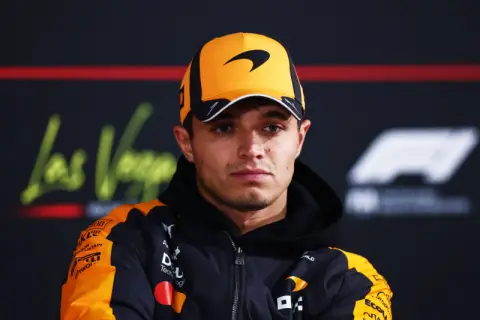
Andrea Stella Sees Lando Norris as McLaren’s Podium Benchmark After Brazil
- Kyle Archer
- 864 views
Norris won in Brazil by 14.602 seconds, while Piastri finished sixth. Stella’s remarks point to a widening gap in McLaren’s recent results.
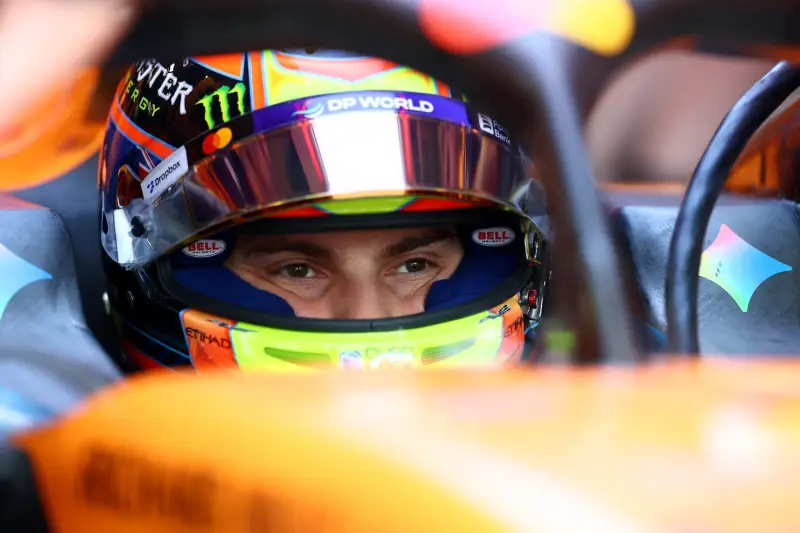
Andrea Stella’s post-race assessment in Brazil put Lando Norris at the center of McLaren’s recent progress. After Norris won the Sao Paulo Grand Prix and Oscar Piastri finished sixth, the team principal singled out races where Norris might have fought for more, while offering no similar example for Piastri. That difference in emphasis is notable, though it doesn’t by itself prove Stella has lost confidence in the Australian.
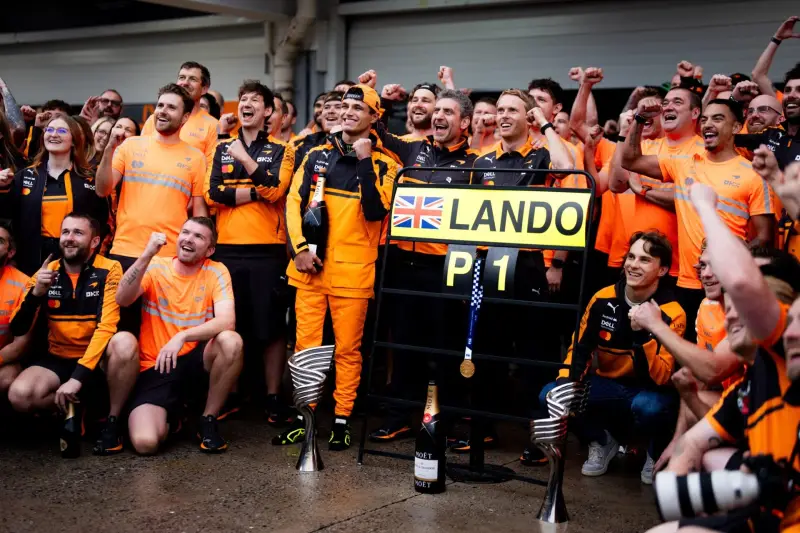
The result at Interlagos gave the contrast some weight. Norris started from pole and won by 14.602 seconds over Max Verstappen. Piastri qualified 12th and crossed the line 56.475 seconds after his teammate. Rain shaped both weekends within the weekend: Norris adapted well in qualifying and the race, while Piastri’s difficulties in changeable conditions left him with ground to recover.
Brazil exposed a gap in execution
Piastri’s qualifying problem centered on the timing of his change from full wet tyres to intermediates in Q2. He made the switch too late to give himself enough time to adjust his driving to the available grip. The race then moved between wet and drying conditions, but Piastri couldn’t turn that changing track into a recovery drive comparable to Norris’s win.
Conditions matter when comparing the two drivers’ results, and one difficult weekend doesn’t settle a season-long judgment. Still, the scale of the gap at Interlagos made the contrast hard to miss: Norris took his third win of the season and fourth pole, while Piastri left Brazil with a sixth-place finish after starting outside the top ten.
Stella also credited McLaren’s upgraded front wing with helping Norris’s performance. McLaren was the only team to introduce aerodynamic updates in Brazil, and Stella said more parts are due for both drivers at the Las Vegas Grand Prix. The upgrades therefore matter beyond one result: the team is testing whether its development work can keep producing performance on track.
Stella’s examples favor Norris
Stella described qualifying as a factor in McLaren’s earlier missed opportunities. Speaking to RACER, he said Norris starting near the front in Austin or Mexico could have put him in a fight for the podium. Norris finished fifth at both events, after qualifying eighth in Austin and sixth in Mexico City.
That’s a specific case for Norris: Stella connected his starting positions with the possibility of stronger finishes. He didn’t make the same argument for Piastri. The omission may reflect how the team principal sees their recent form, but the available remarks don’t establish whether he has privately changed his view of Piastri’s potential.
Stella traced the car’s progress to upgrades introduced after the Hungarian Grand Prix. He said McLaren should have won in Madrid, before rivals’ own updates shifted the competitive picture. The newer package, he added, helped put the team back in a position to win, with Brazil’s wet conditions also contributing. The parts planned for Las Vegas are intended to build on that work and form a foundation for next year’s car.
Piastri’s earlier results add context
Piastri has reached the podium twice this season: second in Japan and third in Miami. He was also in contention for the lead in Hungary before losing time behind Carlos Sainz’s Williams and retiring with a gearbox failure while running second. In Japan, a safety car brought out after Oliver Bearman’s Haas crash cost him the chance to pursue a win.
Those results complicate any simple reading of his recent form. Piastri has shown he can contend near the front, but he hasn’t returned to the podium since Hungary. Norris, meanwhile, won in Hungary, then added victories in the Netherlands and Brazil. Stella’s reference to a possible Spanish Grand Prix win for Norris also points to how closely he is tracking the Briton’s chances, even when the result went elsewhere: a virtual safety car helped Mercedes driver Andrea Kimi Antonelli take the lead.
The practical question for McLaren is whether its latest development work can make the car easier to exploit across different conditions, while giving both drivers a platform to convert qualifying pace into strong finishes. The MCL40 has been described as tricky to drive even when competitive, and Piastri’s recent difficulty adapting to it adds another layer to the performance gap.
Las Vegas will offer the next indication, with further upgrades planned for both cars. For now, Brazil leaves Norris as McLaren’s clearest recent reference for podium form. Piastri’s earlier podiums and near-misses show why the picture isn’t settled, but he’ll need stronger qualifying and cleaner execution to make Stella’s next assessment about both drivers.