Toyota GR GT3 Nears Wider Racing Debut After Motegi Test
- Jamie Klein
- 310 views
Toyota is targeting FIA homologation soon after the GR GT3’s Motegi debut, with Daytona testing and programs in several series among the next steps.
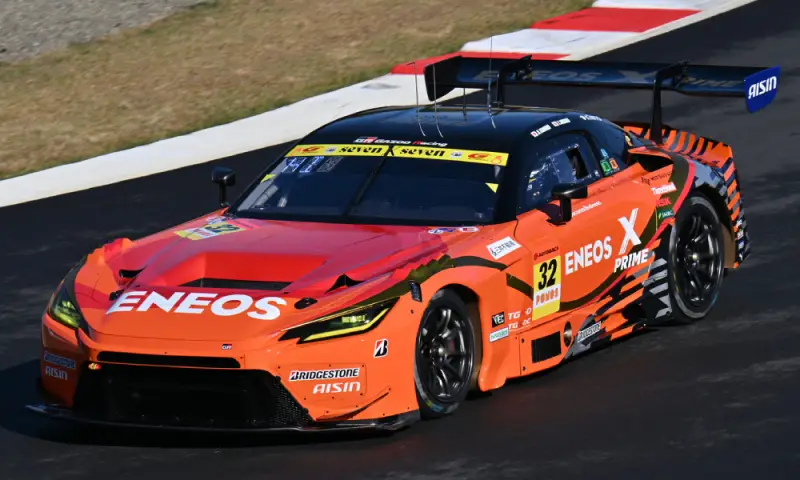
Photo: SUPER GT
Toyota’s first competitive outing with the GR GT3 was less about results than learning what the new car needs before a broader racing rollout. The concept made its debut at SUPER GT’s Motegi finale, and Toyota now expects FIA homologation in the “near future.” That milestone would clear a path toward the next phase of testing and competition, though the timing remains uncertain.
Rookie Racing entered the car in GT300 with Hiroaki Ishiura and Tokiya Suzuki sharing the drive. They finished 19th in the first race and 24th in the second, which included multiple penalties. The car wasn’t eligible to score points: it took part with special permission from series organizer GTA because it had not yet been homologated.
Those results tell only part of the story. Toyota global motorsport director Masaya Kaji said the priority at Motegi was finding issues that might not emerge as clearly in testing. The team also chose the venue because development had been centered in Japan and Rookie Racing was equipped to operate the car. A tire test on the Monday after the second race added another chance to gather information.
What Motegi revealed
The outing exposed a problem with the car’s reported top speed during Friday practice. Kaji said an incorrectly correlated sensor was the main cause. That sort of fault matters during development because teams rely on sensor readings to understand how a car is performing. If a reading doesn’t match the car’s actual behavior, it can send engineers toward the wrong explanation. Finding the issue in a test or limited race program gives them a chance to correct it before the car faces a fuller competitive schedule.
Kaji described the car’s performance level as acceptable, while stressing that outright pace wasn’t the objective. The team wasn’t trying to run as quickly as possible while a title contest was underway. That makes Motegi a useful first check of the package and its operation, but not a clear guide to how the GR GT3 will compare with established GT3 rivals once it races for results.
The tire test was another practical benefit. A new race car has to work with its tires across different conditions and over repeated running, not just produce a promising lap. Motegi gave Toyota a chance to continue that work immediately after the race weekend. The source doesn’t give tire data or describe changes made afterward, so the test’s specific findings remain unknown.
Homologation and the next test
Toyota’s next target is to complete homologation in time for an IMSA-sanctioned test at Daytona International Speedway on Dec. 10–11. Kaji said the process was still underway, but that it looked on track and wasn’t far from completion. He didn’t give a date, so participation at Daytona remains a target rather than a confirmed step.
That test would fit the wider development picture: the GR GT3 has also run at Sebring in recent days, and Toyota has tested the car extensively on the Nürburgring Nordschleife this year. The Nordschleife running points toward a possible Nürburgring 24 program, while the Sebring mileage adds to signs that a WeatherTech Championship effort is being considered. Neither prospect comes with confirmed production quantities or a published entry plan in the details available here.
The car is expected to appear next year in several categories where Toyota has been active, but how many customer cars will be ready for a first full season is not yet known. That number will shape how widely the GR GT3 can be deployed, including across Toyota-affiliated teams in Japan. A broad rollout depends on more than the car’s pace: teams also need cars available to prepare, operate and support through a season.
Teams looking toward the GR GT3
Rookie Racing is the first Toyota-affiliated GT300 team to race the new car. K-tunes Racing could be next in line for an allocation. The Okayama Toyopet-owned outfit has fielded the Lexus RC F GT3 since its first season in 2018 and has previously said it wants to switch to the GR GT3 as soon as possible. A move would give the team a newer Toyota-based option, although no allocation or switch date has been confirmed.
Apr has also been linked with the possibility of running a GR GT3 in Super Taikyu. Its two-car GT300 program with the LC500h and GR86 GT is expected to continue unchanged, leaving the potential Super Taikyu entry as a separate prospect rather than a replacement for its existing SUPER GT cars.
Interest extends beyond Japan. Akkodis ASP boss Jerome Policand has reaffirmed the team’s aim of racing the GR GT3 in the FIA World Endurance Championship next year. That plan, along with the possible Daytona test and the Nordschleife and Sebring running, shows why homologation is the immediate marker to watch. The Motegi debut supplied an early operational check; the next steps will show how quickly Toyota can turn development mileage into a car that teams can run across a full season.
Toyota is expected to keep using the GR Supra in SUPER GT’s GT500 class next season, even though the equivalent road car has gone out of production. For now, the GR GT3’s status is different: it has raced once in concept form, but its availability, customer numbers and final calendar remain open questions. Homologation and the Daytona test will provide the clearest early signs of how soon the new GT3 can move from development work to a wider grid presence.


