2027 Honda Passport TrailSport Gets the Ground Clearance It Needed
- Zach Butler
- 622 views
Honda raises the 2027 Passport TrailSport to 9.65 inches of ground clearance. Here's what the fix changes off-road and what it means for 2026 owners.
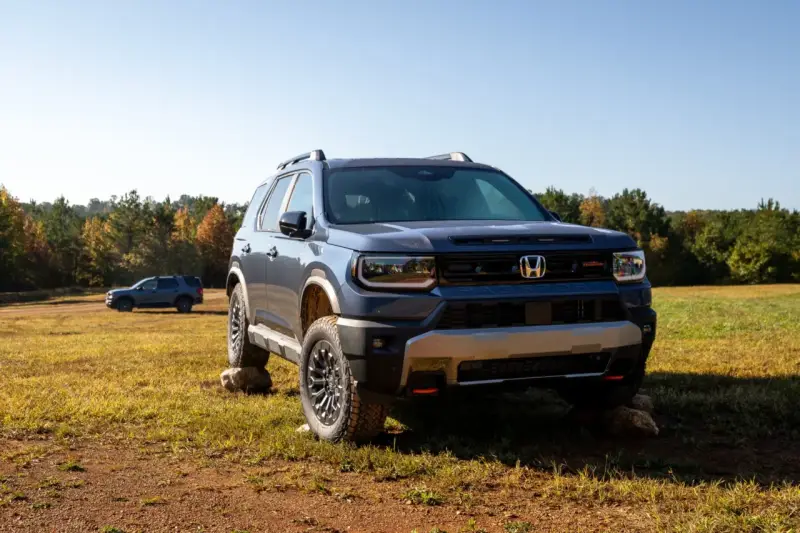
Honda's decision to split the Passport from the three-row Pilot with the 2026 redesign paid off fast. Sales climbed 70% for calendar year 2025 and have kept rising through this year. The trade-off showed up on the trail, though. The TrailSport's 8.3 inches of ground clearance was the one complaint that kept coming up in reviewer feedback. Honda has now addressed it, and the real question is whether the fix is enough to make the TrailSport a genuine adventure SUV.
What stayed the same, and who it affects
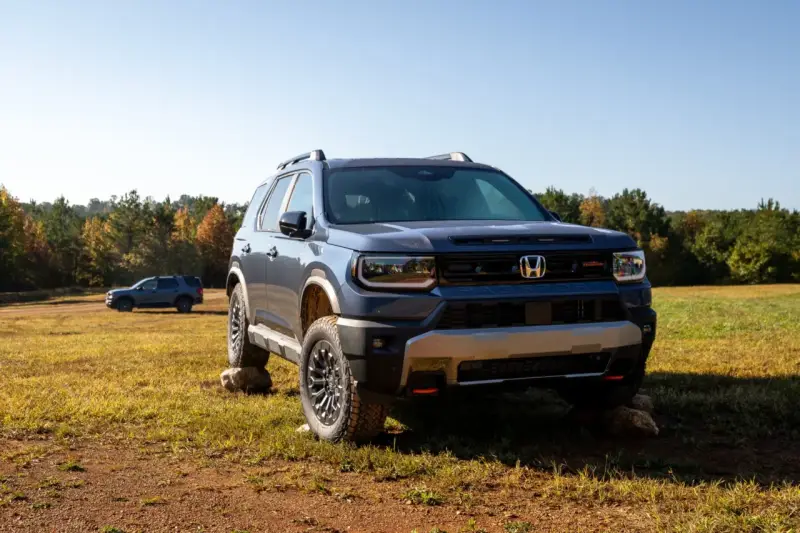
Start with what hasn't changed. If you bought the base RTL, the 2027 is essentially the 2026 with a higher price tag. Base pricing rose $345 to $46,790 including destination, and that's the extent of it. Honda says the RTL accounts for roughly 20% of buyers, which means the other 80% went for the TrailSport and will see the bulk of the changes.
The suspension rework is the real story
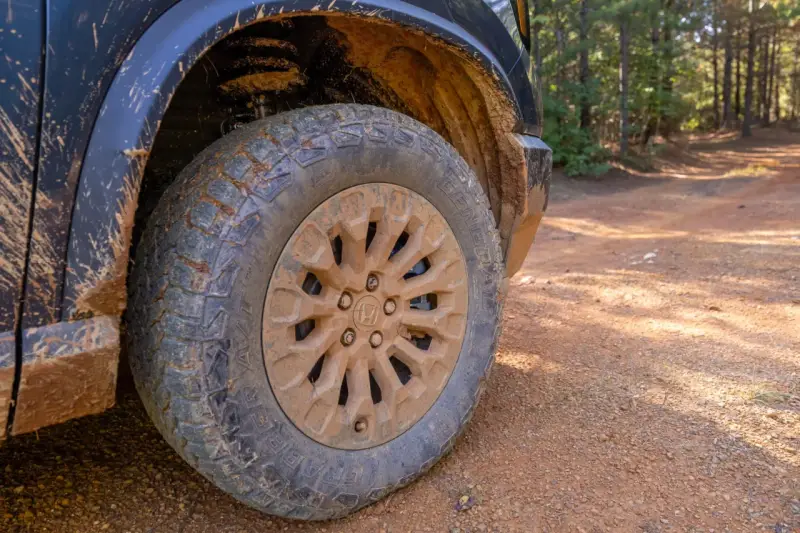
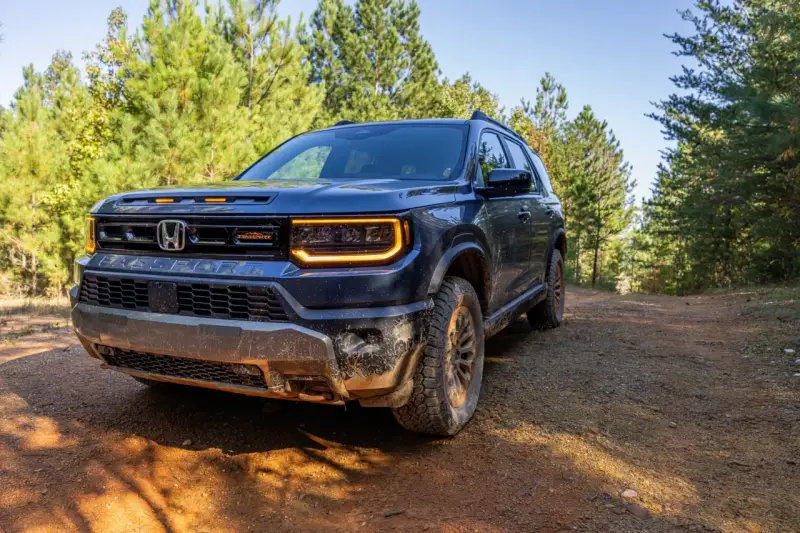
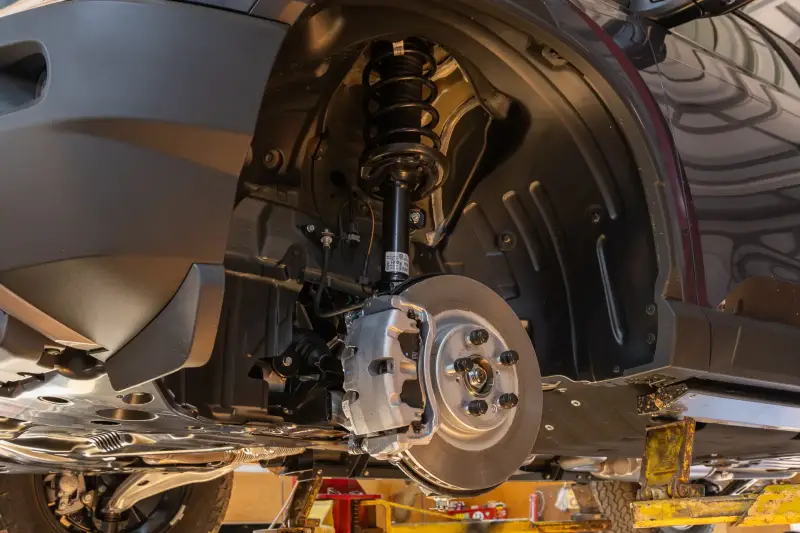
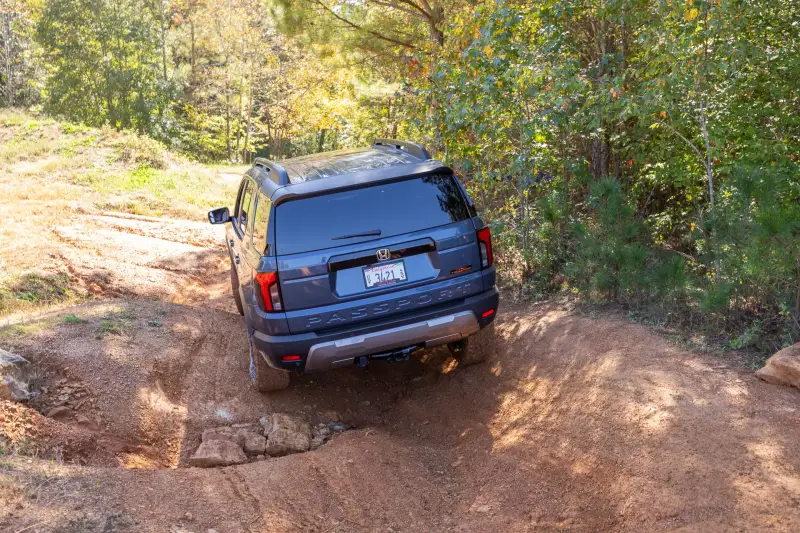
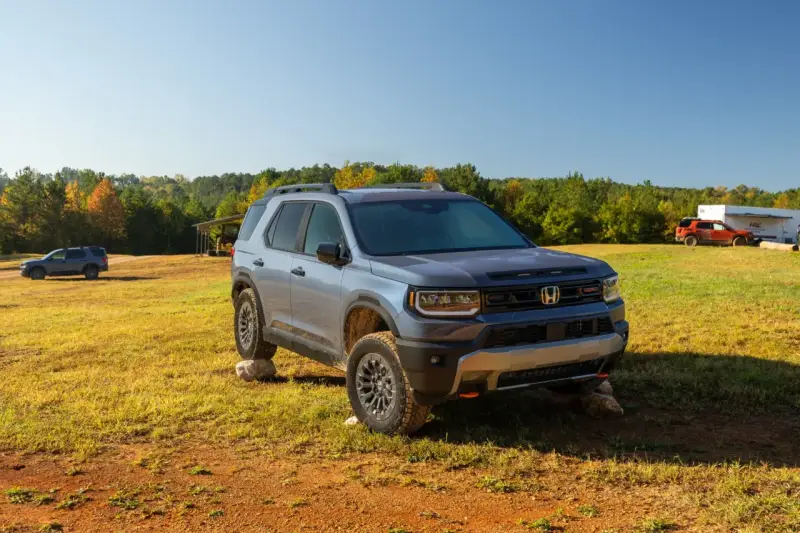
Honda listened to feedback from customers and journalists, and the numbers show it took the complaint seriously. Ground clearance rises to 9.65 inches, a 1.38-inch gain over the first model year. Roughly 70% of the suspension components are new, from shocks and springs to control arms, stabilizer bars and steering knuckles. Engineers also redesigned the front subframe and driveshafts to handle the extra ride height and wheel travel.
Clearance is only part of the off-road equation. On paper, approach angle goes to 25 degrees, up 2 degrees, and breakover improves to 23 degrees, up 3. Departure angle also improved, though the figures I have don't give a number for it. Breakover matters most in real terrain. It governs whether the middle of the vehicle hangs up on a crest or a ditch edge, and it's where the 2026 model was most likely to scrape its underbody.
Smaller changes, and where they land
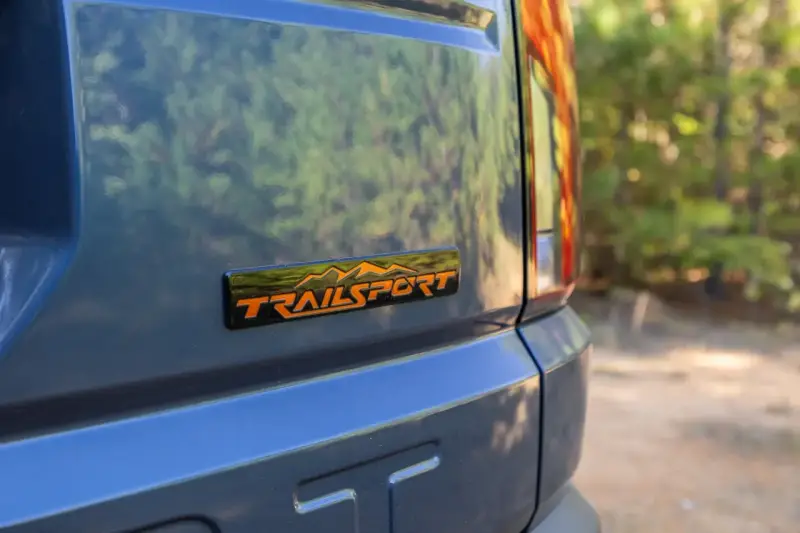
The rest of the update leans toward feature and quality-of-life items. A new hood scoop adds amber lights, and the more pronounced flared fenders are the clearest visual tell apart from the taller stance. There's also a new Smoke Blue Pearl paint option.
Two equipment moves matter more for daily use. The TrailWatch camera system now trickles down to the base TrailSport, so you no longer need the pricier Elite to get it, and the front camera gets a washer nozzle to keep the lens clean on muddy trails. The base TrailSport also picks up a heated steering wheel as standard. Pricing across the lineup barely moves from last year despite all of this, which is a point in Honda's favor.
Testing it on real terrain
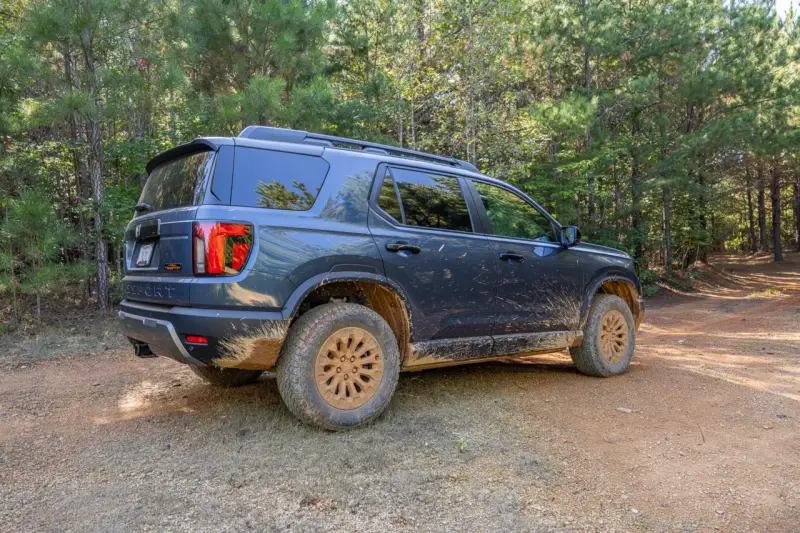
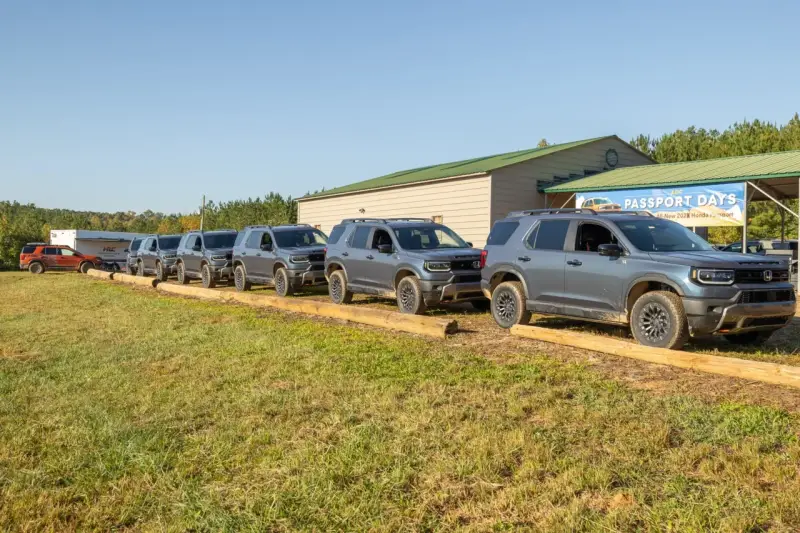
Honda brought a dozen or so reviewers to a multi-day off-road workshop at Overland Experts' 200-acre facility in North Carolina. The course went well beyond a graded dirt road with a few washouts. There were more steep climbs, tight ditches and muddy crossings, often stacked together, than I expected. Honda uses this site often, and the Passport TrailSport got through it, but the obstacles did press against that 9.65 inches of clearance and the steel skid plates protecting the engine and fuel tank.
That's the key difference from the old truck. Last year's model frequently grazed its underbelly on the skid plates and the accessory HPD rock rails. This year's version still needs care on the worst obstacles, but it doesn't punish you for every rut. The rock rails did come in handy on both of our drives.
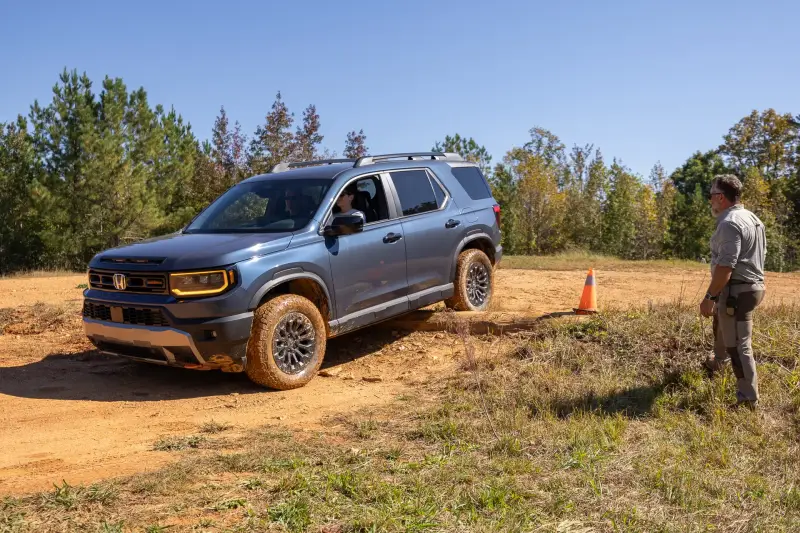
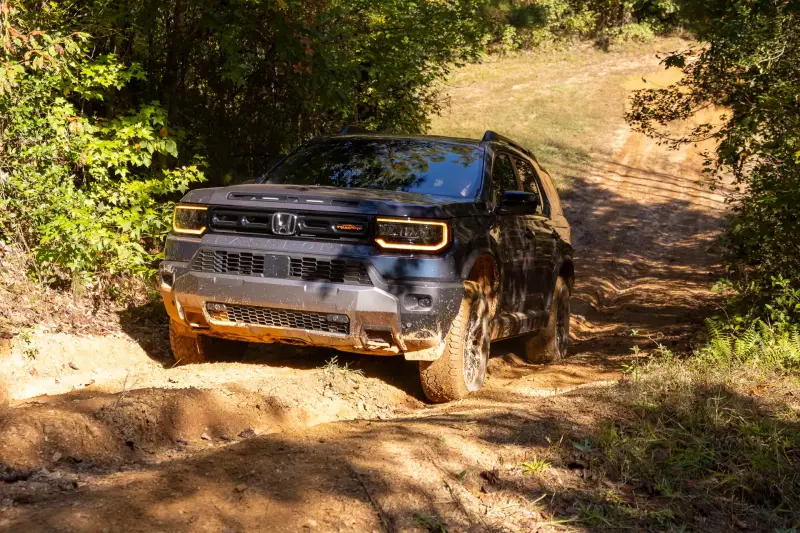
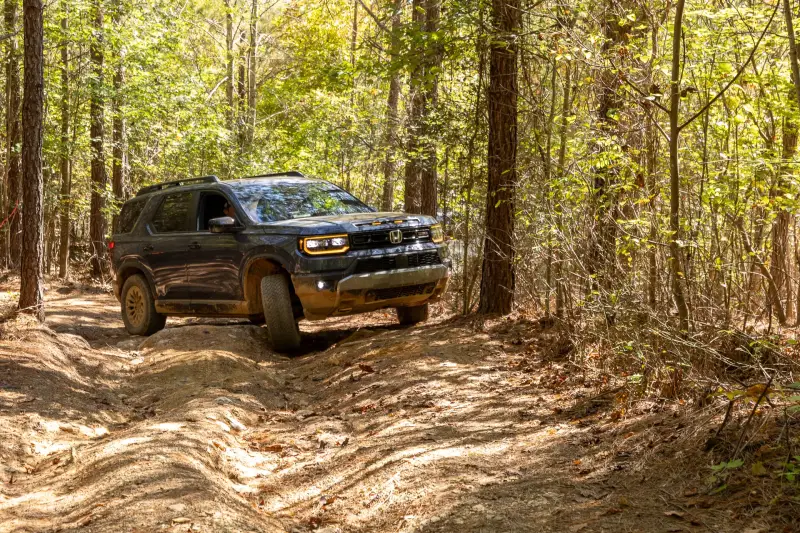
Honda designed the Passport to sit between capable and practical. You get enough articulation and clearance for the kind of forest roads, snowy passes and gravel detours most owners will actually take. You give up what a body-on-frame rig like a Jeep Wrangler or Ford Bronco offers in extreme terrain. That's a deliberate trade, not a shortcoming.
Where the drivetrain runs out of road
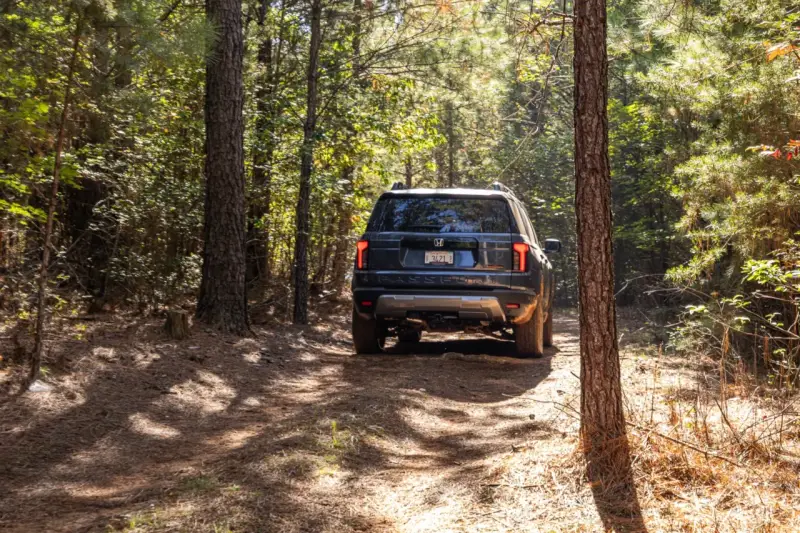
The TrailSport keeps the second-generation i-VTM4 all-wheel-drive system, a clear step up from the 2019-2025 unit. A twin-clutch unit on the rear axle can send up to 70% of torque to the rear, then route all of that torque to either rear wheel. In Trail mode, you can feel the system shift power to the tire that's still on the ground when a rear wheel lifts over an obstacle.
That said, the system is no substitute for mechanical gearing. The Passport has no low-range transfer case and no selectable locking differentials. Software and your own throttle control and momentum do the work on the trickiest sections. The system is remarkably good for what it is, but the limits are real if you push into serious rock crawling.
Inside the cabin and cargo area
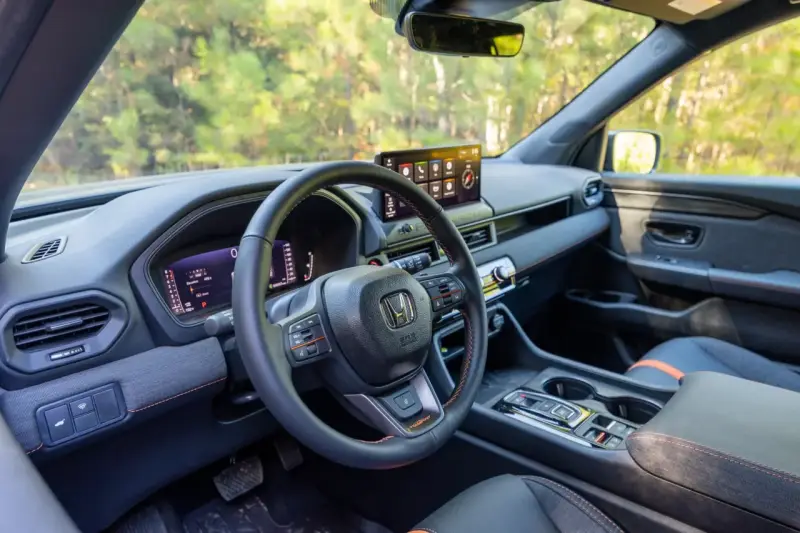
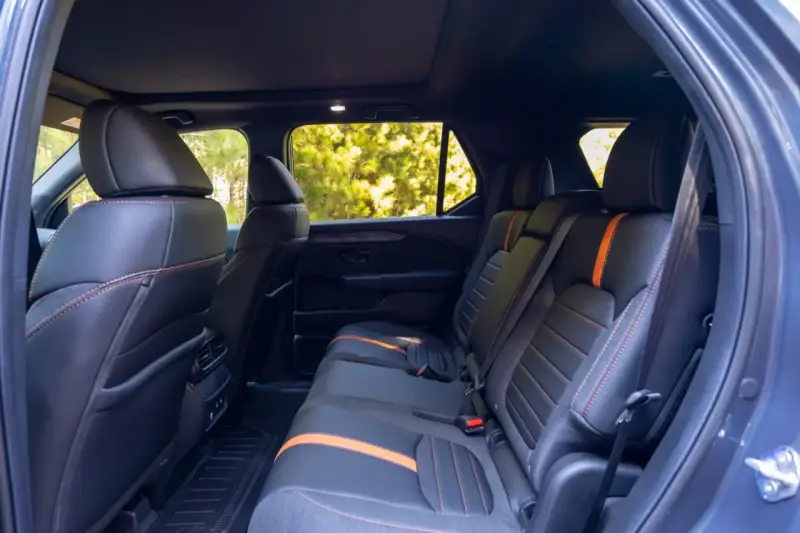
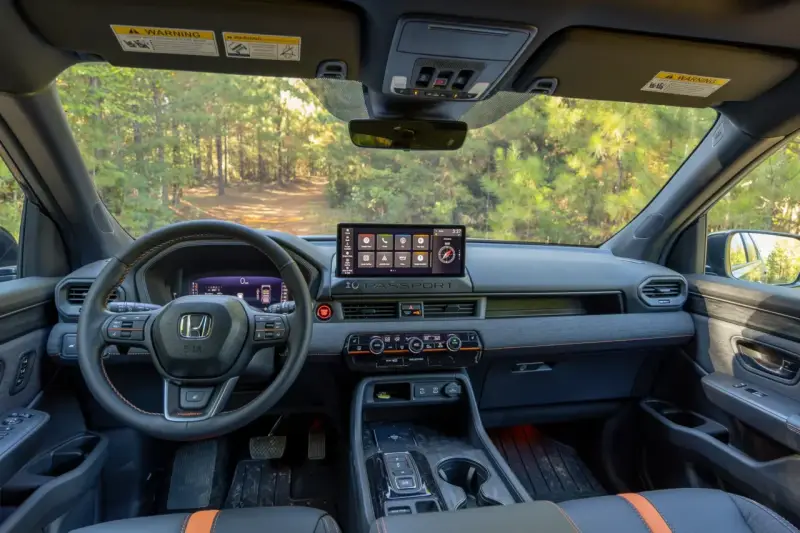
The interior didn't change in any fundamental way, and that's fine since the redesign is still fresh. The cabin feels solid and well built. The essentials are all there: heated seats and steering wheel, a 12.3-inch touchscreen, a 10.2-inch digital cluster, several USB-C ports, dual-zone climate control and seven drive modes. The wireless charger isn't Qi2 and won't snap to a MagSafe-compatible phone. Elite trims add ventilated seats, and the Blackout package adds styling touches.
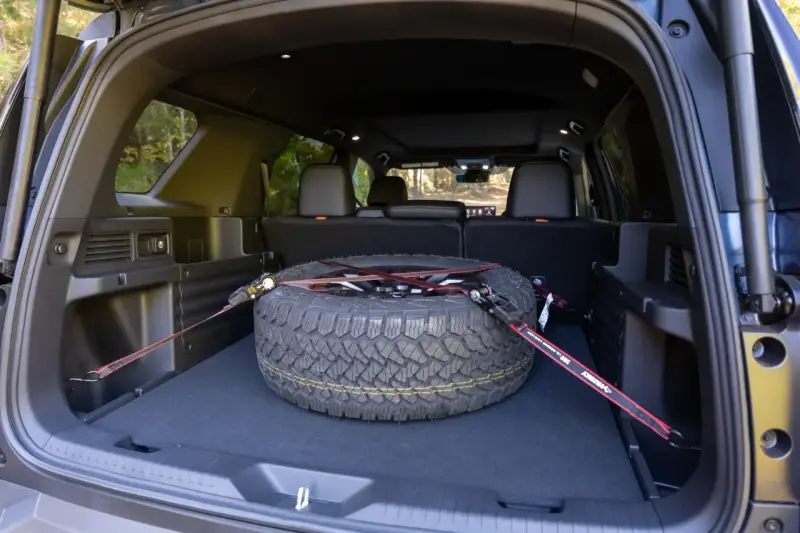
Cargo space is practical. You get 44 cubic feet behind the seats and 83.8 cubic feet with them folded. A full-size spare fits in the rear compartment. Honda's demo vehicles carried spares strapped to the floor, but the automaker also offers a setup that stands the tire upright along the side, similar to an old Jeep Cherokee.
Verdict: worth a look, with caveats for current owners
This isn't a ground-up rethink, and the first model year wasn't bad. But the extra clearance and better angles make the TrailSport a far more convincing choice for buyers. If you're shopping in the $50,000 to $55,000 range and want one vehicle that handles weekend trails, ski routes and daily commuting, the TrailSport or TrailSport Elite deserves a close look. It won't take you across the Rubicon, and it isn't meant to.
On the road, the 2027 drives much like the old model. It still uses a 285-horsepower 3.5-liter V6 and a 10-speed automatic. Fuel economy is the weak spot. Expect around 20 mpg on a good day. The Passport is no speed machine, but it's perfectly relaxed on the highway, and the higher seating position is the main thing you'll notice behind the wheel.
The harder question is for owners who already bought a 2026 TrailSport. Honda's upgrades can't be retrofitted in any cost-effective way, so the fix is simply a new vehicle. Not everyone can or wants to do that, and some owners will feel they got the short end. If your current Passport handles your terrain, I wouldn't trade it in for a 2027 on a whim. If you regularly hit deep snow or rutted trails where that extra 1.38 inches matters, the upgrade starts to make a lot more sense.


