BMW M3 Electric Prototype: 850bhp, Four Motors and More Than 400 Miles of Range
- Jonas Uhlig
- 713 views
BMW’s electric M3 pairs four motors and nearly 850bhp with simulated gear changes. Its targeted range is just over 400 miles.
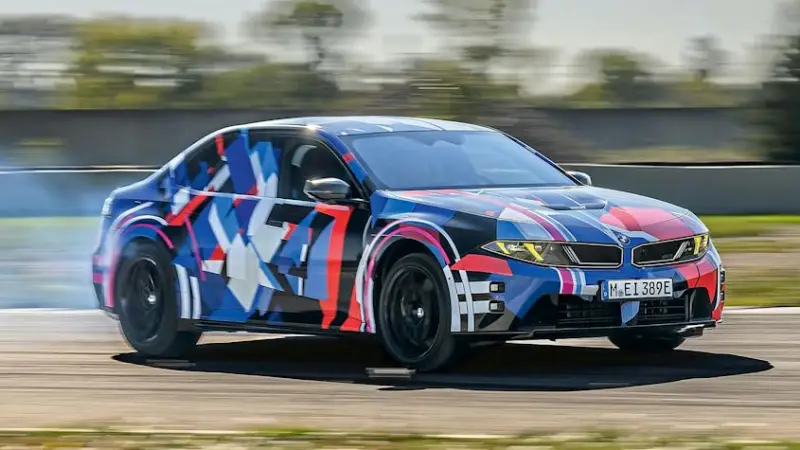
BMW’s electric M3 is being developed to deliver more than straight-line speed. Its four-motor layout, simulated gear changes and extensive electronic control are intended to give drivers familiar performance cues in a high-powered electric car. A prototype driven on a handling course showed strong acceleration and adjustable responses, while leaving key questions about weight, final specifications and road manners unanswered.
Four motors and a targeted range above 400 miles
The prototype has almost 850bhp and 1,200Nm of torque, with an electric motor at each wheel. That configuration gives BMW control over how drive reaches each corner, a central part of the car’s handling approach. The battery has a stated capacity of 100kWh, and BMW is targeting a WLTP range of just over 400 miles.
That range is a target rather than a confirmed production figure, and real-world distance will depend on conditions and how the car is driven. The prototype’s performance focus also makes the eventual balance between pace and efficiency worth watching. The source figures provide no charging speed or charging time, so they don’t yet show how practical the M3 Electric will be on longer journeys.
BMW’s forthcoming electric 3 Series performance car is planned to arrive ahead of a petrol-powered six-cylinder counterpart, with both described as future high-performance options in the 3 Series range. The electric model is scheduled for early next year, while BMW plans to reveal more when the covers come off very early in 2027. Those timings point to a staged rollout, though the precise order and market availability remain to be confirmed.
Simulated shifts add a familiar performance cue
On the handling course, acceleration was immediately forceful, but BMW has also built in interruptions to the power delivery that it calls “stages.” Pulling a paddle triggers a simulated jolt, giving the driver a shift-like sensation despite the electric powertrain. The setup recalls Hyundai’s virtual gearbox concept: an electronic effect designed to make acceleration easier to read and more engaging for drivers accustomed to stepped power delivery.
An artificial engine sound accompanies the staged response. It has an eighties synthesiser character, according to the drive, and is intended to provide another reference for speed. These features won’t change the car’s underlying electric propulsion, but they show BMW treating the driver interface as part of the M car’s performance character. Whether the sounds and interruptions remain enjoyable over everyday use will be clearer in a longer drive.
The four motors also allow the control systems to manage the car’s responses through corners. During the prototype session, the electronics helped keep the car on course, and BMW says the M3 Electric is capable of drifting. That claim will need to be judged in a more complete test: the prototype drive offered a brief view of the system on a course, not a detailed assessment across road surfaces or normal driving conditions.
Weight and chassis engineering remain open questions
BMW hasn’t disclosed the car’s weight. The estimate given during the prototype drive was well above 2.1 tonnes, but that isn’t an official specification. The mass was perceptible on track, even as the control systems made it less dominant in the experience. For buyers comparing high-performance electric cars, the final weight will matter alongside power: it affects the engineering challenge of managing cornering, braking and repeated acceleration.
BMW says it has paid particular attention to structural rigidity, battery cooling and braking. Those areas are closely linked in a powerful electric car: the structure has to support the chassis, cooling has to manage the battery under demanding use, and the brakes must cope with hard driving. The M3 Electric is planned with a choice of steel or carbon-ceramic brakes. Prices, the details of that choice and the final technical specifications haven’t been disclosed.
The four-motor system can also provide up to 540kW of regenerative braking power. That is a stated maximum, not a promise that the car will recover that much energy in every situation. Regeneration can return energy to the battery as the car slows, while the braking hardware provides another means of controlling speed. How the systems work together, and how the brake pedal feels, are details to look for in the production car.
Prototype styling hints at a wider M treatment
Camouflage conceals much of the bodywork, but the prototype shows flared wheel arches and a chunky rear diffuser. Yellow daytime running lights associated with M models are visible, along with additional lighting in the lower bumper. The design appears to signal the car’s wider stance and performance role, though the final shape will have to wait until BMW removes the coverings.
The cabin is also largely hidden. Visible elements include BMW’s Panoramic iDrive display, a high centre console and a new two-spoke steering wheel. Red M1 and M2 buttons sit on the steering wheel arms; they are described as a way to access the car’s full potential. BMW hasn’t yet detailed how those controls will configure the car or which settings they will store.
For now, the M3 Electric’s clearest promise is a combination of four-motor control, near-850bhp output and driver-focused electronic features, backed by a range target just above 400 miles. Its weight, charging performance, final range, prices and full production specifications will determine how well that package works beyond a handling course. A proper drive in the spring is expected to provide a closer look at the car’s behaviour and controls.


