REO Runabout Targets $21,500 for a Simple Work Truck, With Crew Cab and SUV to Follow
- Tim Esterdahl
- 830 views
REO’s three-model Runabout range pairs manual four-wheel drive with practical layouts. Prices, specifications and production plans are still preliminary.
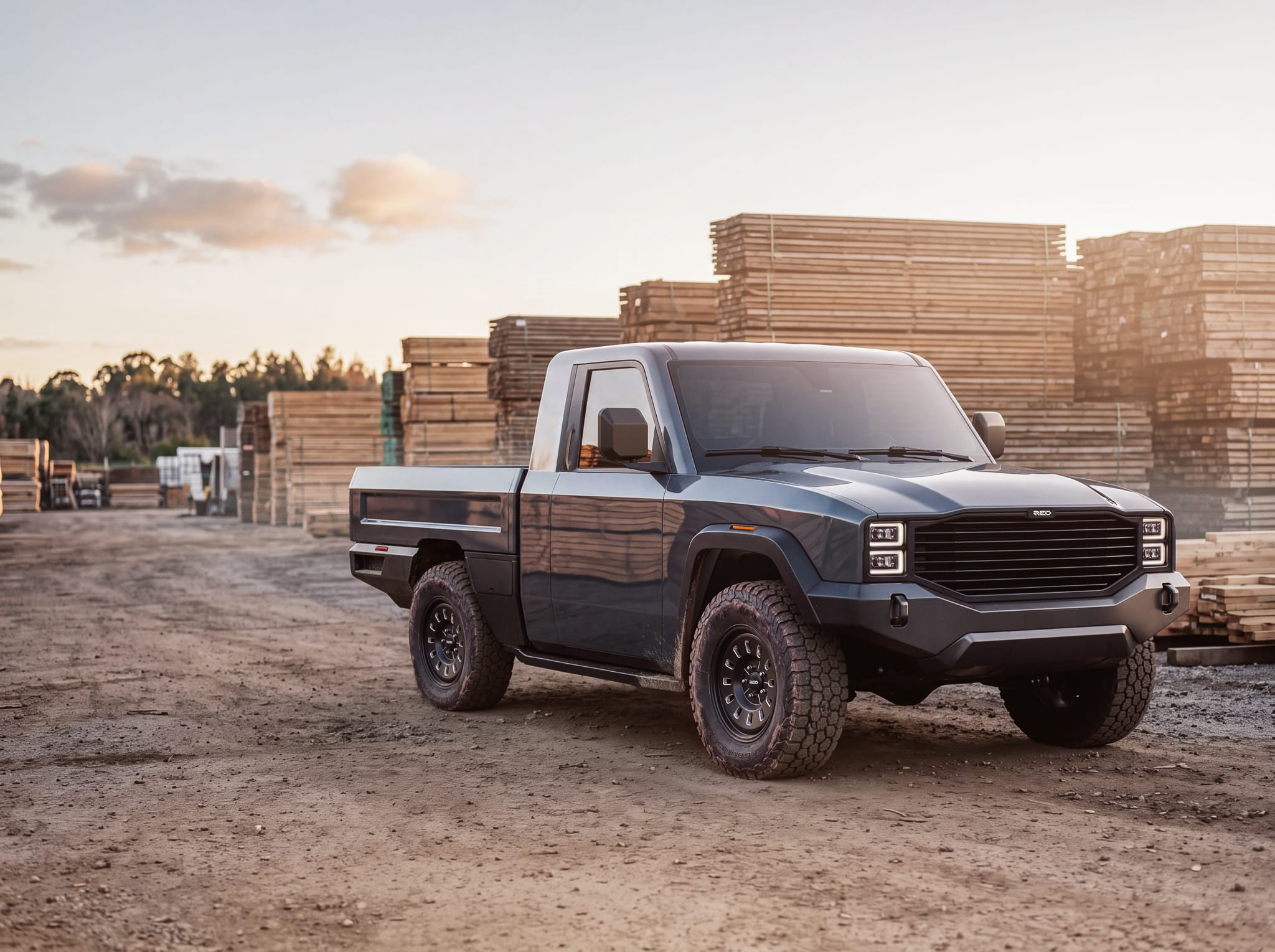
REO’s Runabout range is built around a straightforward proposition: smaller vehicles, physical controls and designs intended to be easier to repair. The Dallas startup has shown three exterior designs, including a two-seat work truck with a targeted starting price of $21,500. That price and the specifications remain preliminary, so the key question is whether REO can turn a deliberately simple concept into vehicles buyers can actually order at those figures.
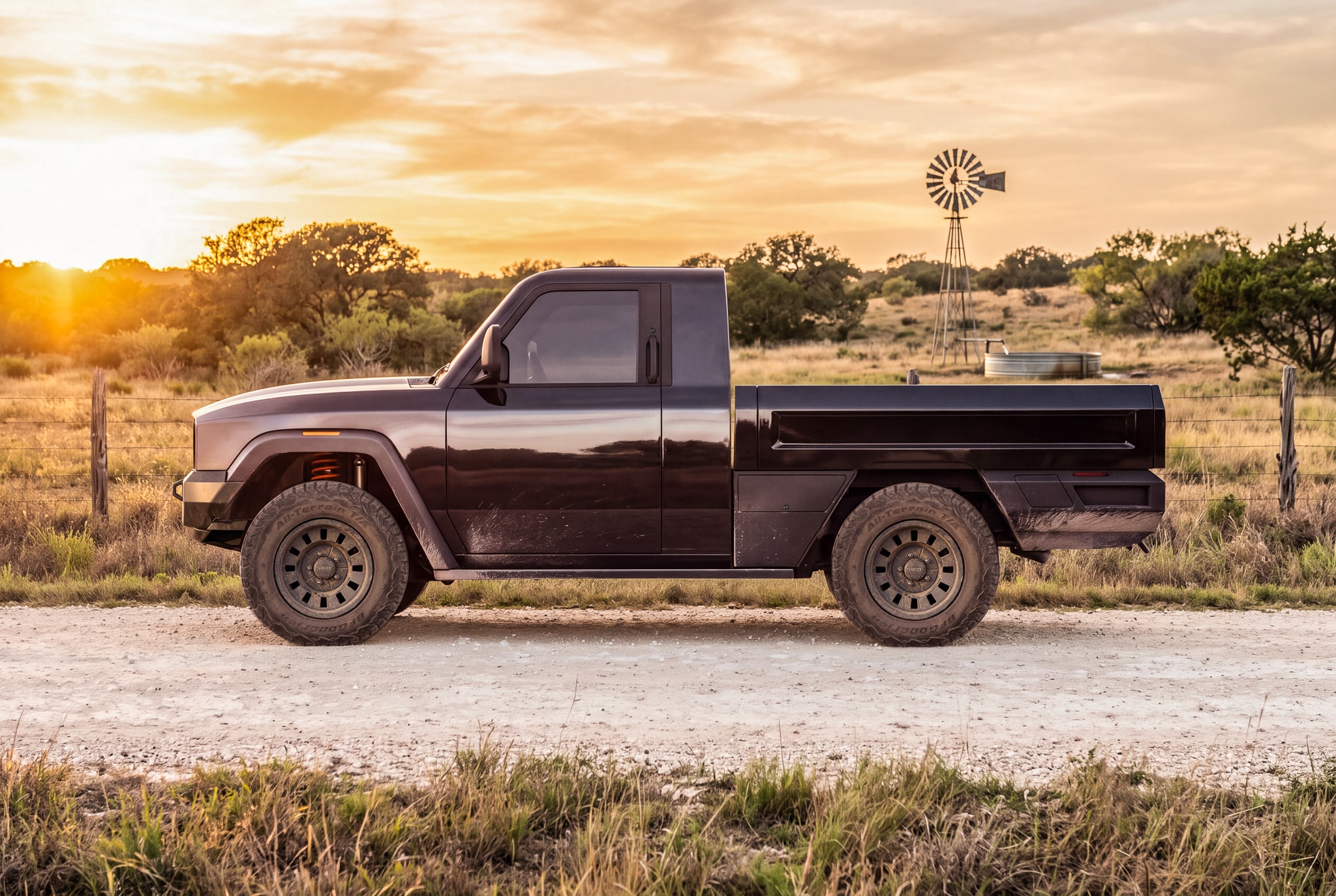
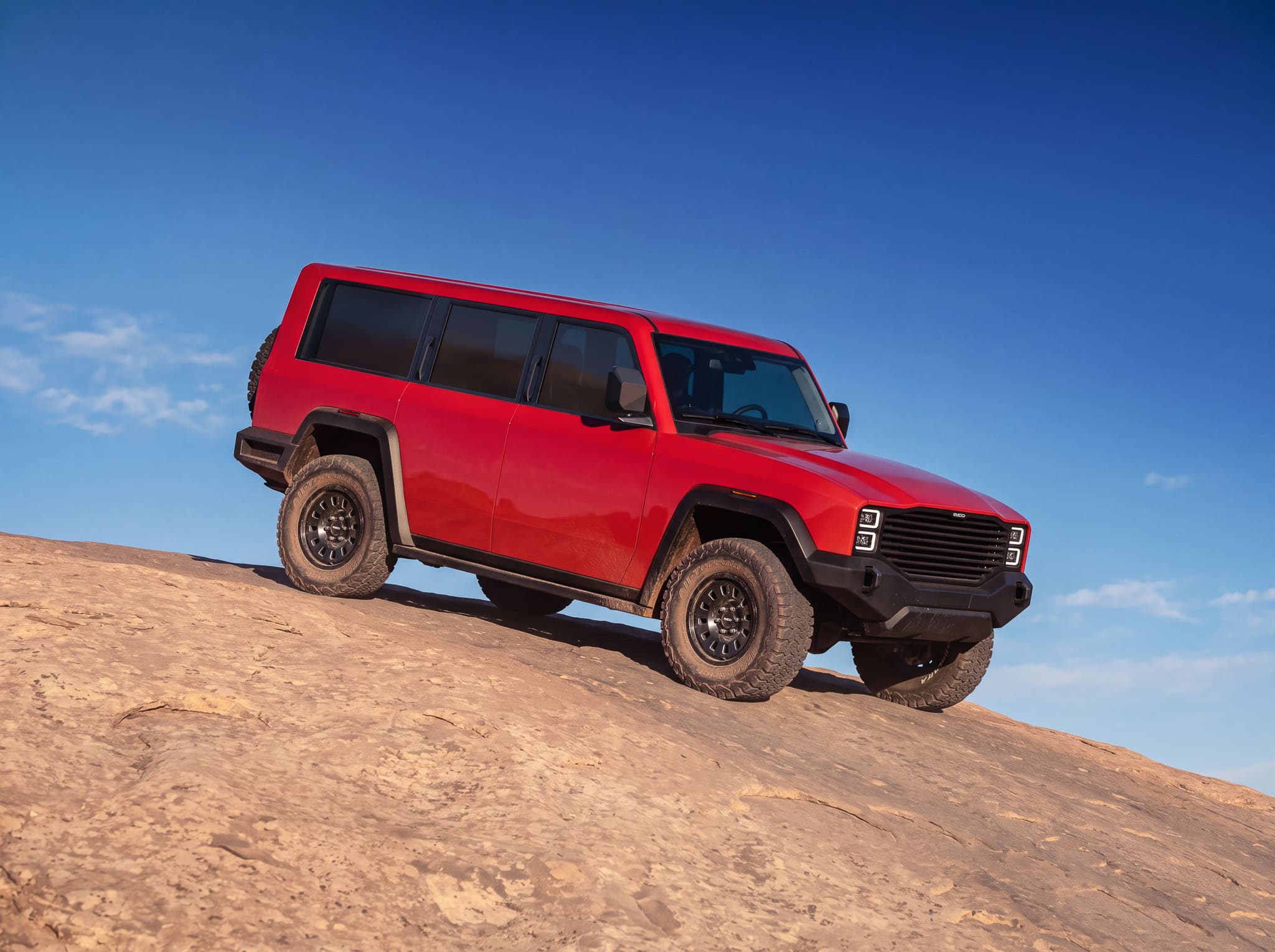
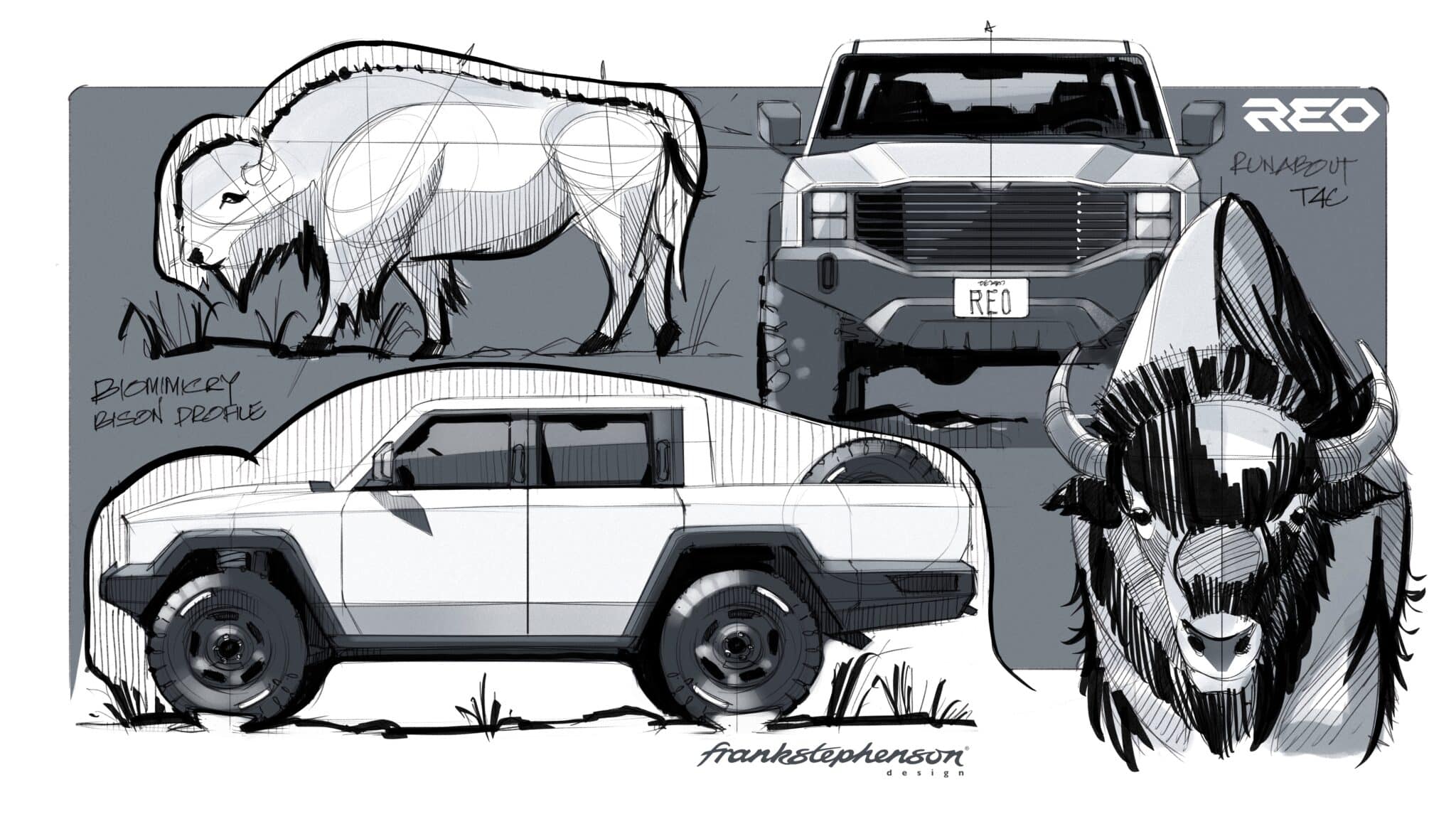
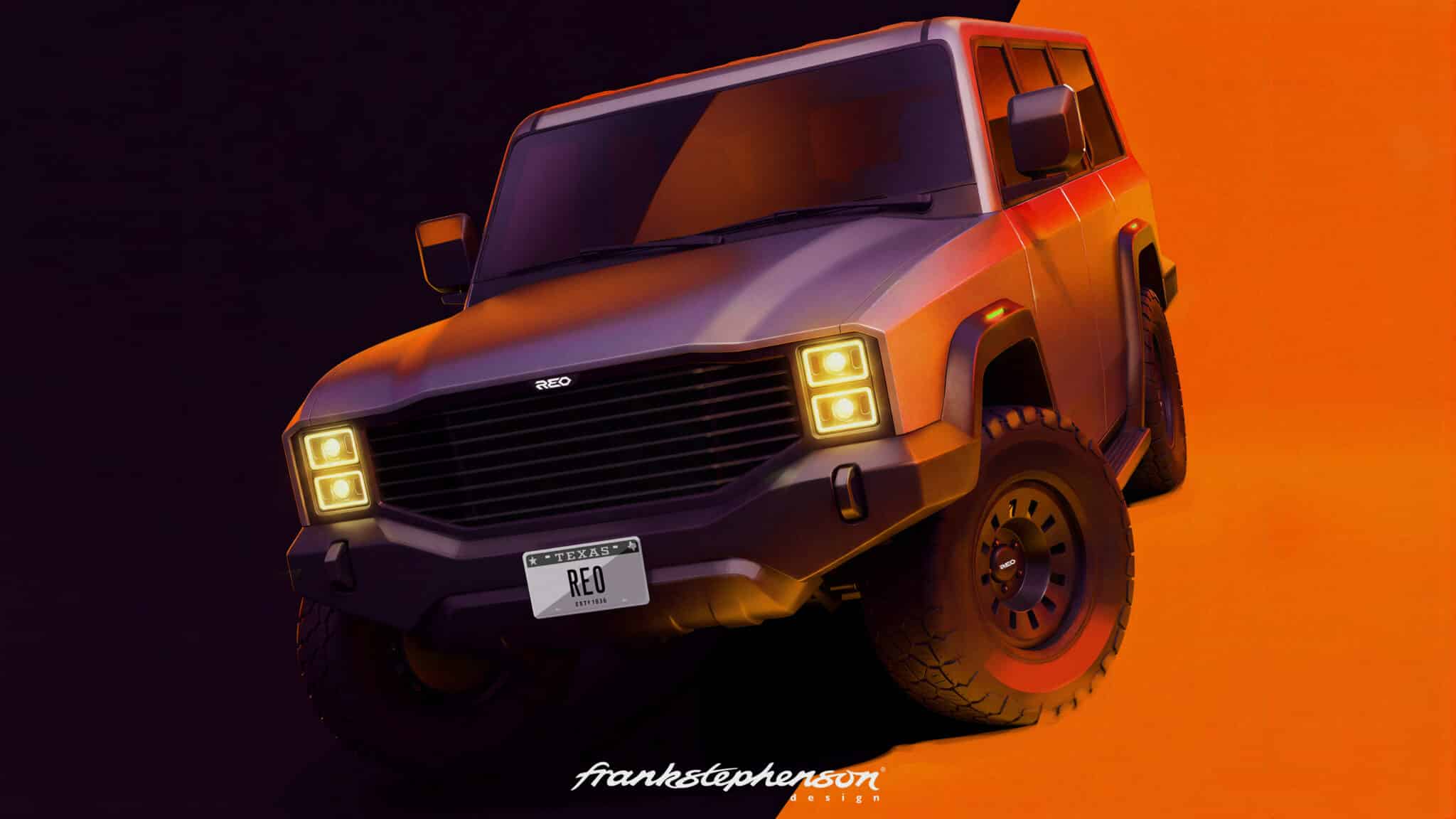
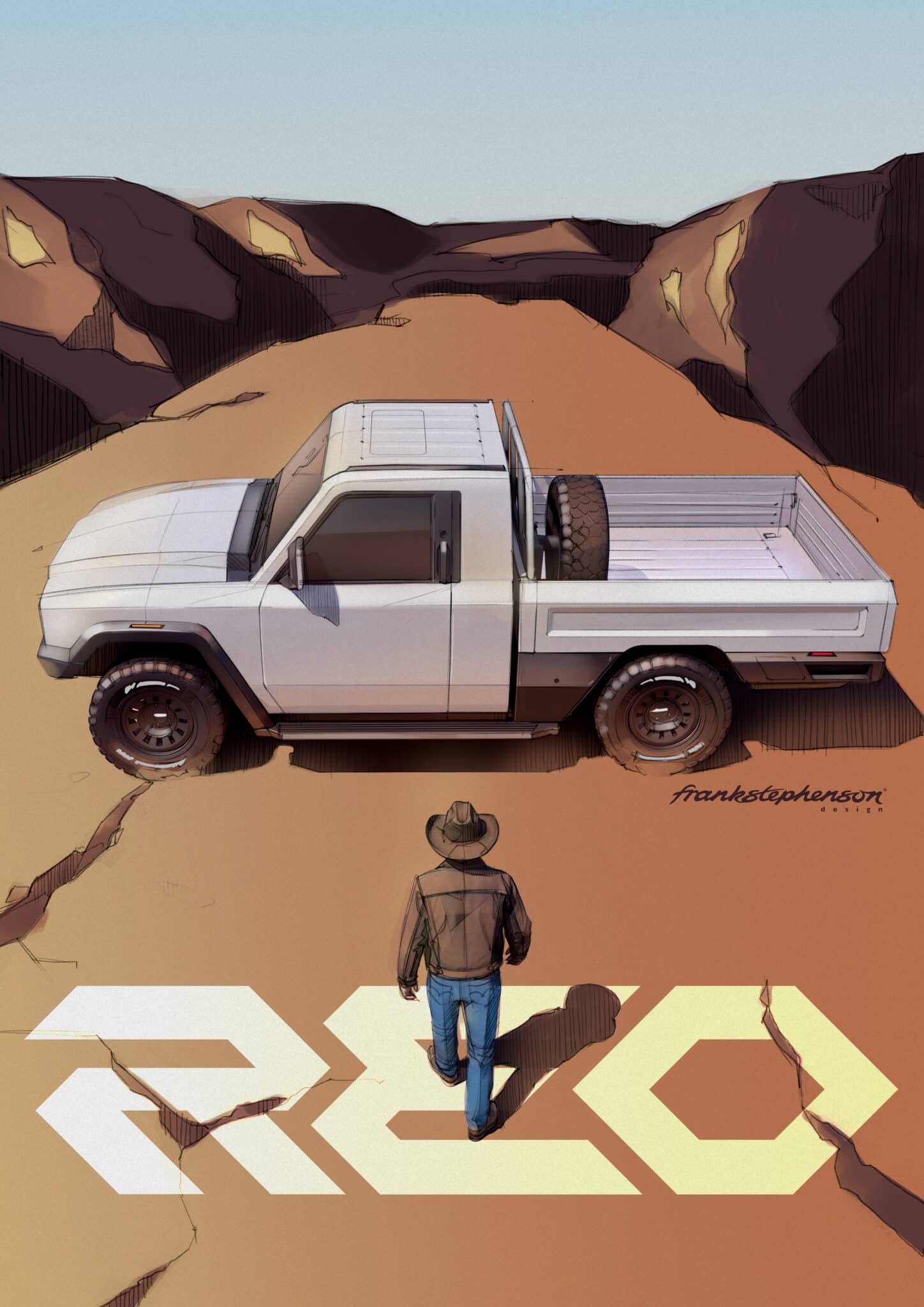
The lineup comprises the two-door T4X work truck, the four-door T4C crew cab and the six-seat S4C SUV. All three share a ladder frame and a 119.6-inch wheelbase. REO worked with Frank Stephenson’s design studio on the vehicles, whose shared front-end styling extends back to the pillar behind the front doors. The company says it will use steel body panels, citing repairability at ordinary body shops, and plans physical controls for basic driving functions. It expects to show the interiors in 2027.
Three layouts for work and everyday use
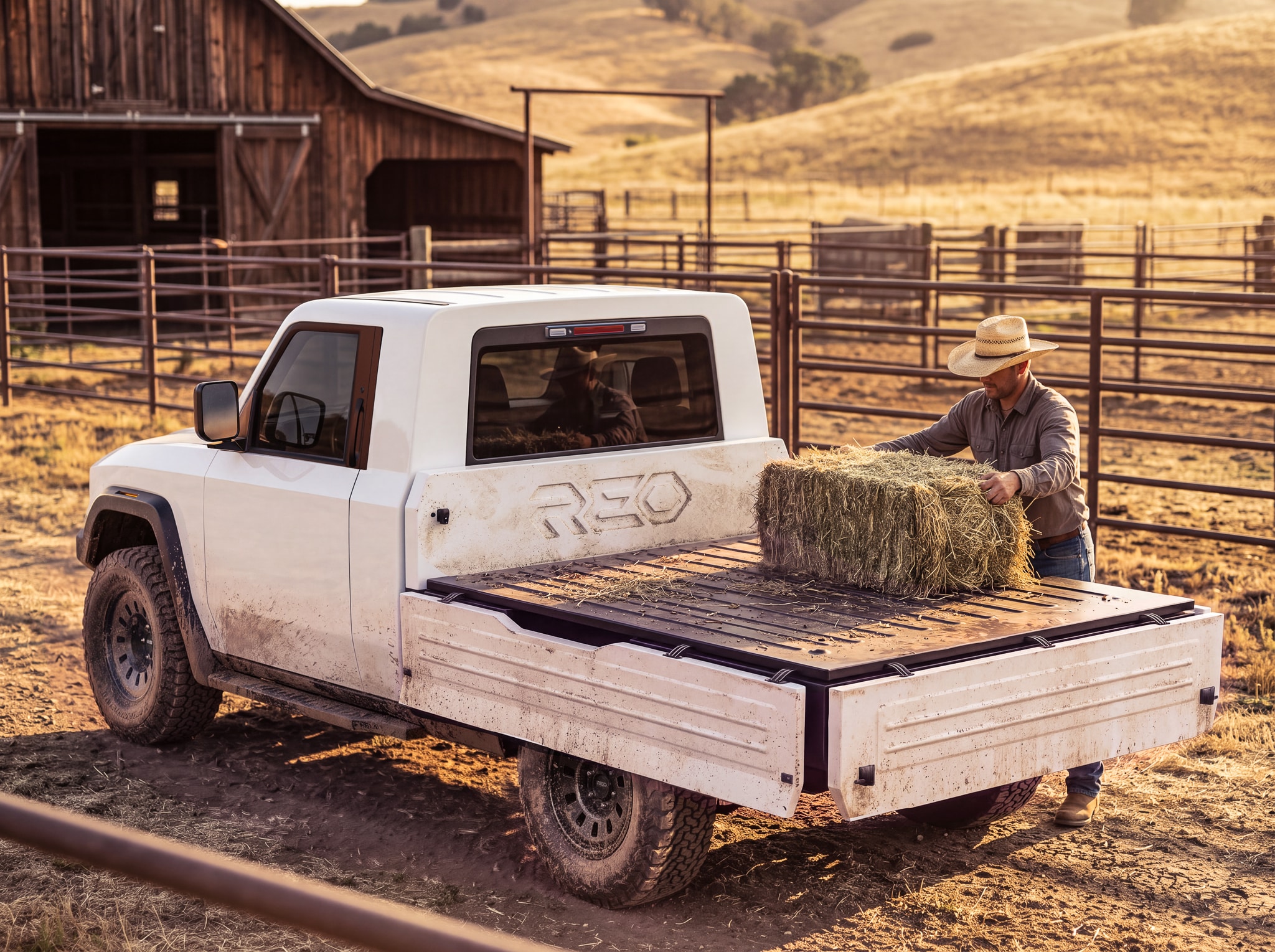
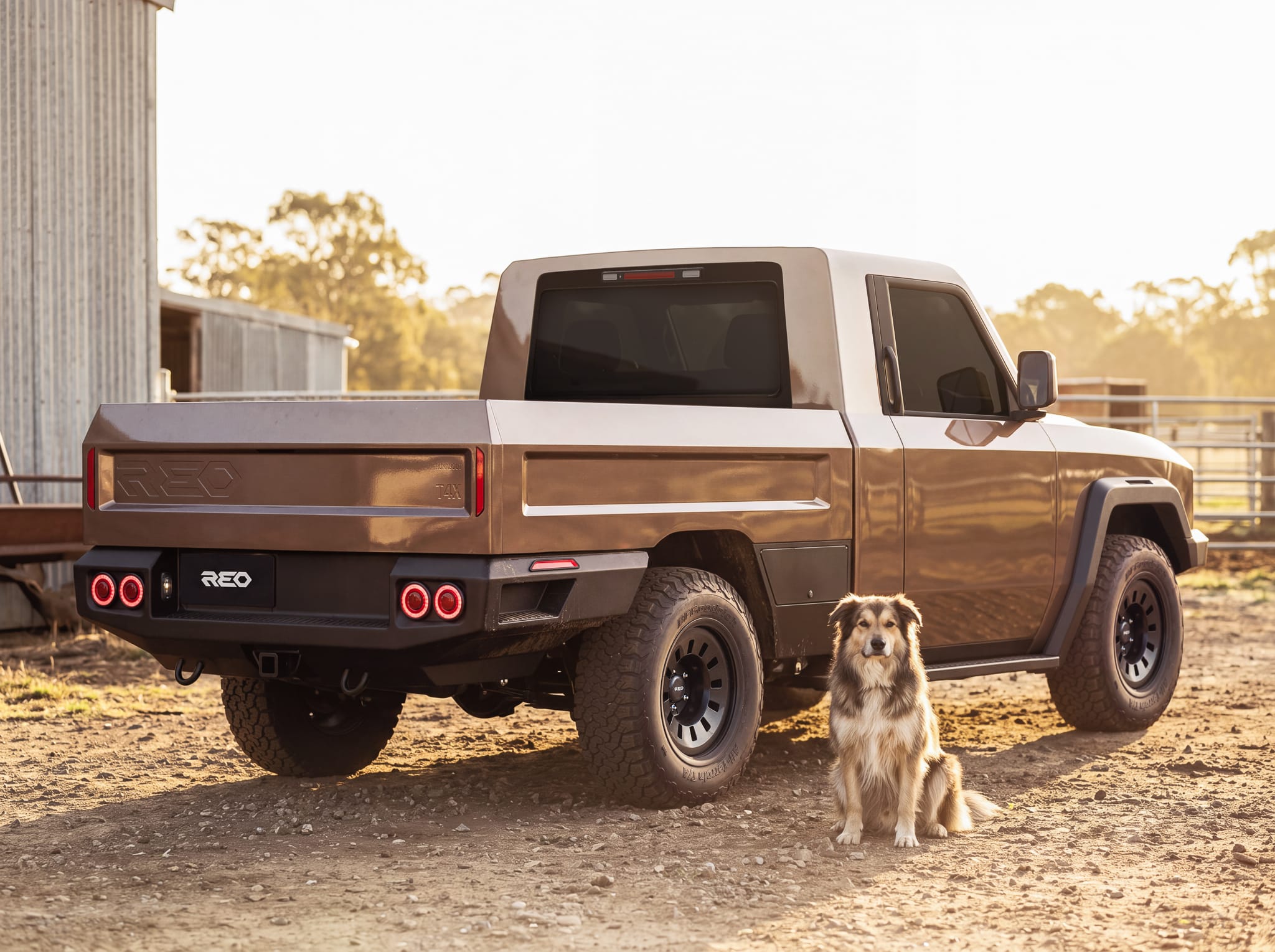
The T4X prioritizes an open, usable load floor. Its steel flatbed is designed with folding sides, so cargo can be loaded from the rear or either side. Integrated steps provide a foothold, and the floor is targeted at 79.1 inches long by 70.6 inches between the sides. With no wheel wells intruding into that space, the bed could be useful for bulky loads. The truck is 196.5 inches long overall.
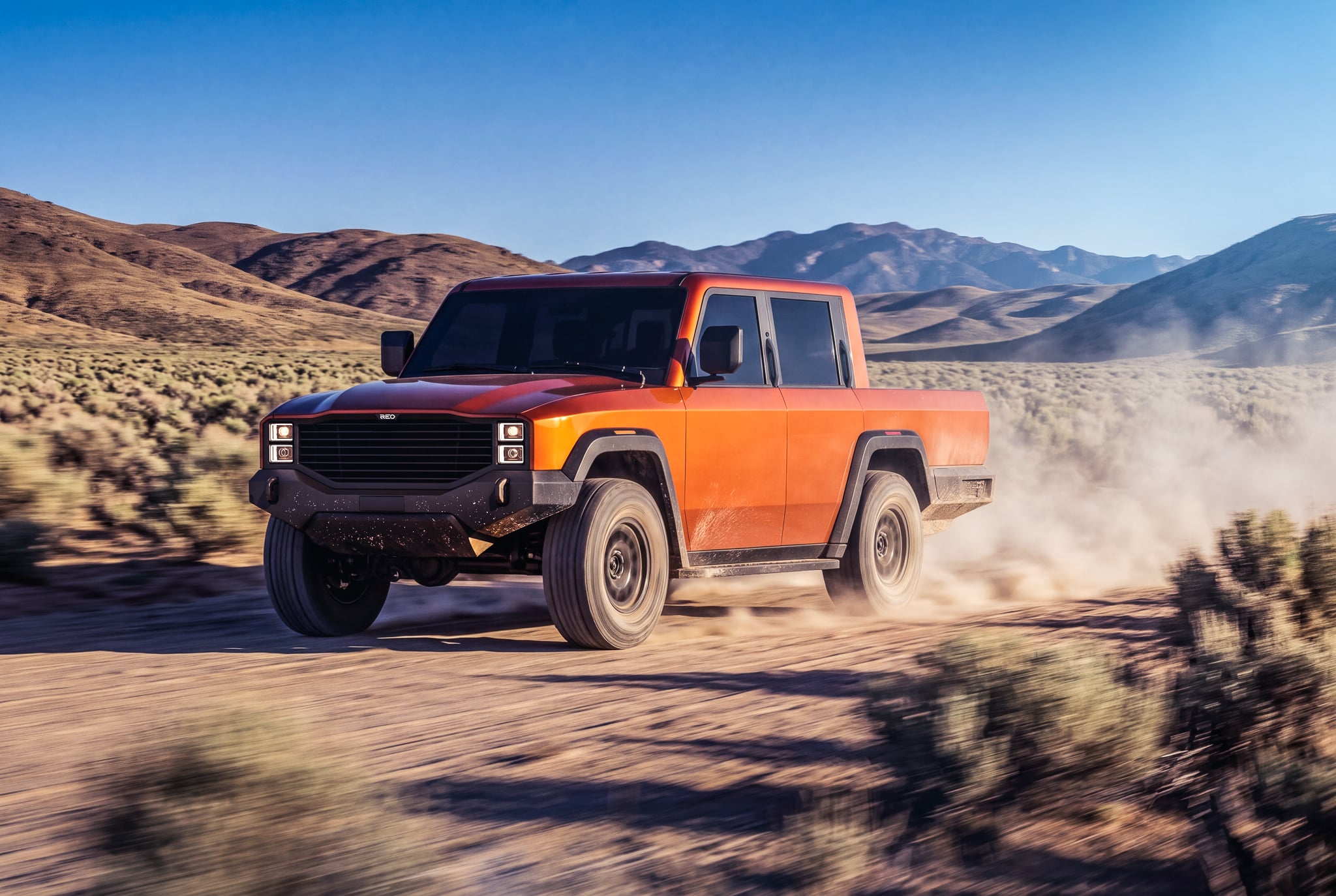
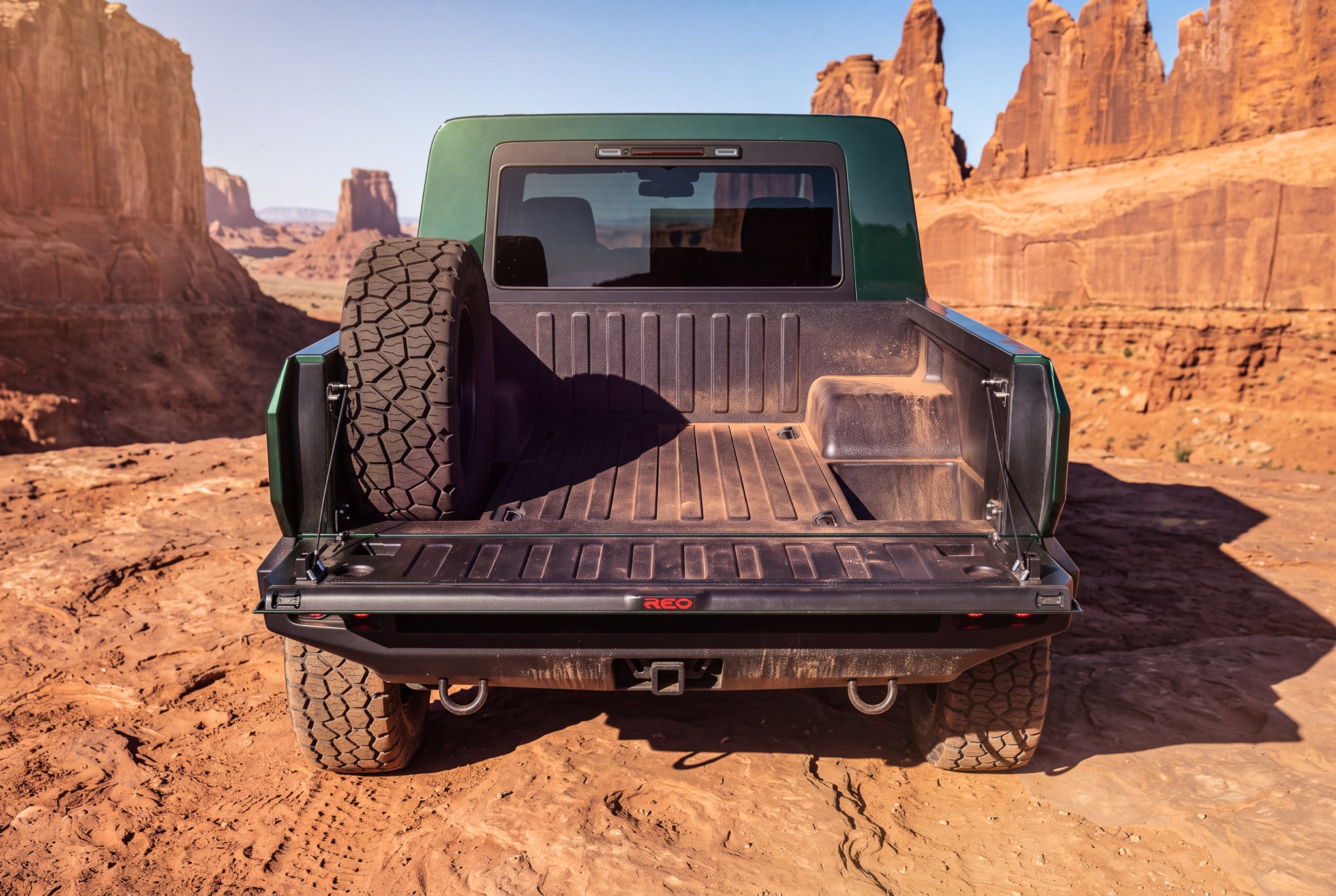
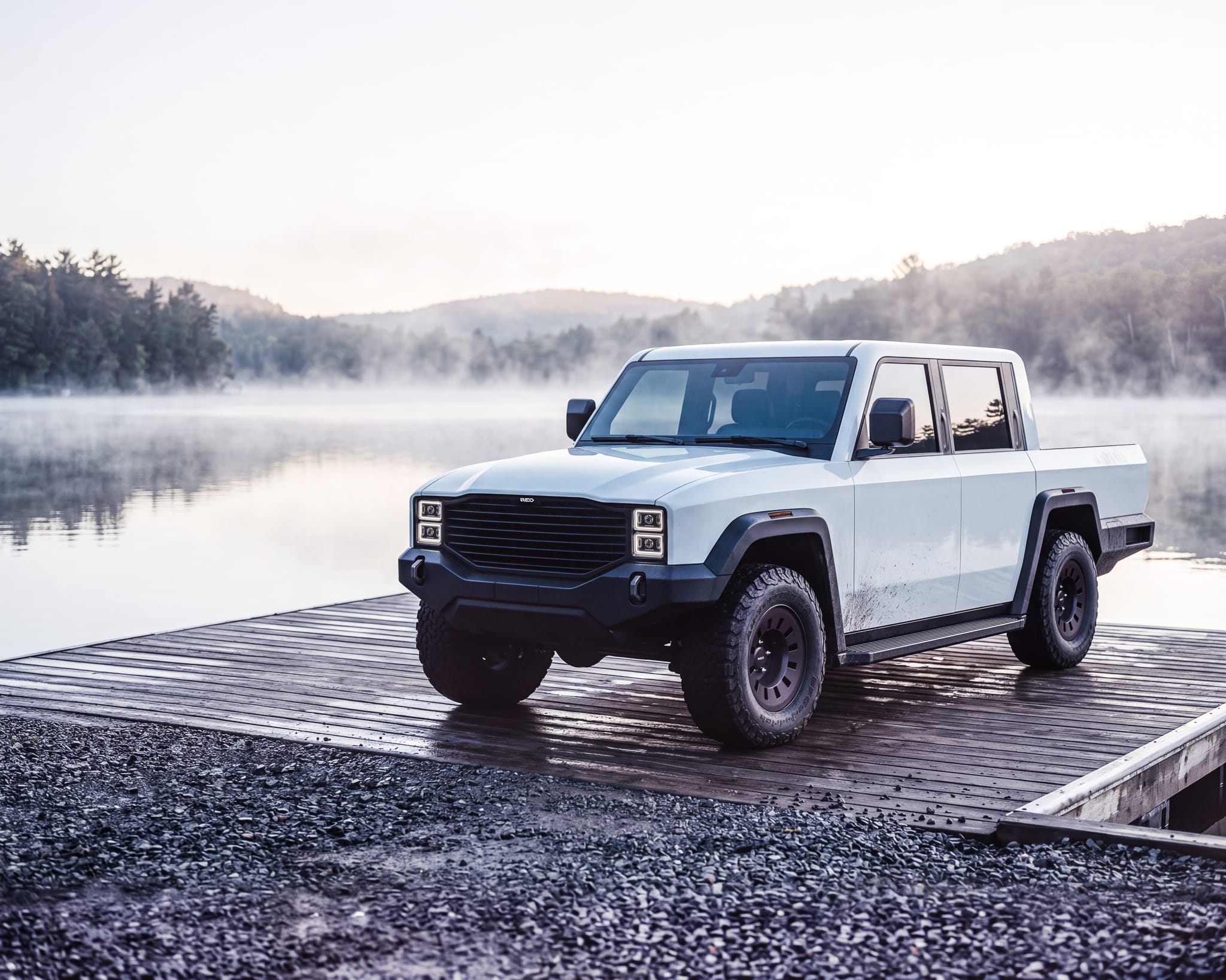
At a targeted $25,000, the T4C adds a second row and four doors, seating five. Its bed floor measures 54.1 inches long and 36.6 inches between the wheel wells. An extendable tailgate is intended to help with longer items, while a recessed spare tire is meant to preserve cargo room. The crew cab measures 195.6 inches overall, about an inch shorter than the T4X. Its longer roof is designed to accept two mounting panels, compared with one on the work truck.
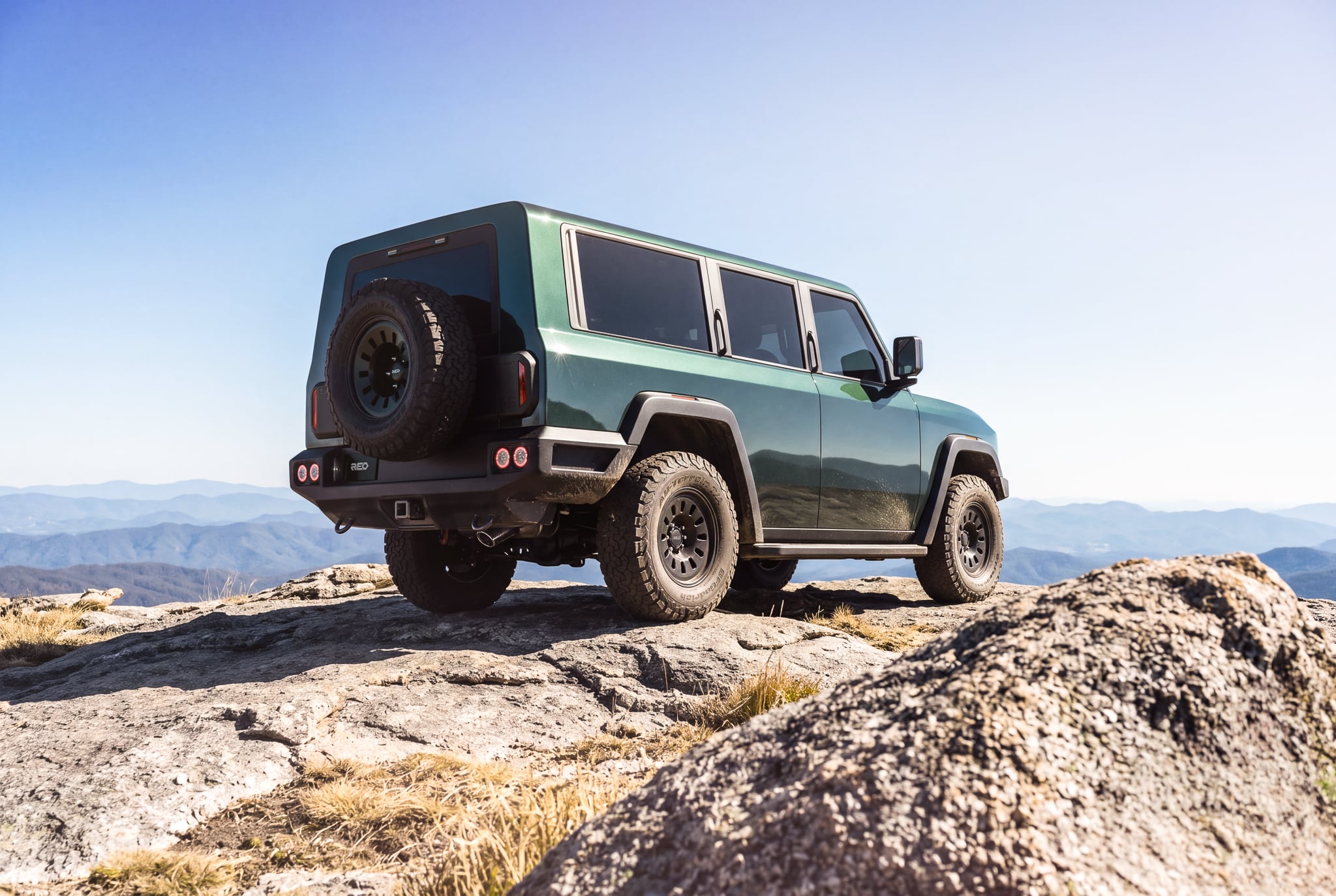
The S4C SUV has a targeted starting price of $28,500 and seats six: two people in front, three across the second row, and one in a fold-away, side-facing jump seat. It is 182.7 inches long without its swing-out full-size spare. REO says the short rear overhang gives the SUV the best departure angle in the range’s preliminary figures. The side-hinged rear door and lowering rear glass offer different ways to access the back.

REO traces its name to Ransom E. Olds, who began building cars under the REO name in Lansing, Michigan, in 1905. The 1915 REO Speed Wagon is often described as an early precursor to the pickup. The new designs draw on that history: the grille references the Speed Wagon, while the broad hood and front fenders take cues from an American bison. The hood bulge also nods to American muscle cars.
Shared mechanical targets, with details still to come
REO plans a naturally aspirated gasoline four-cylinder engine without direct injection or automatic start-stop. A manual transmission is standard, and an automatic will be optional. All three are planned with part-time four-wheel drive, controlled by a floor lever with 2H, 4H and 4L settings. The suspension plan uses solid axles at both ends, front coil springs and rear leaf springs.
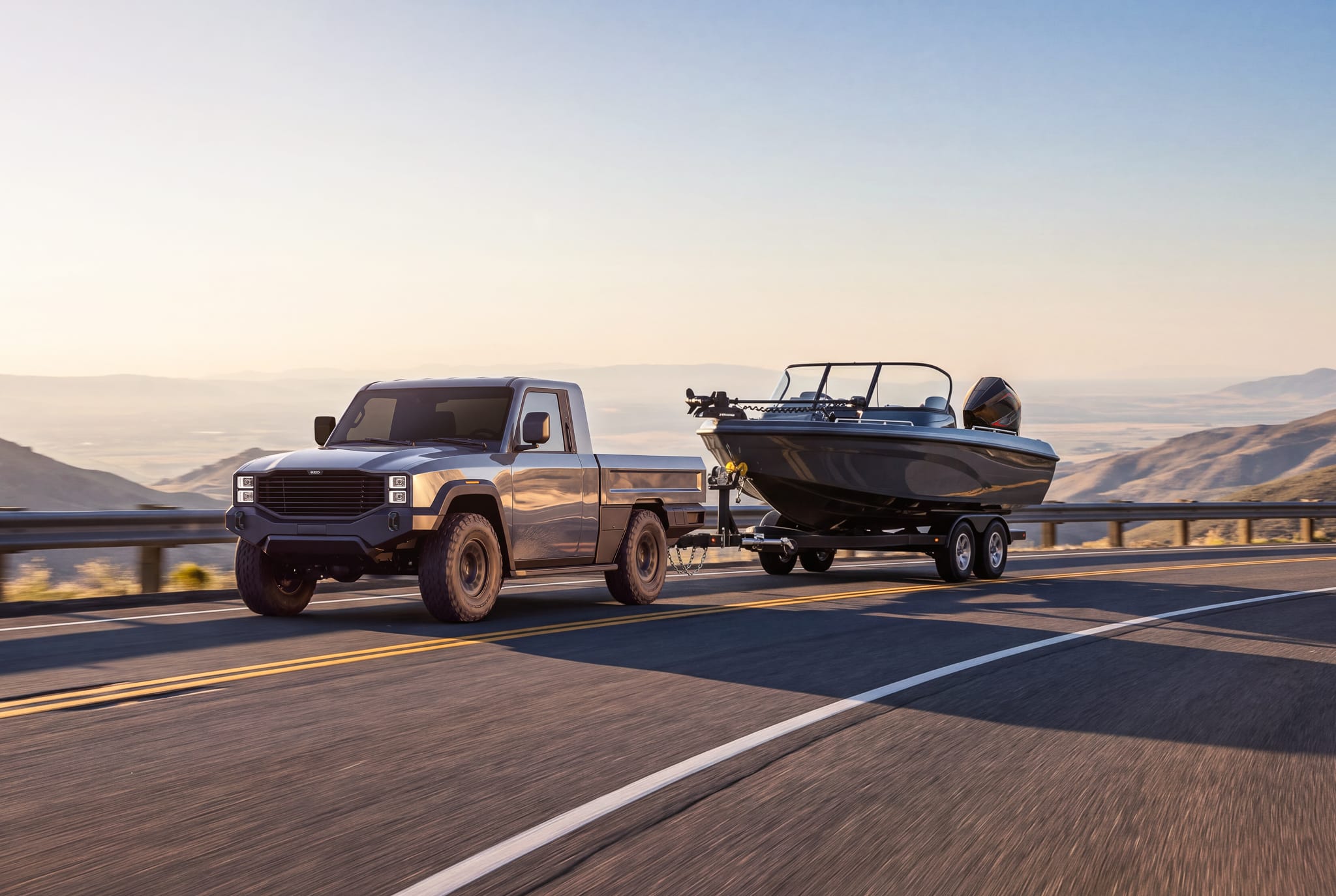
An optional Ransom off-road package is expected to add 265/70R17 all-terrain tires and a 2.5-inch lift. Across the platform, REO lists targets of 2,500 pounds of payload, 5,000 pounds of towing and 22 to 25 mpg combined. These are engineering targets, not model-specific ratings or EPA fuel-economy figures. The company also states a 500,000-mile powertrain design target. Weight, engine output and other details that would help buyers judge the figures have not yet been given.
For owners planning to keep a vehicle for years, REO’s repair plans may matter as much as its hardware. The startup says it intends to publish a parts catalog with prices for 20 years, provide service manuals at no charge and avoid software locks that bind replacement parts to individual vehicles. It also plans to include a glovebox tool kit sized for the vehicles’ bolts. Those commitments could make maintenance more accessible, but their value will depend on parts availability and how the service network develops.
Production plans and open questions
REO intends to assemble the Runabout in Texas, but has not named a facility. Its current timeline calls for T4X pilot builds in 2027, orders in 2028 and first deliveries in late 2028 or 2029. The T4C and S4C are planned to follow. REO says it has taken more than 40,000 paid reservations. Each reservation costs $25 and is refundable; it holds an approximate place in line, does not constitute an order and does not secure a price.
The company says it plans to sell directly and that it will use a sales approach similar to Tesla and Rivian. The final purchase process and seller for customers in Texas remain to be explained. That matters because a reservation is not an order, and the announced starting prices are estimates rather than locked-in transaction prices.
REO founder and CEO Zach De Bernardi said the company has hired engineers with experience deploying trucks and other products across North America. He argues that the Runabout’s simpler design should reduce manufacturing and engineering complexity compared with a clean-sheet platform. That may help, but the company has not built vehicles before, and the production facility and broader manufacturing plan have yet to be identified.
De Bernardi also said the vehicles will go through full safety testing and meet applicable safety standards. The current design reveal does not specify the airbag package, provide crash-test results or describe the validation plan. Buyers will also want details on how the side-facing sixth seat in the S4C is protected. Those answers will be central to assessing a vehicle range that emphasizes basic construction and owner repairs.
The low projected prices face a similar test. Building and selling vehicles involves development, equipment, staffing, service and testing costs, all of which have to fit the final business plan. Steel construction and a short list of mechanical features may support REO’s case for simplicity, but the company has not yet published curb weights or enough technical detail to judge its fuel-economy targets. Price, weight, test results and the path from pilot builds to customer deliveries are the next facts that will show how much of the Runabout proposal can reach production.
Runabout design gallery