Hongqi EHS4 Electric SUV: Range, Charging, Space and UK Prospects
- Matt Robinson
- 705 views
The Hongqi EHS4 shares its foundations with the Leapmotor B10, offering a distinct cabin and more quoted range, with UK availability still unconfirmed.
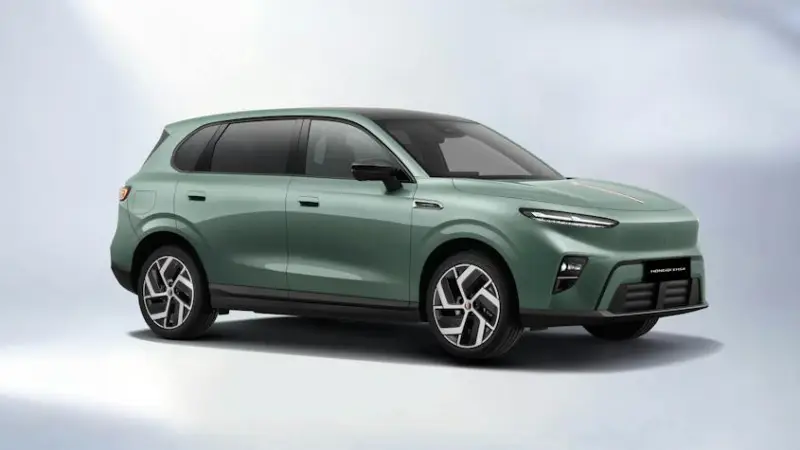
The Hongqi EHS4’s main selling point may be the combination of a familiar electric SUV platform and a new badge with a long history. The model is heading towards Europe and is considered a likely candidate for the UK, though no UK launch details are given. Its connection to the Leapmotor B10 gives a useful reference for understanding what the EHS4 is—and what prospective buyers may want to compare.
A Hongqi identity on familiar foundations
Hongqi traces its roots to 1958, giving it a much longer history than many of the Chinese brands now expanding into European markets. The EHS4, however, is not an entirely separate engineering effort. It is based on the Leapmotor B10, following a collaboration memorandum signed in 2025 between Leapmotor and FAW Group, Hongqi’s parent company.
That relationship shows most clearly at the rear and inside the cabin, where the EHS4 closely resembles its Leapmotor counterpart. The front end makes a stronger effort to establish a separate identity: Hongqi has reshaped the styling and added a chrome strip running along the bonnet. Buyers deciding between the two will therefore find a visible difference at the nose, while much of the vehicle’s underlying design is shared.
Shared foundations can give a newer model a useful head start. They also make the details that differ—equipment, prices, local support and the driving experience—especially important in a comparison. The available information establishes the B10 as the EHS4’s closest reference point, but doesn’t give prices or a full specification list for either version here.
Cabin layout and carrying space
The EHS4’s cabin follows a layout that’s increasingly common in electric SUVs: a large central touchscreen handles much of the interaction, with few physical buttons. That approach gives the dashboard a clean appearance, though drivers who prefer dedicated controls will want to try the setup in person and see how straightforward the main functions are to reach while driving.
One specific addition is a Yamaha sound system. The named audio equipment gives Hongqi a clear cabin feature to highlight, but the available details don’t specify its configuration or other interior equipment. For buyers weighing the EHS4 against the B10, the sound system is one confirmed difference to keep in view; the broader equipment comparison still needs a full specification.
Hongqi quotes 557 litres of boot capacity, rising to 1,704 litres with the rear seats folded. A further 33-litre compartment at the front adds space for smaller items. Those figures point to useful everyday flexibility: the main boot can handle regular luggage, while folding the rear seats creates more room for larger loads. The front compartment offers a separate place to stow items, although its 33-litre capacity is best treated as extra storage rather than a substitute for the main boot.
Range and charging figures
The EHS4 is quoted with a WLTP range of 292 miles, a little more than the Leapmotor B10. That advantage is modest, and the figure alone doesn’t tell drivers how the two will compare over a mixed week of commuting, errands and longer trips. Actual distance between charges will depend on use and conditions, so buyers should compare the stated test figures alongside their own routine.
For longer journeys, Hongqi quotes an 18-minute rapid charge from 30 to 80 per cent. The starting point matters: a 30 per cent charge gives the battery less distance to recover than a session beginning at 10 or 20 per cent. The figure is still useful when planning a stop, but it shouldn’t be treated as a direct match for charging claims that use a lower starting level. No charging power, battery capacity or connector details are provided here.
A range-extender version could broaden the EHS4’s appeal to drivers who want electric driving with another way to cover longer distances. The Leapmotor link makes a version using the B10 REEV powertrain seem plausible, but there is no confirmed EHS4 range-extender specification or timing. Until details arrive, the quoted 292-mile WLTP figure and the 30-to-80-per-cent charging claim are the concrete measures to assess.
European production remains a possibility
Hongqi is reported to be seeking a European partner to help it produce cars on the continent. Stellantis is among the potential partners named, while Hongqi is also evaluating other companies. A European production arrangement could matter to the brand’s ability to build a presence in the region, but no partner or production plan has been confirmed.
Stellantis has a connection to Leapmotor through its majority ownership of the company’s European operation, which gives the reported interest a clear point of context. It doesn’t, by itself, establish that Stellantis will work with Hongqi. For UK buyers, the practical questions remain local availability, pricing, equipment and support—details that will determine how the EHS4 stacks up against the B10 and other electric SUVs.
For now, the EHS4 looks like a Hongqi-styled take on a known electric SUV package, with a slightly higher quoted range, generous stated boot capacity and a specific audio upgrade. The next details that matter most are a confirmed UK launch, prices and a complete specification buyers can compare directly.