2027 Subaru Forester Wilderness Hybrid Adds Range and Off-Road Hardware
- Robert Miller
- 975 views
The 2027 Forester Wilderness Hybrid combines 194 hp, 9.3 inches of clearance and all-terrain tires, with an estimated 30 mpg city rating.
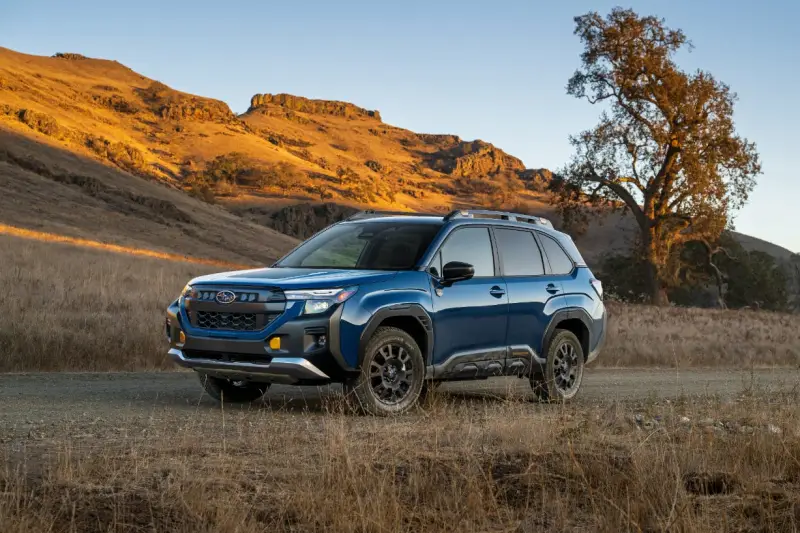
The 2027 Subaru Forester Wilderness Hybrid brings hybrid fuel savings to Subaru’s more dirt-ready Forester, while adding 0.6 inch of ground clearance over other Forester models. Its 194-hp powertrain and all-terrain tires suit trail access and rough tracks; a hand-timed run to 60 mph took just over 10 seconds, so quick acceleration isn’t its calling card.

Subaru is adding the hybrid Wilderness to a lineup that already includes the Crosstrek Wilderness, Outback Wilderness and gasoline-powered Forester Wilderness. The new model pairs a series-parallel hybrid system with Subaru’s Symmetrical All-Wheel Drive, selectable X-Mode traction settings and 9.3 inches of clearance. That combination targets drivers who want more trail capability than a standard crossover provides, along with the lower fuel use of a hybrid.
Hybrid power, with relaxed acceleration
The powertrain combines an Atkinson/Miller-cycle 2.5-liter flat-four, two electric motors and a 1.1-kWh lithium-ion battery. One motor provides traction, while the other serves as a generator. Together, the system produces 194 horsepower. A CVT sends power to the wheels.
In hand-timed testing on flat pavement, the 3,940-pound Wilderness Hybrid took a little more than 10 seconds to reach 60 mph. There was a noticeable pause before the CVT engaged, after which the Forester gathered speed. That result gives a useful sense of its priorities: the hybrid setup is aimed at efficiency and everyday driving, rather than brisk launches.
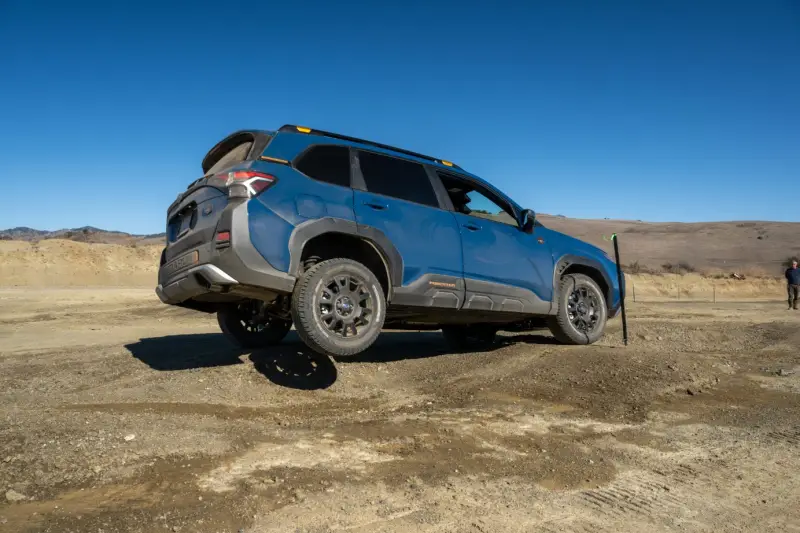
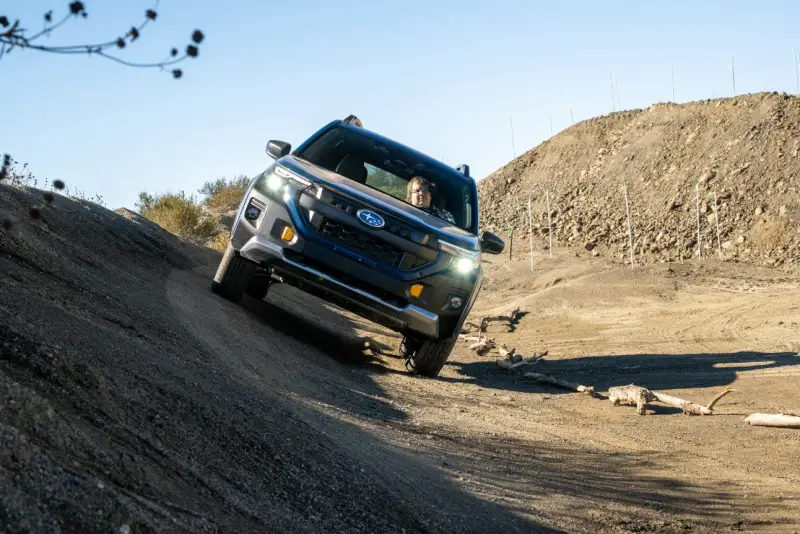
For off-road use, the more relevant equipment includes X-Mode Dual-Mode traction management and Hill-Descent Control. On steep trails, descent speed could be adjusted as the vehicle crept downhill. The Forester also crossed dirt piles and uneven ground that lifted one rear wheel clear of the surface. When a wheel spun, the system applied its brake to help direct traction to the wheels still moving the vehicle forward.
 VIEW GALLERY
All-terrain tires make a practical difference
The Wilderness Hybrid wears 235/60R-17 Yokohama Geolandar all-terrain tires. Their tread and construction are better suited to dirt than standard mud-and-snow tires, and they stayed composed on the rough trails during a day of driving at Rancho Quien Sabe in California’s Coastal Range, near Pinnacles National Park. On pavement, they weren’t excessively loud.
Tires are a key part of the package because they affect both trail performance and daily comfort. A standard Forester Hybrid could be fitted with all-terrain tires separately, but that changes the cost comparison. The cited price for Yokohama Geolandar A/T G015 tires is $344.45 each, or $1,377.80 for four. Buyers considering that route should weigh the tire cost against the Wilderness Hybrid’s added clearance and factory-fitted hardware.
 VIEW GALLERY
Efficiency and equipment
Subaru estimates the Wilderness Hybrid will travel 481 miles on a tank and return up to 30 mpg in city driving. The company says that city figure is up to 25 percent better than the gasoline Forester Wilderness, and describes the hybrid as the most fuel-efficient and lowest-emission member of its Wilderness lineup. These are manufacturer estimates; the provided figures don’t include a separate highway rating.
Forester models come with at least 8.7 inches of ground clearance, all-wheel drive and EyeSight Driver-Assist Technologies. An 11.6-inch multimedia touchscreen with wireless Apple CarPlay and Android Auto is standard on most versions. The 12.3-inch digital gauge cluster is standard on Forester Wilderness trims and all Forester Hybrid trims, including the new Wilderness Hybrid.
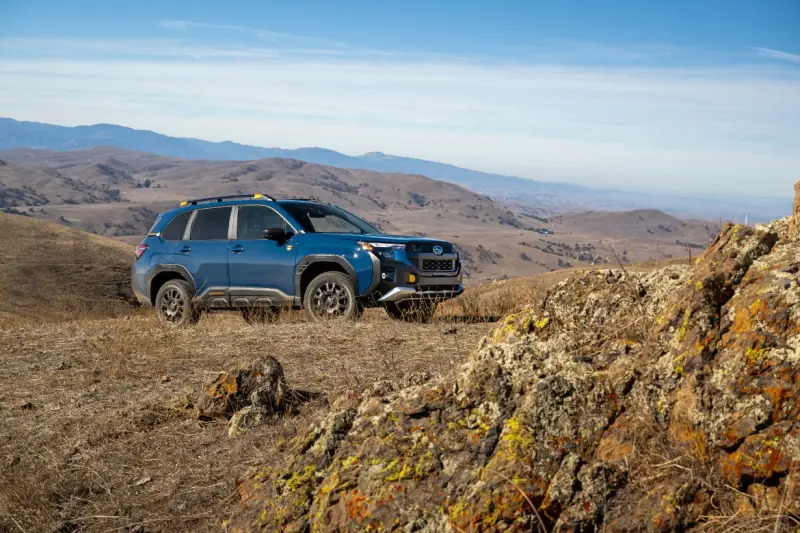
The Wilderness Hybrid adds 0.6 inch of clearance over the 8.7 inches found on other Foresters, along with its hybrid system, X-Mode Dual-Mode and Geolandar tires. Those details matter most to drivers who regularly encounter rutted access roads, loose surfaces or steep trails. The reported test suggests the vehicle can handle that sort of terrain at a measured pace; it doesn’t establish how it performs in every off-road condition.
 VIEW GALLERY
Price puts the hybrid hardware in perspective
The 2027 Forester Wilderness Hybrid starts at $42,020. The entry-level 2027 Forester is priced at $31,520, a difference of $10,500. A buyer comparing the two should consider the value of the hybrid powertrain, the estimated fuel economy, the extra clearance and the factory all-terrain tires together. Adding tires to a less expensive Forester addresses one part of the Wilderness package, but doesn’t add the same ground clearance or the other included equipment.
For drivers who spend most of their time on pavement, the standard Forester’s lower starting price may carry more weight. For regular trail use, the Wilderness Hybrid bundles useful hardware with improved estimated city fuel economy compared with the gasoline Wilderness. Its strongest case is that mix of capability and range; the trade-off is a relatively high starting price and unhurried acceleration. At 30 mpg city and an estimated 481 miles per tank, it looks best suited to buyers who want trail access without giving up hybrid efficiency for everyday driving.


