Why Tesla Replaced Opening Sunroofs With Heat-Reflective Glass Roofs
- Joseph Williams
- 972 views
Tesla says owners rarely used opening sunroofs after the novelty wore off. Its fixed roofs reduce heat and UV exposure, with potential range benefits in hot weather.
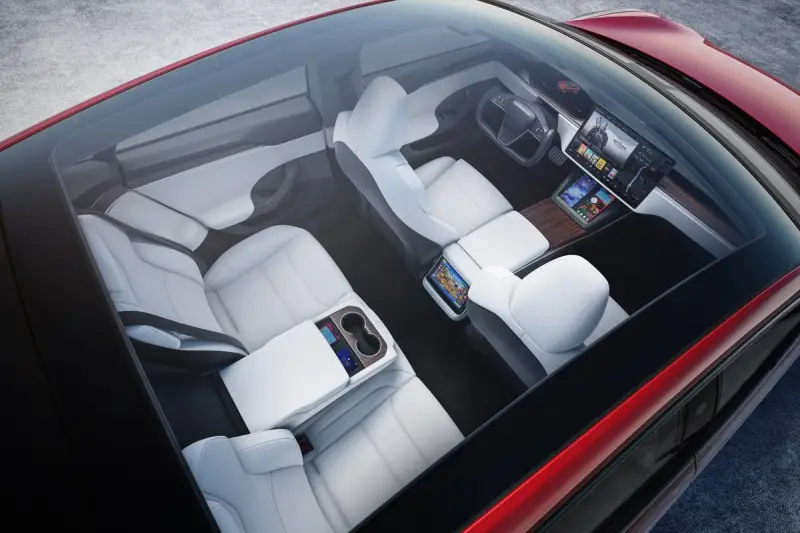
Tesla’s decision to drop opening sunroofs came down to a tradeoff between occasional use and lasting complexity. On Jay Leno’s Garage, vehicle engineering VP Lars Moravy and chief designer Franz von Holzhausen said owners tended to use the feature when a car was new, then leave it alone. Tesla’s response has been to refine fixed glass roofs for heat control, light and packaging.

The discussion came as Leno looked over Tesla’s Model Y L and recalled that his first Model S had a large opening roof. His question gets at a familiar ownership calculation: a feature can feel appealing at a test drive, but its value depends on whether drivers keep using it after the first few weeks.
Use declines; the hardware remains
Moravy described sunroof use as something that drops off after the initial period of ownership. Leno likened the pattern to buying a hot tub: it might get daily attention during the first week, then become an afterthought. That comparison is anecdotal, but it captures the product question Tesla says it considered—whether a moving roof earns its place over years of use.

There are costs even when the roof stays closed. Tesla described the mechanism as heavy and complicated, with multiple parts to build and a recurring presence in service. A moving roof also adds hardware that a fixed pane doesn’t need. If customers rarely open it, the added mass, components and service burden become harder to justify.
That doesn’t mean an opening roof has no appeal. Some drivers value fresh air and the open-air feel, especially on slower trips or in mild weather. But Tesla’s explanation suggests the company judged those benefits against the feature’s low use across its customer base. The choice reflects a product priority: devote engineering effort to the cabin experience most drivers encounter every day.

Fixed glass as a functional upgrade
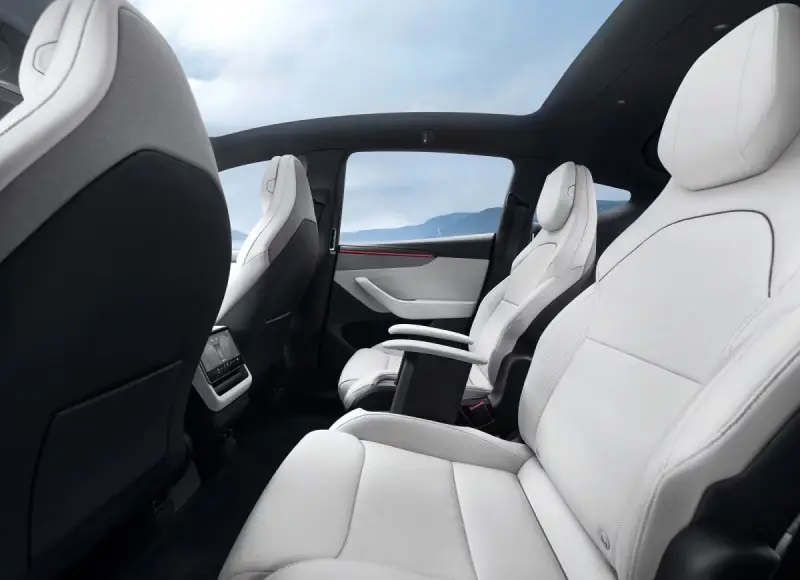
Tesla says it has put that effort into the glass itself. Its roofs use laminated layers designed to reflect heat and sunlight and block UVA and UVB rays. The company also describes a reflective silver coating and antennas integrated into the glass, avoiding a separate antenna mounted on the roof’s exterior.
For drivers, the practical point is cabin comfort in strong sun. A fixed roof can still bring in daylight and create a more open cabin feel, while its coatings aim to limit solar heat entering the interior. That matters most when a car sits outdoors or travels in hot conditions, when the climate system has to work harder to cool the cabin.
Tesla says the Model Y L roof reflects up to eight times more solar energy and allows up to 30% less solar heat into the cabin than Model Y vehicles from 2024 and earlier. Combined with HVAC upgrades, the changes help the Model Y L gain about seven miles of real-world range in hot weather. Those figures are Tesla’s comparisons; they describe a specific model and climate condition, rather than a general range increase for every Tesla.
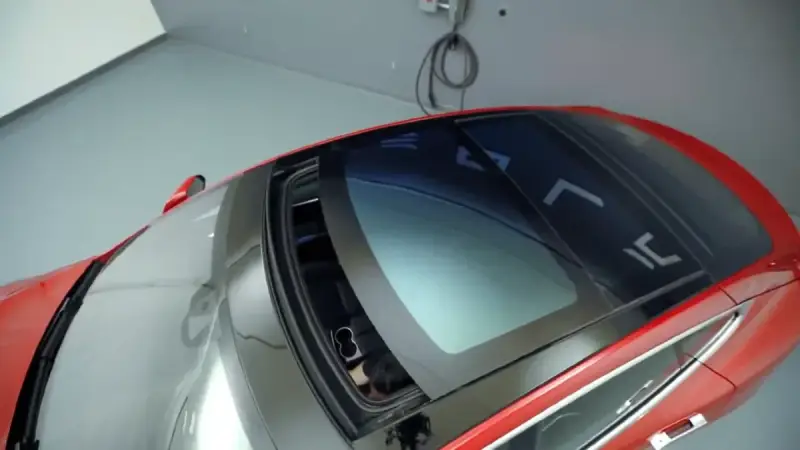
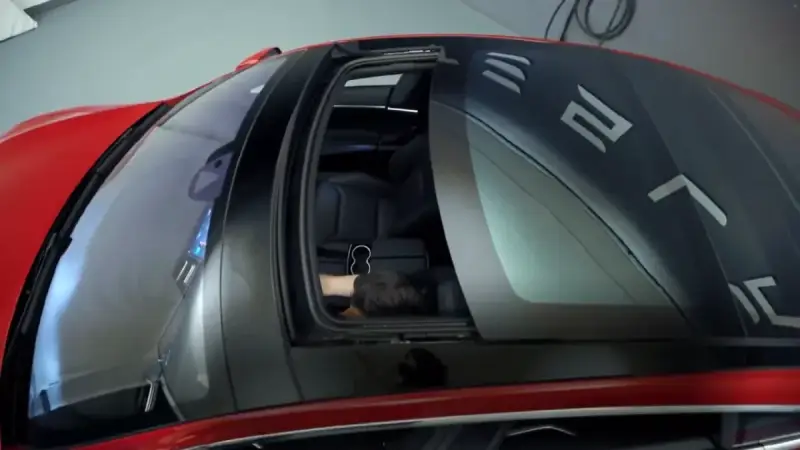
Lower cabin heat can reduce the cooling work required from the vehicle’s HVAC system. In an EV, that creates a possible efficiency benefit because climate control draws energy from the battery. The Model Y L example links roof design and HVAC changes to a stated hot-weather range gain, though the account doesn’t separate how much each change contributes.
A lighter roof, and a possible next step
The development has been gradual. In 2023, Tesla gave the Model S a high-visibility glass roof that weighed less and let in five times more light while maintaining the same heat and UV protection, the company said. The lower roof weight also reduced the car’s center of gravity. The example shows that fixed glass can be tuned for more than solar rejection; weight and the amount of daylight entering the cabin matter too.

Another possible direction is a roof that participates in cabin climate control. Tesla received a patent for a perforated glass design with two layers, including thousands of small holes in the inner pane. The proposed arrangement would let HVAC air move through the roof and absorb road and wind noise. A patent describes a design, though it doesn’t establish that the feature will reach a production vehicle.

For now, Tesla’s rationale is straightforward: owners reportedly stopped opening the sunroof, while the mechanism brought weight, complexity and service needs. The fixed roof has become a platform for managing heat, light and, potentially, airflow and noise. Whether that tradeoff satisfies buyers who want an opening panel is a different question; the company’s next roof developments will show how far it can extend the fixed-glass approach.