Tesla Extends Cybertruck Production Through Summer 2027 as Backlog Persists
- Joseph Martinez
- 554 views
Cybertruck production is set to continue through summer 2027, while higher prices and fewer available trims leave buyers facing a narrower path to order.
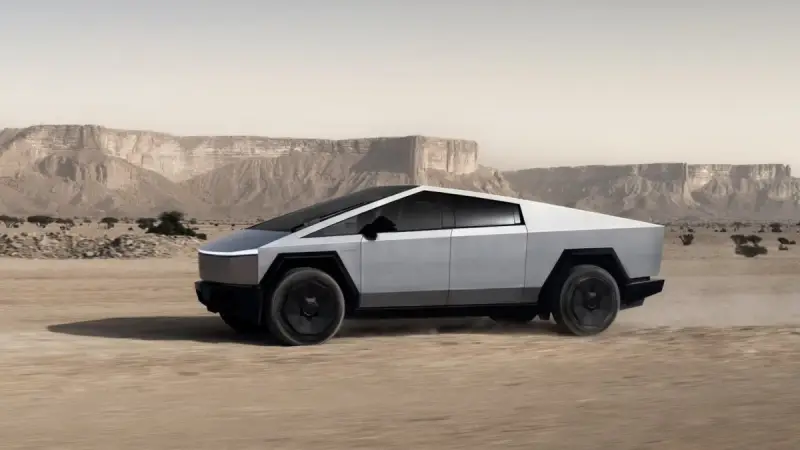
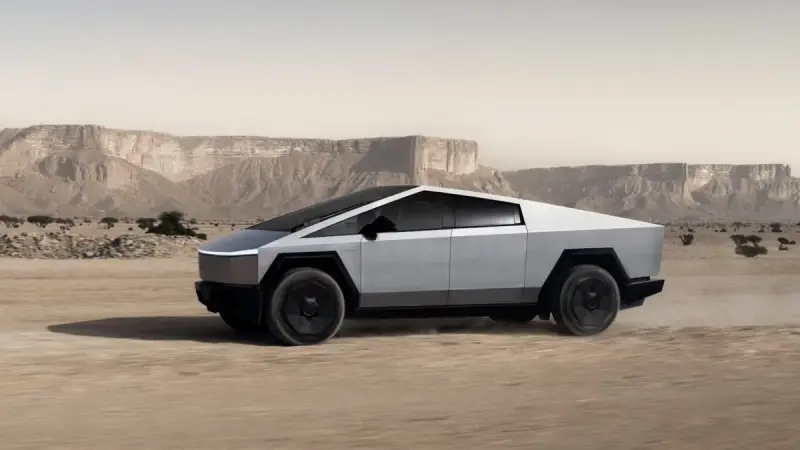
Tesla plans to keep building the Cybertruck through the end of summer 2027, extending production to work through outstanding orders. The added time comes alongside a planned extra factory shift, but the company hasn’t said how many trucks it expects to deliver or whether the extension will cover every buyer waiting for one.

The move changes the timing of Tesla’s earlier plan to wind down Cybertruck production around June or July 2027. It also leaves the vehicle in an unusual position: production is being extended while the range of trims available to new buyers has narrowed and prices have climbed. For customers, the practical question is now less about choosing among several versions and more about whether the remaining configuration fits their budget and whether their order will be fulfilled.

More factory time, with delivery details still open
Elon Musk said manufacturing would continue through the end of summer 2027 so Tesla could build more trucks for customers with existing orders. The company had already outlined an additional Cybertruck production shift as a way to address the backlog. The longer timetable provides more time on the production line, though the announcement doesn’t specify how much extra capacity the shift or extension will provide.

Musk described the extra shift as a decision driven partly by sentiment rather than profit maximization. “This is not the smartest move from a profit-maximizing standpoint btw, but there must be some room in this world for sentimentality or what’s the point?” he wrote on November 11, 2026.
That explanation gives the production decision a personal dimension, but it doesn’t resolve the uncertainty for deposit holders. Earlier in the week, Musk said Tesla would refund many Cybertruck deposits because orders were exceeding production. The extension offers additional manufacturing time, but Tesla hasn’t identified which customers may still receive refunds or confirmed that every outstanding order will be completed.

For buyers, that distinction matters. A longer production window may improve the chance of clearing some of the backlog, yet it isn’t a delivery estimate. Anyone waiting on a truck still lacks a public timeline tied to a specific order, and the available information doesn’t spell out how Tesla will prioritize remaining orders.

Fewer trims and higher prices reshape the offer
The production extension arrives after a rapid series of changes to Cybertruck ordering. Tesla paused orders for the Dual Motor AWD version and raised the Premium AWD price from $84,990 to $92,490. The Cyberbeast rose from $99,990 to $102,490 during the same round of changes.

By November 10, Tesla had stopped taking Premium AWD orders and increased the Cyberbeast price again, to $109,990. That left the Cyberbeast as the only trim open to new orders, following a $10,000 increase in less than a week. No new price or restored trim availability is specified with the production extension.

The effect is a sharper divide between existing customers and shoppers entering the market now. People already holding orders may be waiting for a version that is no longer open to new buyers, while new shoppers face a single remaining configuration at a substantially higher listed price than the Cyberbeast had carried earlier in the month. With no updated delivery schedule or order fulfillment details, the production news doesn’t yet tell either group exactly what to expect.

Factory space remains part of Tesla’s calculation
Tesla’s earlier plan to end Cybertruck production was tied to using space at Giga Texas for more Cybercab production. Musk has said the Cybertruck remains profitable, while also pointing to the model’s manufacturing complexity and the engineering resources and factory space it occupies. Extending production therefore means balancing the backlog against Tesla’s stated plans for the facility and its other vehicle program.

That tradeoff helps explain why the added time shouldn’t be read as a commitment to keep the Cybertruck in production indefinitely. The stated endpoint remains the end of summer 2027, and the company has not described a longer-term production plan. How quickly Tesla can work through outstanding orders will shape what happens between now and that endpoint.
The Cybertruck’s market reach has also narrowed geographically: in October, Tesla canceled reservations in Australia and New Zealand and offered affected customers full refunds. The current extension concerns production timing, and it doesn’t change that earlier decision.
For prospective buyers, the clearest takeaway is that Tesla is giving its Texas factory more time to build Cybertrucks while new-order choices have contracted to the Cyberbeast. The key details still to watch are whether Tesla gives customers clearer delivery estimates, how many outstanding orders are fulfilled, and whether the remaining trim and price change again before production ends.


