F1’s 2027 Overtaking Rules Face a Speed Limit and Energy Challenge
- Jon Noble
- 979 views
FIA and teams will review F1’s overtaking rules for 2027, as higher speeds could bring the 350km/h ceiling into play more often.
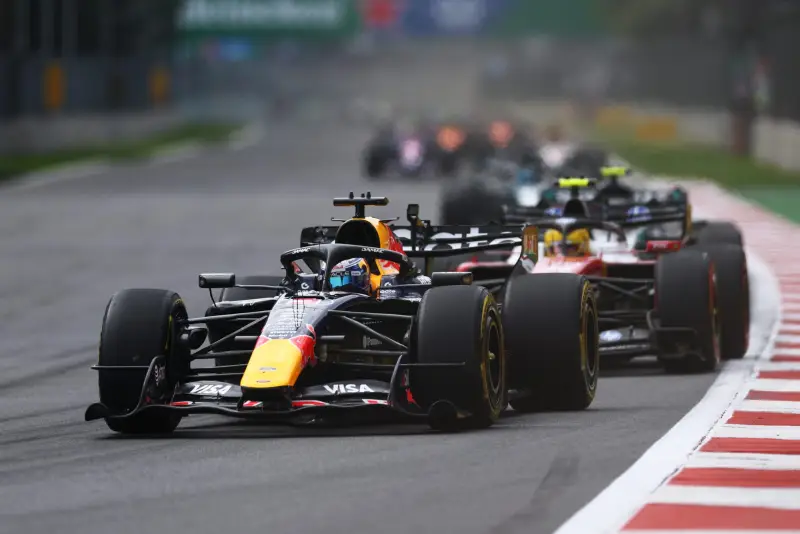
Formula 1’s overtaking problem is bigger than a single speed cap. The 2026 cars often lack the energy and speed difference needed to pass, while the rules begin reducing battery power as speeds approach 350km/h. The FIA plans to consult teams about possible changes for 2027, when engine adjustments could push cars closer to that ceiling at more circuits.
Why the early passing has faded
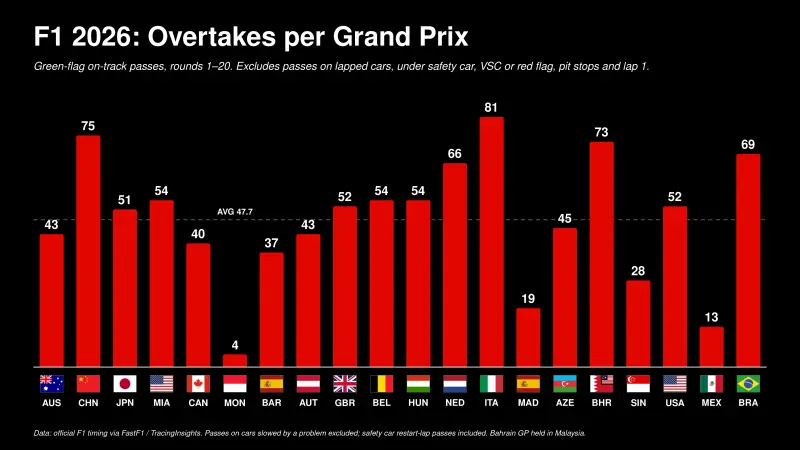
The 2026 season began with frequent position changes as cars ran with different amounts of battery energy available. That “yo-yo” effect has eased as teams and drivers have learned to manage energy more consistently. Outside unusually chaotic races such as Monza and rain-hit Interlagos, passing has become less frequent.
That leaves drivers relying more heavily on overtake mode, which is intended to give a pursuing car extra power. In practice, the boost has been modest: drivers at the Brazilian Grand Prix estimated it was worth only 0.1 to 0.2 seconds to the car behind. That is a small margin when a driver needs to close a gap and complete a pass before the straight ends.
Mexico highlighted a further constraint. The race had the fewest overtakes of the 2026 season outside Monaco, and cars approaching 350km/h began to lose the battery power that could have helped a pursuer get alongside.
How the speed ceiling works
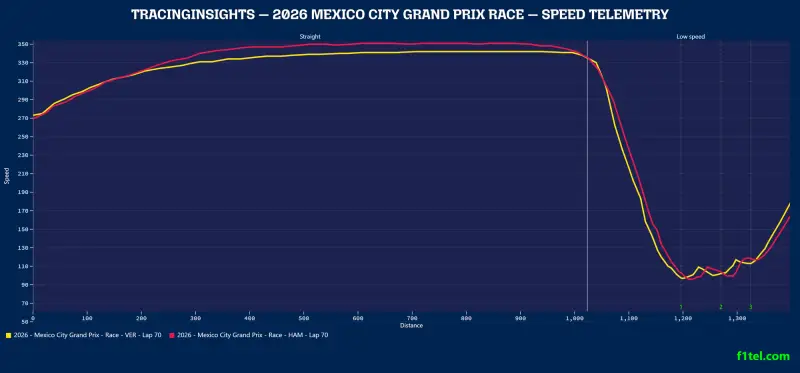
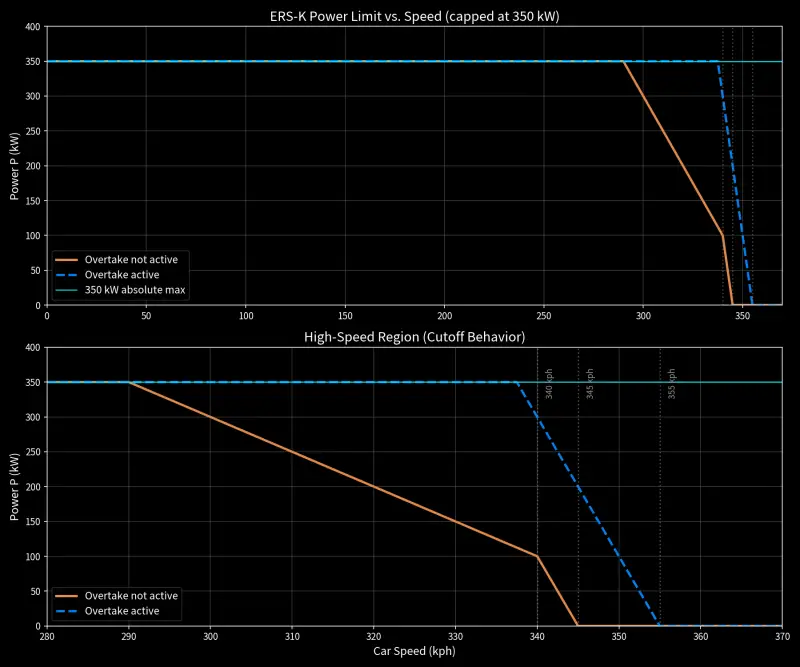
Under the current rules, battery deployment starts tapering above 290km/h, falling from a maximum of 350kW until it reaches zero at 345km/h. When overtake mode is active, the 350kW output starts ramping down at 337.5km/h and reaches zero at 355km/h.
Lewis Hamilton said the system made it harder to challenge Max Verstappen for the lead in Mexico. As he closed in, power fell away in the slipstream, weakening the very speed advantage he needed to pass. Hamilton called the rule “the silliest thing” and argued that a driver with more power behind a rival should be able to use it to complete an overtake.
The issue could surface again in Las Vegas, where the long run down the Strip is expected to bring cars into the same high-speed range. Hamilton raised the cap during the Friday night drivers’ briefing in Brazil and argued that changes were needed for 2027 to reduce the risk of races becoming processional. The discussion broadened, and the FIA agreed to review possible adjustments with teams through technical and sporting advisory committees.
The speed tapering rules no longer appear in the published 2027 technical regulations, but they remain in a separate area available to teams. Their absence from the public text does not mean the cap has been removed.
Why removing the cap may not help
The ceiling was introduced as the 2026 power units and larger batteries took shape. Toto Wolff said in August the year before that using all the available energy on a single straight could let the cars reach 400km/h. A power ramp-down was designed to smooth the drop in deployment, while the speed limit addressed concerns about track safety and high-speed wheel-to-wheel racing.
Many circuits were designed around cars reaching speeds near 350km/h. Arriving at corners significantly faster could exceed the assumptions behind their runoff areas. Drivers had also raised concerns about close racing near 400km/h, prompting calls for a limit.
Those concerns make simply deleting the ceiling an incomplete answer. Sources cited in the report suggest that removing it entirely could even make passing harder: a car might use its energy to reach a higher speed earlier in the straight, then run out of battery power and coast at a lower speed. The pursuing driver would lose the energy difference needed to make a move.
Overtake mode needs a bigger advantage
In the previous rules era, DRS could create a speed advantage of up to 30km/h. That was broadly in the range required to pass a rival on a straight. On a kilometre-long straight, a car starting one second behind would theoretically need a speed advantage of 28.4km/h at 320km/h, or 34km/h at 350km/h, to draw level.
DRS has been replaced by straight mode, which is available to all cars. Overtake mode is meant to provide the pursuer with an advantage, but Hamilton’s peak speed offset against Verstappen in Mexico reached only 10km/h. As battery power tapered near the ceiling, that fell to 8km/h.
The cars’ limited energy supply also restricts how long they can run at maximum power. Overtake mode currently adds 0.5MJ to a car’s energy allowance. At 350kW, that extra energy amounts to about 1.43 seconds of full-power running beyond the theoretical 10 seconds available from the standard 3.5MJ allowance.
Some manufacturers were open to raising the overtake allowance, but others resisted increasing the overall state-of-charge limit beyond 4MJ. A higher limit of 4.5MJ or 5MJ could have supported a stronger power boost and a more useful speed difference, but it would also have changed the energy balance teams must manage.
Engine changes shape the 2027 review
The 2027 engine rules are intended to make cars less dependent on battery energy. They increase the internal-combustion engine’s contribution through a higher fuel-flow rate and greater turbo boost pressure. In normal running, the rules set a maximum output of 300kW; with overtake mode active, cars can use up to 350kW.
The permitted battery state of charge is also set to rise from 4MJ to 4.5MJ, while overtake mode’s additional 0.5MJ remains unchanged. That combination could improve the cars’ energy position, but higher top speeds may also bring them up against the 350km/h ceiling more often. If so, the Mexico limitation could affect more tracks.
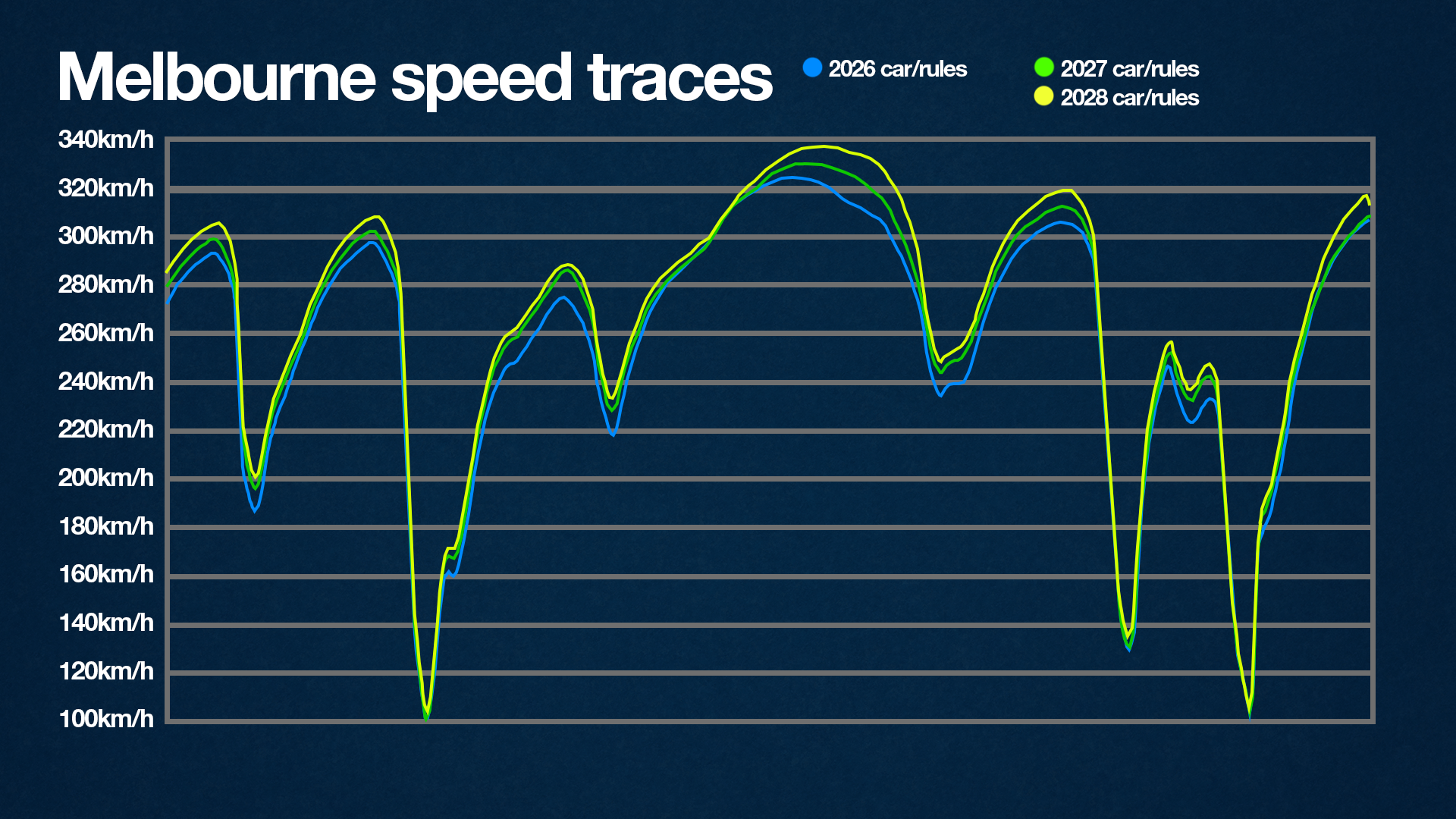
Teams and the FIA will need to simulate how the revised engines and deployment rules interact before settling on changes. Hamilton said after discussions in Brazil that he hoped they could find a workable solution, adding that getting the details right mattered because it would make the racing better. The key test is whether 2027 delivers a useful passing advantage without pushing cars beyond the speeds the circuits were built to accommodate.


