India CV Retail Sales Set October Record as Tata Motors Leads
- Pearl Daniels
- 715 views
CV retail sales reached 1,15,140 units in October 2026. Tata Motors led, while heavy and medium vehicles grew and light commercial sales fell.
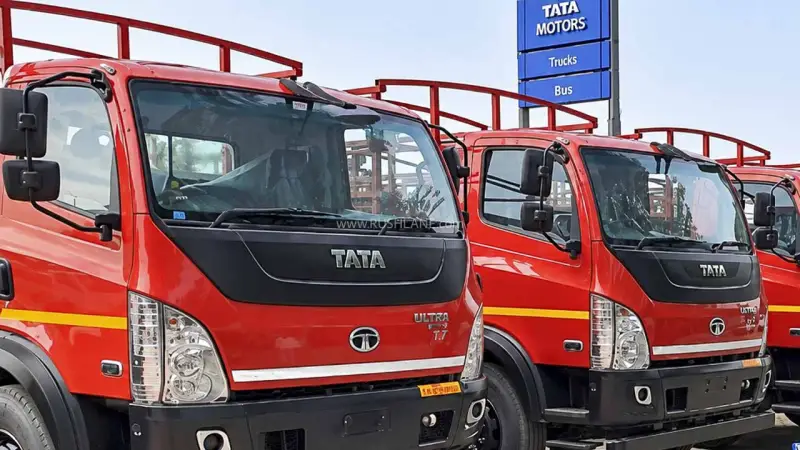
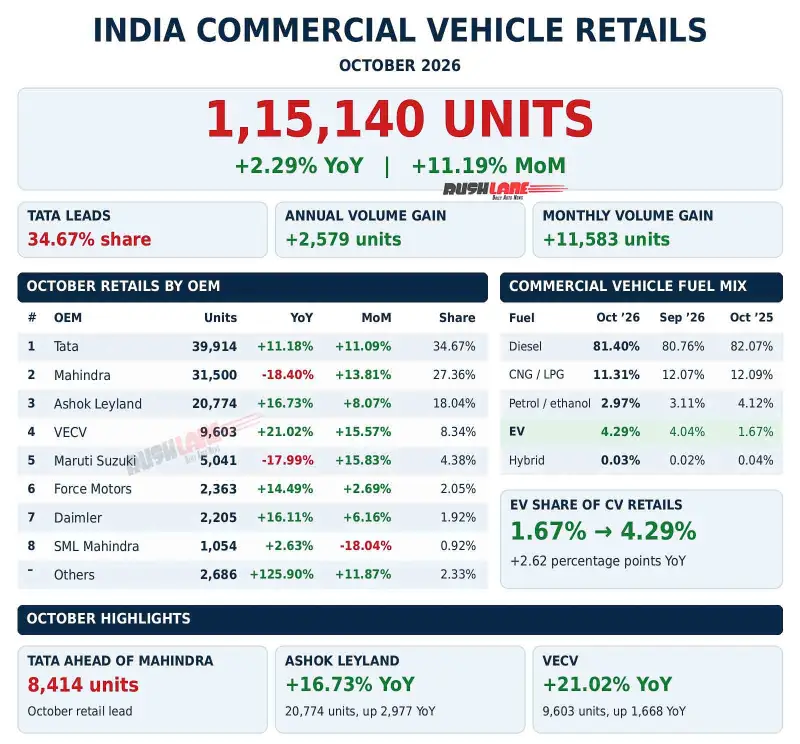
India’s commercial vehicle (CV) market set a new October retail record in 2026, but growth was concentrated in heavier vehicle categories. Dealers recorded 1,15,140 units, up 2.29% year on year from 1,12,561 in October 2025 and 11.19% from September’s 1,03,557. Tata Motors led the manufacturers, while light commercial vehicles (LCVs) were the one major category to contract year on year.

The headline record comes with a split in demand worth watching. Medium commercial vehicle (MCV) retail sales rose 21.16% year on year to 9,042 units, and heavy commercial vehicle (HCV) sales grew 28.95%. LCVs, still the largest category by volume, fell 9.57% to 69,148 units. The “Others” category nearly doubled, increasing from 36 to 71 units, a 97.22% rise from a small base.
That divergence matters for reading the market: the overall increase does not mean every type of commercial vehicle is gaining ground. LCVs accounted for most of the reported category volume, so their decline sits alongside much faster growth in MCVs and HCVs. The figures establish the direction of retail demand, though they don’t identify which applications, vehicle sizes or buyer groups drove the changes.
The year-to-date tally points to a stronger broader run than October’s modest annual gain alone suggests. From April through October 2026, commercial vehicle retail sales reached 7,02,405 units, up 18.17% from 5,94,384 in the same period a year earlier. That cumulative comparison provides a wider view of the market’s progress, while the October category mix shows that recent momentum was uneven.
Diesel remains the leading fuel choice
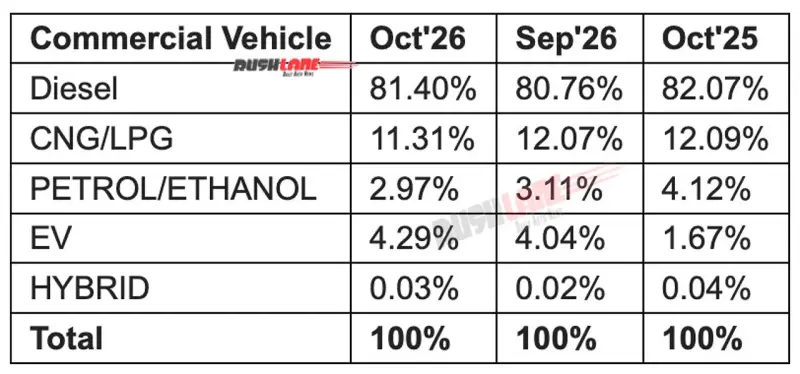
Diesel vehicles represented 81.40% of October CV retail sales, keeping them well ahead of every other powertrain. CNG and LPG models together accounted for 11.31%, while electric vehicles held a 4.29% share. Petrol and ethanol vehicles made up 2.97%; hybrids contributed 0.03%.
The figures show that electric and gas fuel options have a measurable presence, but diesel still dominates new retail registrations by a wide margin. For fleet buyers comparing options, the mix is a useful snapshot of what the market is buying; it doesn’t by itself show operating costs, charging access or the suitability of a particular powertrain for a route. Those questions depend on how and where each vehicle is used.
Urban and rural markets also moved in different directions over the year. Urban CV sales rose 6.51% year on year and 15.47% month on month. Rural sales increased 6.51% from September but declined 2.29% against October 2025. The monthly rise in both areas offers evidence of a pickup from September, while the annual comparison shows that rural demand remained weaker.
Tata leads; Mahindra’s volume falls
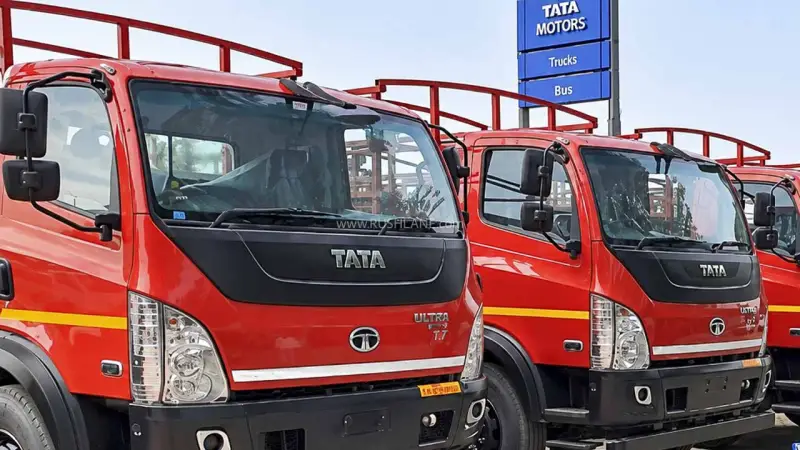
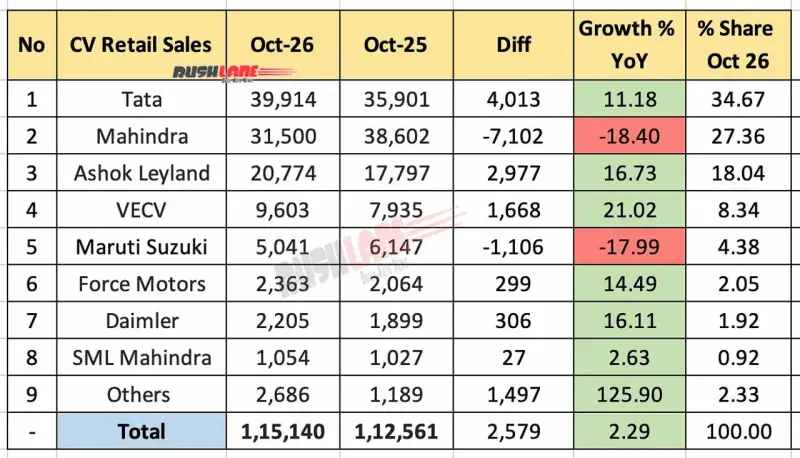
Tata Motors topped the manufacturer rankings with 39,914 units and a 34.67% market share. Mahindra placed second at 31,500 units, down from 38,602 a year earlier, and its share eased to 27.36%. The two leaders remained well ahead of the next listed manufacturers, though their year-on-year results diverged sharply.
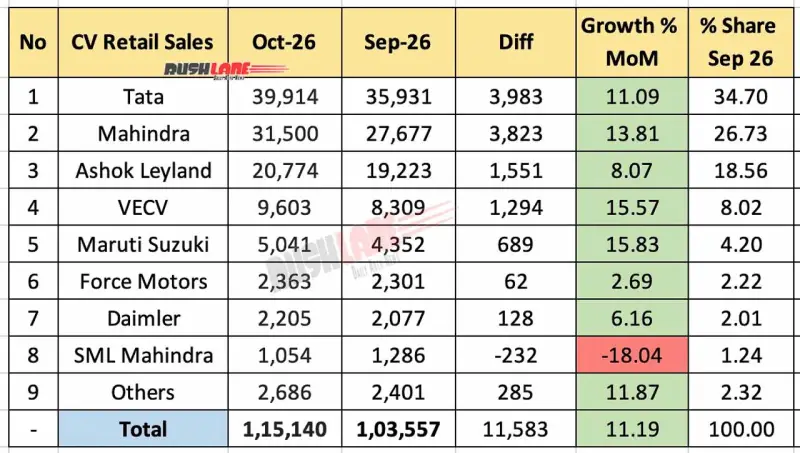
Ashok Leyland recorded 20,774 units, compared with 17,797 in October 2025, lifting its share to 18.04%. VECV came fourth with 9,603 units, an increase of 1,668 from the previous October’s 7,935. Its share rose from 7.05% to 8.34%. These gains place both manufacturers among the stronger year-on-year performers in the reported list.
Maruti Suzuki’s CV retail sales fell to 5,041 units from 6,147, taking its market share down from 5.46% to 4.38%. Force Motors recorded 2,363 units, while Daimler registered 2,205. SML Mahindra edged up to 1,054 units from 1,027. Sales grouped under “Others” reached 2,686, up from 1,189 a year earlier.
Dealers anticipate healthy CV demand from November 2026 through January 2027, with infrastructure development, mining and e-commerce activity cited as supporting factors. That outlook will be tested against the market’s mixed October pattern: a record total and strong MCV and HCV growth, but a year-on-year LCV decline and softer rural sales. The next few months should show whether the heavier-vehicle gains can sustain overall momentum while the largest vehicle category recovers.