GM Service Bulletins Reveal Truck Wash Issues, Safety Glitches and Spiders
- [email protected] (B. L. Johnson)
- 988 views
GM bulletins document unexpected trouble, from false braking alerts and water leaks to OnStar calls, engine noises and spider nests.

GM service bulletins cover a distinctly unglamorous side of vehicle ownership: the odd faults that surface after a model reaches drivers. The cases range from a truck that sets a warning after a wash to a roof leak that disrupts keyless entry. Some are minor irritations; others involve airbag behavior or braking systems, where the details matter more than the oddity.
These reports also show how diagnosis can hinge on unlikely connections. Water can linger in a drain tube, a module can mistake sound for a request for help, and a spider nest can obstruct an emissions component. For owners and technicians, the practical lesson is that a familiar symptom does not always point to the familiar cause.

OnStar calls from trucks that weren’t being driven
A 2007 GMC Sierra service update describes certain 2001–2008 light-duty trucks, Hummers and Saabs making repeated, incomplete OnStar calls without the driver’s knowledge. In some cases, GM’s stated repair was to replace the vehicle communication interface module, or VCIM. The calls were less like deliberate pranks than an electronic system activating on its own.
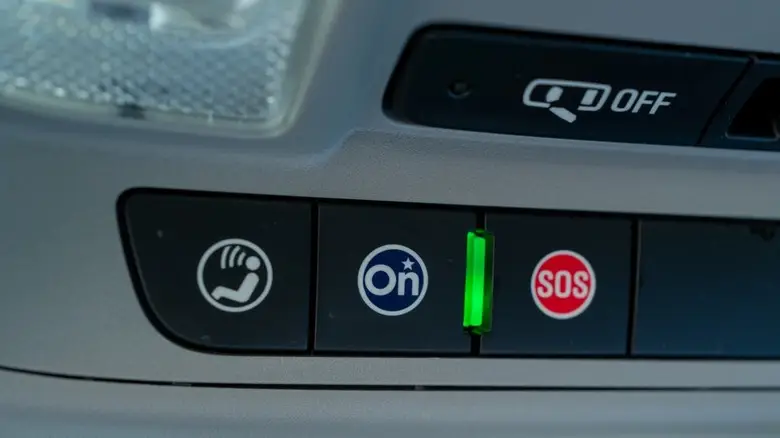
An earlier bulletin involving the 2006 GMC Canyon discussed a similar issue across OnStar-equipped vehicles from 1996 through 2008. Its explanations included a driver pressing the white button and the system then treating background noise as a request for assistance. A cough was one example. That leaves a curious question about how the system distinguished ordinary cabin sounds from a real call, though the bulletin’s account doesn’t answer it.
For owners, an unexpected connection can be more than a nuisance: it’s a sign that a communications component may need attention. The cases also underline why technicians need to know whether a vehicle has been making calls even when nobody reports using the button.
Water and washing trigger unexpected symptoms
On some 2024 and 2025 Chevrolet Silverado 2500 HD and 3500 HD pickups, a check-engine light and diagnostic code P244B could appear after the truck had been washed. The code refers to diesel particulate filter differential pressure being too high on Bank 1. Bulletin PIP6020A says recent washing may be associated with the condition, making a routine cleaning relevant information when a technician investigates the warning.

Another water-related report concerns 2021 Chevrolet Tahoes and GMC Yukons. After heavy rain or a car wash, some owners heard gurgling that was traced to water remaining in the sunroof drain tubes. The suggested remedy was to run the HVAC blower in fresh-air mode to clear the water. That is a very different repair from the diesel pickup issue, but both show why the timing of a symptom can help narrow down its cause.
The two cases offer a useful ownership detail: note whether a warning, noise or other change began after rain or washing. That history can help a service visit move past guesswork. The reported pickup problem amounted to a warning light; the bulletin does not describe washing as causing the trucks to stop working.
Driver assistance and restraint systems need precise diagnosis
Some 2024 Cadillac XT4s were reported to brake automatically when their camera system detected an obstacle that wasn’t there. Service Bulletin 24-NA-053 says camera limitations may be involved. Unwanted braking is a stark example of how a driver aid can become unsettling when it reacts to a false reading, especially in traffic where other drivers may not expect the vehicle to slow.

A separate case involved the sensing and diagnostic module in some 2013 Chevrolet Malibus. Program Bulletin 12084 says the module could reset for three seconds after hard braking. If the driver made an aggressive turn during that interval, the side airbags could deploy; if a crash occurred, the seatbelt pretensioner might not function. Those are sharply defined conditions, so the useful takeaway is to treat the bulletin as a specific service concern rather than a general description of every Malibu.
GM has also had a separate recall involving temporary loss of braking in several models. Taken together, these examples show why reports about safety systems need close attention to model, year and fault. A false braking response and a brief restraint-system reset describe different problems, and neither should be generalized beyond the vehicles and conditions identified.
Odors can point to very different problems
GM bulletins have covered odors ranging from gear-oil smells in vehicles with remote vents to burning smells linked with fire under the hood in Buick Regal GS and Pontiac Grand Prix models. Owners of some 2022–2024 GM vehicles also reported smoke-like odors from beneath the seats, where technicians could find melted burn marks around the seat-height adjuster motor.

The range matters: an unpleasant smell is a symptom, not a diagnosis. A gear-oil odor, a burning smell under the hood and signs of heat near a seat motor have different implications. Drivers who notice a new odor can give technicians a better starting point by describing where it seems to come from and when it occurs.
There’s also a less technical wrinkle. One GM bulletin promoted GM Vehicle Care Odor Eliminator for dealership detailing and used-car preparation. It suggested that dealers could offer the product with a new vehicle or display it for sale, noting it wasn’t sold in stores. That’s an unusually direct collision between service advice and sales: a product aimed at unwanted smells was pitched as a way to support dealership business, too.
Some engine sounds are documented as normal
Noise complaints can sound alarming even when the manufacturer identifies them as expected behavior. Owners of certain 1980 Oldsmobile Ninety-Eights heard a growl when parking on an incline. The bulletin’s instruction was to set the parking brake before shifting into Park, then check that the vehicle was properly in Park.

For some 2019–2023 full-size GM trucks and SUVs, reports included chirps and squeaks. Another bulletin, 26-NA-021, refers to ticks, taps and typewriter-like sounds in 2019–2026 trucks. Those descriptions are useful because they give technicians a vocabulary for matching a customer’s report to a known condition.
Bulletin 14-06-04-004G addresses a different sound: a “Rrrrp” or “Rasp” from vehicles with a two-stage vane-type oil pump when starting in freezing weather or after the engine has sat for a few hours. The same bulletin says some vehicles with a 6.2-liter engine can make a moan after a cold start, at idle or at low engine speeds. GM describes these particular noises as normal. For an owner, that distinction can prevent a documented operating sound from being mistaken for a new fault, while still leaving room to report a sound that changes.
A roof leak can reach the keyless entry system
On some 2024 Chevrolet Trax models, pinhole roof leaks could let water reach electronic components and interfere with the key fob. Service Bulletin 23-NA-107 links the leak with the remote’s failure to communicate with the vehicle. It’s an unusual diagnostic chain: when a fob stops working, the cause may be water entering through the roof rather than a depleted fob battery.

Another report concerns flashing lights and a drained battery in some 2023 Cadillac XT4s and 2024–2025 Buick Envisions. GM identified a possible defect in the K171 rear-closure hands-free module. The bulletin’s diagnostic check is strikingly specific: tape the key fob to the rear wiper and see whether the rear gate opens when the lights flash. That behavior helps point technicians toward the module involved.
It’s a reminder that electrical symptoms can connect systems owners may think are unrelated. A flashing light, a battery that won’t hold charge and an unexpectedly opening rear gate can all belong to the same fault investigation.
Spider nests can block an emissions component
On certain Buick Encore, Chevrolet Trax and Chevrolet Sonic models from the 2010s, diagnostic codes P0446 or P0455 could point technicians toward a restriction in the evaporative emissions canister. The service bulletin instructed them to check the canister for spider nests.

The prescribed repair was to replace the EVAP canister, a part reported at $300. The bulletin doesn’t explain why spiders were drawn to that component, or how many cases prompted the guidance. Still, the unusual instruction indicates the nest was considered a plausible enough cause to include in the diagnostic process.
Across these cases, the pattern is clear: service bulletins turn odd customer complaints into checks a technician can repeat. A wash, rainstorm, cold start, unexpected odor or even a spider nest may be the clue that gets a repair pointed in the right direction. For drivers, keeping track of when a symptom occurs can make that first service conversation more useful.


