Nissan NX7 PHEV Opens China Pre-Sales With 320 km Electric Range
- Blagojce Krivevski
- 630 views
The NX7 pairs a 40.9 kWh battery with a 1.5-liter engine, offering up to 320 km of CLTC electric range from 129,900 yuan.
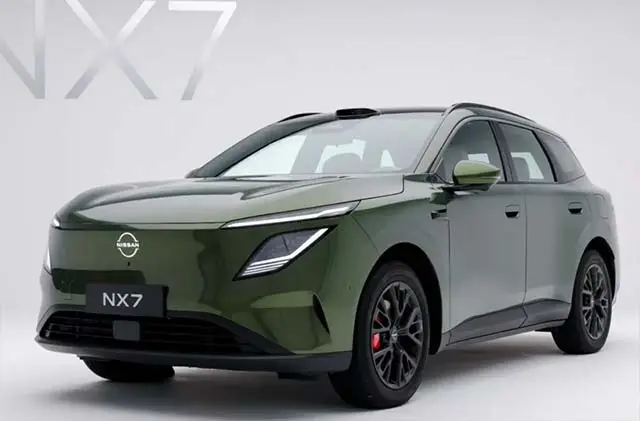
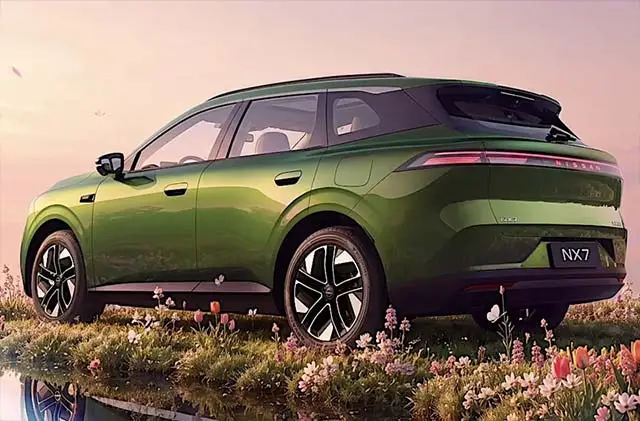
The Nissan NX7 puts an unusually large battery at the center of its plug-in hybrid pitch. Its claimed 320 km of electric driving on China’s CLTC cycle gives the SUV a much longer stated electric range than many plug-in hybrids, while a gasoline engine and a claimed 1,666 km combined range address longer journeys. Pre-sales began November 13, with prices from 129,900 yuan (about $19,400 or €17,670).
That combination is the NX7’s main point of difference: buyers can cover a substantial amount of everyday driving on electricity while keeping a fuel-powered option for trips beyond the battery’s reach. The figures are claims for the Chinese market, and the electric and combined range estimates use the CLTC test cycle. As with any stated range, actual distance will vary with speed, temperature, driving conditions and other factors.
Three versions, starting at 129,900 yuan
Dongfeng Nissan is offering three NX7 trims during pre-sales. The 320 Pro starts at 129,900 yuan, the 320 Max at 139,900 yuan, and the 320 Ultra LiDAR Edition at 149,900 yuan. These are pre-sale prices; final retail pricing may differ when the SUV reaches its market debut on November 27 at the Guangzhou Auto Show.
Early buyers can put down a 999-yuan reservation deposit and receive a 3,000-yuan deduction from the purchase price. Clover Green and Wisteria Purple are among the exterior colors being offered without an added charge during the promotion. The entry price gives the NX7 a clear position in China’s crowded new-energy vehicle market, though the final trim pricing and equipment mix will matter when buyers compare it with rivals.
The NX7 is the fourth model in Nissan’s N-series in China and its second SUV, following the NX8. It joins the N7 electric sedan and N6 plug-in hybrid sedan, broadening a lineup that now spans different body styles and powertrain approaches.
A large battery changes the PHEV equation
All three versions use a 40.9 kWh lithium iron phosphate battery supplied by CATL. Dongfeng Nissan quotes 320 km (199 miles) of electric range and up to 1,666 km (1,035 miles) of combined range with a full battery and full fuel tank. For a plug-in hybrid, that battery capacity is a notable feature: it gives the NX7 a stated electric range that could cover many regular journeys without starting the gasoline engine, provided owners can recharge between trips.
The powertrain pairs a naturally aspirated 1.5-liter gasoline engine rated at 73 kW (98 hp) with an electric motor producing up to 170 kW (228 hp). The stated figures describe the individual engine and motor outputs; no combined system output is provided. The NX7 therefore offers buyers a route to electric daily driving without relying entirely on public charging for longer travel. How well that works in practice will depend on charging access and real-world range, neither of which can be established from the claimed figures alone.
CLTC estimates tend to be more optimistic than range tests used in Europe and North America, so the 320 km figure shouldn’t be treated as a direct comparison with ratings from those markets. It gives a useful indication of the NX7’s positioning in China, but buyers will need local test results and real-world use to judge its range against fully electric SUVs or other plug-in hybrids.
Cabin tech and space focus on family use
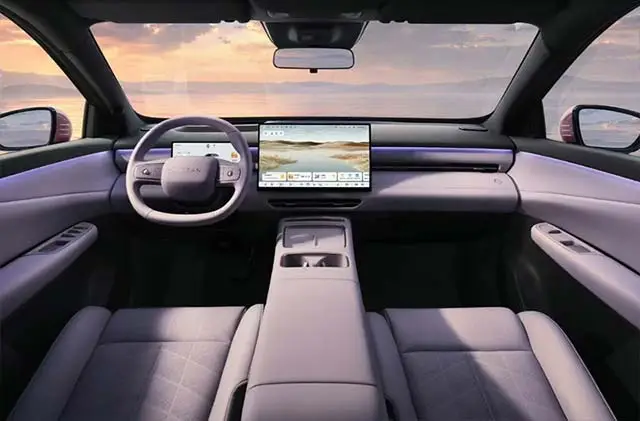
The NX7’s interior centers on a 17.3-inch 3K infotainment screen, a digital instrument cluster and Nissan OS 3.0. Qualcomm’s Snapdragon 8295P processor powers the infotainment system, while voice functions were developed with iFlytek. Higher trims add a 55-inch augmented reality head-up display, which projects navigation and driving information into the driver’s view.
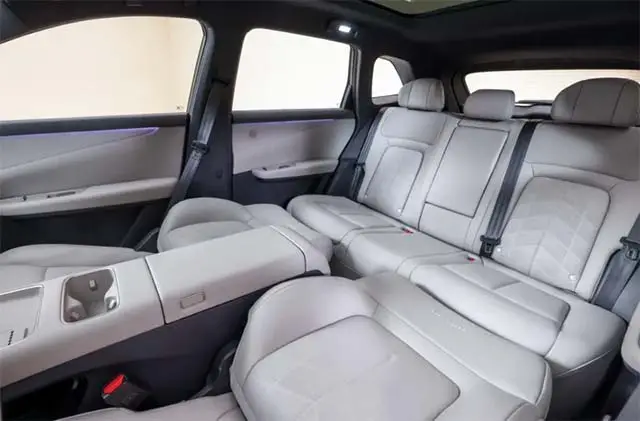
Comfort equipment includes heated, ventilated and massage-equipped seats. The front seats can recline into a bed-like position, and the cabin also gets an onboard refrigerator and storage compartments. Dongfeng Nissan says its third-generation motion-sickness prevention system can reduce its motion-sickness index by as much as 83%; that is the automaker’s stated figure, rather than an independently measured result.
For carrying capacity, the NX7 is reported to offer up to 783 liters of luggage space, rising to 1,878 liters with the rear seats folded. Those figures suggest a practical focus alongside the cabin’s screen and comfort features, although the available information does not detail how cargo space varies between trims.
LiDAR is reserved for the top trim
The 320 Ultra LiDAR Edition adds roof-mounted LiDAR sensors and the Momenta R7 driver-assistance system. Its listed functions include highway and urban navigation assistance, supported lane changes, navigation through complex intersections and automated parking. Dongfeng Nissan says the parking system handles more than 300 parking scenarios in China and can guide the SUV into a space only 40 centimeters wider than the vehicle.
Those features make the top trim a more technology-heavy choice, but they also leave a 20,000-yuan gap between it and the entry version. Buyers will need to weigh the added assistance hardware and functions against the lower trims’ shared battery and powertrain. The NX7 is set to debut in China on November 27; no availability in Europe or North America has been confirmed. Dongfeng Nissan has also said it plans five more new-energy models in China by summer 2027, putting the NX7 within a broader expansion of the brand’s local lineup.