New-Car Average Price Sets Record at $51,109 as Buyers Shift Toward Cheaper Models
- James Johnson
- 783 views
October’s $51,109 average reflects demand for costly SUVs and pickups, while sales of vehicles priced $28,000 to $38,000 also grew.

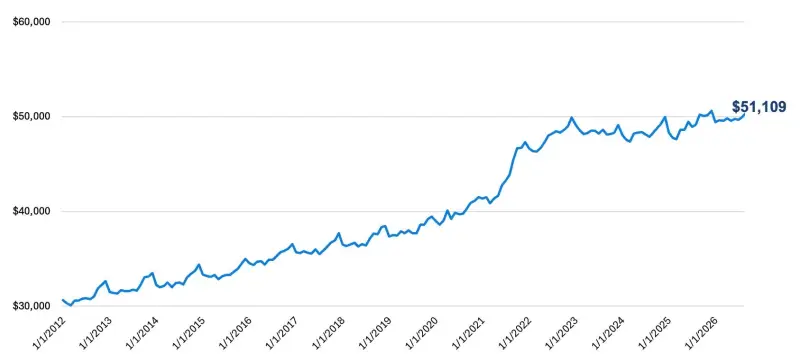
The average price paid for a new vehicle in the United States reached $51,109 in October, according to Kelley Blue Book. That record says as much about the mix of vehicles people are buying as it does about what an individual shopper is likely to spend: higher-priced SUVs and pickups continue to lift the industry average, even as sales growth favors less expensive models.

Vehicle mix pushes the average higher
October was the first month in which the average transaction price topped $51,000. It climbed 1.3 percent from September and 2.1 percent from October 2025, passing the previous record of $50,614, set in December 2025. The figures describe the average amount paid across new-vehicle transactions; they don’t mean that most buyers paid close to $51,109.
The difference between an average and a typical purchase matters in a market where buyers choose vehicles at very different price points. Midsize SUVs were the best-selling segment in October, with an average transaction price of $50,570. Full-size pickups averaged $67,912. By comparison, compact SUVs averaged $37,895, subcompact SUVs $31,333, and compact cars $28,030.
Together, those five segments made up about 64.4 percent of new-vehicle sales. The spread between compact cars and full-size pickups helps explain why strong demand for larger vehicles can pull the overall figure upward, even when many transactions happen well below the headline average.
Prices and incentives tell a fuller story
Sticker prices rose more modestly than the transaction-price record might suggest. Kelley Blue Book put the average manufacturer’s suggested retail price at $52,933 in October, up 2.4 percent from a year earlier. Incentives also edged higher, averaging $3,490, equivalent to 6.8 percent of the transaction price.
Those numbers offer two different views of the market. The suggested retail price tracks manufacturers’ listed prices, while transaction prices reflect what buyers paid after incentives and other effects on the final deal. In October, the average transaction price remained below the average suggested retail price, and incentives offset part of the listed cost. A market average still can’t tell an individual shopper what a particular model, trim or dealer will cost; it’s a broad measure of transactions across the market.
Cox Automotive analyst Erin Keating has pointed to a key counterweight to the rising average: sales of vehicles priced roughly between $28,000 and $38,000 increased 9.6 percent from a year earlier. That growth suggests buyers are increasingly gravitating toward less expensive options, even while high transaction prices for larger vehicles shape the market-wide total.
Affordability remains a pressure point
The contrast between the record average and growth in lower-priced vehicles lands against a difficult affordability picture. Cox’s affordability index showed that the typical new-vehicle payment reached $776 in September. Buyers needed the equivalent of 35.7 weeks of median income to purchase the average new vehicle, the least affordable reading since January.
These measures capture different parts of the ownership equation. The average transaction price describes vehicle purchases, while a monthly payment also depends on how a purchase is financed. The income comparison gives another way to view the price burden. Taken together, they show why a strong headline sales total or a rise in less expensive models doesn’t automatically make new vehicles affordable for every buyer.
Cox estimated that 1.32 million new vehicles were sold in October, about 3 percent more than a year earlier. At the same time, the seasonally adjusted annual sales rate fell to 15.5 million, among the weaker estimates of 2026. Retail sales were particularly soft, while fleet purchases remained relatively strong. The split suggests that total sales growth alone doesn’t capture how individual consumers are faring.

EV prices remain below last year
Electric vehicles followed the monthly increase but remained less expensive on average than they were a year earlier. Their average transaction price rose 1 percent in October to $56,220, while sitting 2.7 percent below its year-earlier level. EV buyers also received larger incentives than buyers across the market: EV incentives averaged 11.3 percent of the transaction price, compared with 6.8 percent overall.
That wider incentive share is a meaningful part of the EV price picture. The average transaction price alone doesn’t show how much support buyers received, and the October figures point to a market where incentives account for a larger portion of EV transactions than they do across new vehicles generally. The price trend also cuts both ways: EVs became more expensive month to month, yet their average remained lower than in October 2025.
Cox expects pricing pressure to continue through the holiday selling season, noting that new-vehicle prices typically reach their annual high toward year-end. The October record is therefore best read as a market-wide signal, not a personal price forecast. For buyers comparing models, the segment and vehicle mix behind the average, along with available incentives, remain central to understanding what the numbers mean at the dealership.


