Mercedes Targets Cobalt-Free EV Batteries by 2030 as Carmakers Weigh Range and Cost
- Robert Martinez
- 589 views
Mercedes is aiming for cobalt-free batteries by 2030, with lithium manganese-rich and nickel manganese oxide chemistries offering alternatives to LFP.

Mercedes-Benz is aiming for cobalt-free batteries across its vehicle range by 2030, a target that puts a familiar engineering trade-off in focus: reducing reliance on cobalt while preserving the range, cost and stability drivers expect from an EV. Stephan Bach, the company’s senior manager of cell technologies and battery concepts, described 2030 as a goal at a technology event in Germany. Mercedes hasn’t said it will meet that date across its lineup; the milestone remains aspirational.

Cobalt has been used in lithium-ion battery cathodes to help limit corrosion, improve efficiency and range, and support cell stability. A typical EV battery pack contains 10 to 20 pounds of the metal, with cobalt accounting for roughly $100 to $400 of an average pack’s cost. Those benefits have made the material useful, but its supply chain carries serious human costs.
An estimated 70 to 74 percent of the world’s cobalt comes from the Democratic Republic of the Congo, often as a byproduct of nickel and copper mining. Artisanal mining in the country’s southeast has been linked to low pay, dangerous working conditions and child labor. Save the Children says tens of thousands of children work at mine sites daily to help support their families. The organization has described children continuing to work in mines after witnessing fatal accidents involving relatives. That record gives automakers a clear reason to seek alternatives, even when replacing cobalt brings technical compromises.

LFP’s cost advantage comes with a range trade-off
Lithium iron phosphate, or LFP, is the clearest established alternative among the chemistries discussed here. Iron-based cells can produce lower-cost battery packs without cobalt, and around 55 percent of new EVs worldwide use LFP, including many vehicles built in China. The catch is lower energy density than some nickel-based cells. For a given amount of battery material, that can limit how much energy a pack stores, making it harder to deliver longer range without increasing pack size or weight.
Tesla uses LFP in some vehicles, while its longer-range versions of the Model 3 and Model Y use high-nickel cells. The company has said it wants to reduce cobalt use to “almost nothing.” Its supplier Panasonic has already cut cobalt to five to 10 percent of cathode weight in its nickel-cobalt-aluminum cells, and its stated roadmap points toward ending cobalt use.

That mix of chemistries reflects a practical reality for automakers: one battery formula may not suit every model. Entry-level vehicles have to hit a price target, while buyers of longer-range versions place more value on stored energy. LFP can work well where cost and adequate range take priority; higher-energy cells remain relevant when driving distance is a central selling point.
GM is shifting from LFP toward manganese-rich cells
General Motors’ battery plans show how quickly that balance can change. Sam Abuelsamid, vice president of market research at Telemetry, said GM initially intended to use LFP in all its entry-level EVs. The 2027 Chevrolet Bolt is set to use LFP cells supplied by China’s CATL, with a stated range of 262 miles. GM has since made progress with lithium manganese-rich, or LMR, cells and plans to use that chemistry more broadly, Abuelsamid said.
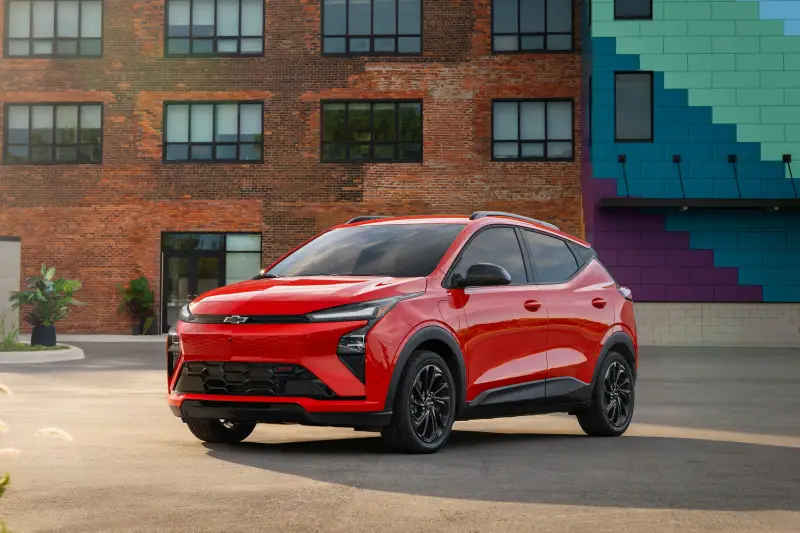
GM and its Ultium Cells joint venture with LG are committing up to $1 billion to build LMR cells in Spring Hill, Tennessee. The chemistry described for those cells uses 65 percent manganese and 35 percent nickel. Lower nickel content can reduce costs, while the near-zero-cobalt formulation offers a route away from the metal without relying solely on LFP’s energy density.
The Bolt’s run is expected to last a single model year. The decision followed a change in the economics of importing CATL’s LFP cells and the loss of a federal tax credit, according to the source details. GM has other entry-level EVs priced around $30,000 in development, so its broader approach to affordable batteries will matter beyond the Bolt. The key question for buyers will be whether those models can pair competitive prices with enough range for their needs.
Solid-state cells don’t dictate the chemistry
Solid-state batteries are often discussed as a distinct next step, but replacing liquid electrolyte does not automatically remove cobalt. Solid-state cells can use different chemistries, including ones with cobalt and ones without it, Abuelsamid said. Factorial Energy, which works with Mercedes, Hyundai/Kia, Karma and Stellantis, is exploring ways to reduce or eliminate cobalt through options that include lithium nickel manganese oxide, or LNMO, and LFP.
Mercedes says LNMO cells could raise energy density, lower production costs and deliver up to 30 percent more driving range. Those are development targets, not confirmed results for a production vehicle. If the chemistry can deliver those gains at scale, it could address the range compromise that has limited cobalt-free options. Production readiness, pack cost and real-world vehicle performance will determine how much the promise matters to buyers.
For now, the path to a cobalt-free Mercedes lineup is a set of competing approaches rather than a single replacement. LFP has broad use and a cost case; LMR and LNMO aim to balance low cobalt with more energy density. Mercedes’ 2030 target will depend on whether its cell development turns those trade-offs into batteries that suit the range and price requirements of its vehicles.


