Mahindra M13Electro Brings Permanent AWD and 816hp to Formula E Gen4
- Aditya Yadav
- 628 views
Mahindra keeps Nyck de Vries and Edoardo Mortara for Gen4, whose 816hp cars add permanent AWD and greater energy recovery.
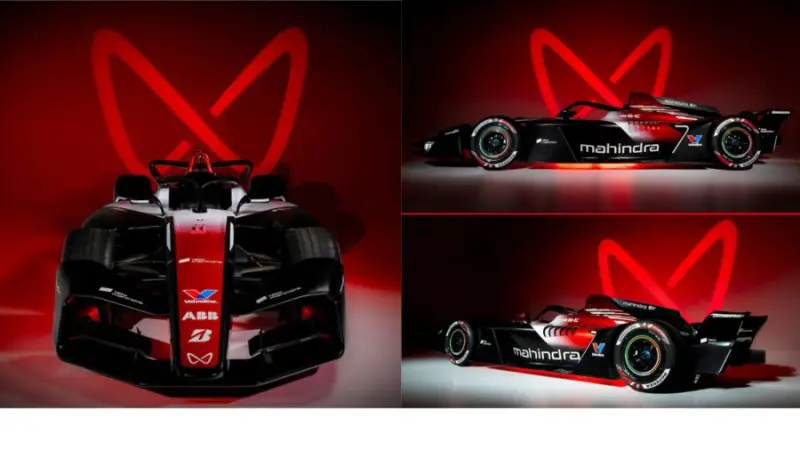
Mahindra Racing’s M13Electro marks a sharp change in the team’s Formula E package. The Gen4 car brings permanent all-wheel drive, up to 816hp in Attack Mode and a higher ceiling for energy recovery. Nyck de Vries and Edoardo Mortara will stay on as drivers, giving Mahindra continuity as it adapts to machinery that changes both how power reaches the road and how energy can be managed through a race.
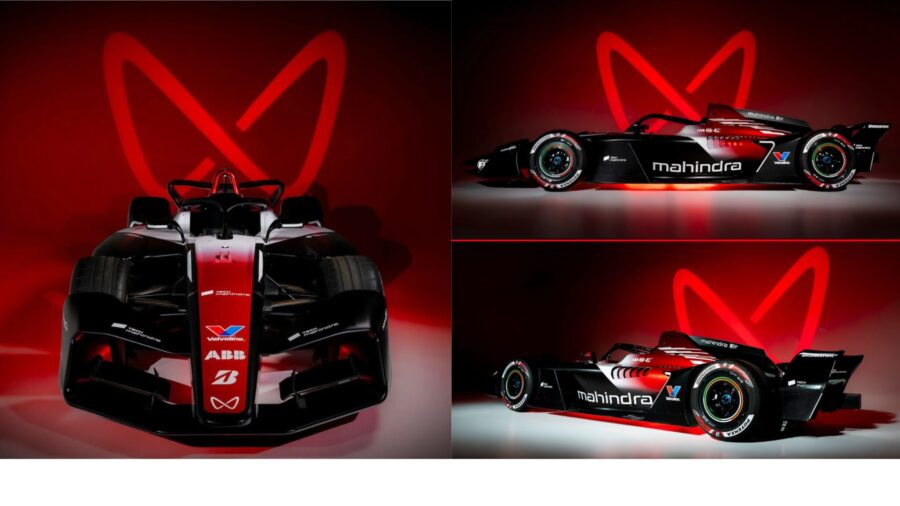
The car retains Mahindra’s red livery and was shown in a digital unveiling. Its first competitive season is scheduled to begin in Mexico on January 16, 2027. The reveal starts a development challenge as much as a new-car debut: Mahindra has said it’ll take time to extract the M13Electro’s full performance, a sensible qualification when the headline figures describe the package’s potential rather than its likely pace in every race.
Gen4 changes the power and energy equation
Formula E’s Gen4 specifications point to a substantial step in outright pace. The cars are listed at up to 816hp in Attack Mode, equivalent to 600kW, with a top speed above 335kph. The stated acceleration figures are 1.8 seconds from 0 to 100kph and 4.4 seconds from 0 to 200kph. In qualifying, the new machinery is expected to be around 10 seconds faster per lap than the previous Gen3 cars, a projection that makes the scale of the change easy to grasp.
Those numbers describe a faster car, but they don’t explain how that speed will feel across a full race. Qualifying rewards a different balance of performance than a race in which energy use, traffic and changing track conditions all shape a driver’s options. The gap between a specification sheet and repeatable lap time is where engineering and execution count.
Permanent all-wheel drive is another defining change. Gen4 cars will use it throughout the championship, while the preceding generation didn’t have permanent AWD. That shifts the driving and engineering task: teams will need to understand how the new drivetrain affects power delivery, tire use and the way the car behaves when accelerating out of corners. Similar systems typically make traction and torque management more complex, so the advantage won’t come simply from having power at both axles.
The specifications establish the potential, but they don’t tell us how much of that pace Mahindra can consistently unlock in competition. This is more significant than it looks: a new drivetrain can change the compromises engineers make across a lap, and drivers will need time to build confidence in how the car responds. The speed is clear. The usable performance still has to be found.
The battery capacity rises from 47kWh to 55kWh, and maximum energy recovery increases from 600kW to 700kW. Those changes give teams more capacity to recover energy and more room to manage it during a race. They also make energy strategy a central part of the learning curve: drivers and engineers will have to balance pace with the energy available over a race distance, while accounting for how the car’s demands vary from one part of a circuit to another.
The figures alone don’t establish how that balance will play out at different circuits. More storage and higher recovery capacity may widen the choices available to teams, but they don’t remove the need to decide when to spend energy and when to conserve it. If you’re working in this space, the question is less whether Gen4 can produce a faster lap than how reliably a team can turn that pace into a race plan.
| Specification | Formula E Gen4 |
|---|---|
| Maximum power in Attack Mode | 816hp / 600kW |
| Top speed | Over 335kph |
| 0–100kph | 1.8 seconds |
| 0–200kph | 4.4 seconds |
| Battery capacity | 55kWh |
| Maximum energy recovery | 700kW |
| Drive system | Permanent all-wheel drive |
Mahindra keeps its driver pairing
De Vries is set to enter his fourth season alongside Mortara, who’ll continue with Mahindra into the Gen4 era. Both drivers have worked with the engineering team during development, so they bring familiarity with the programme as the team takes on a new car. That knowledge can help engineers compare feedback and identify what the new package is doing, though a familiar line-up can’t make the technical learning curve disappear.
Keeping the pair gives Mahindra a stable driver line-up while it learns a significantly different technical package. Drivers have to adapt their braking, acceleration and energy management to the car in front of them; engineers, in turn, need feedback that helps distinguish a setup issue from a broader characteristic of the new system. Continuity gives the team a useful reference point. It doesn’t guarantee a quick adaptation.
The team comes into the change after finishing third in the 2025–26 Teams’ Championship with 252 points. It had placed fourth the season before, scoring 186 points. That improvement gives Mahindra a stronger recent result to build on, though Gen4 changes the terms of the comparison: the team’s previous standings can’t show how quickly it’ll adapt to the new car. A stronger finish is evidence of recent progress, not a forecast of where the team will sit in a new technical cycle.
Mexico opens the 2027 season
The 2027 season is due to start in Mexico on January 16. The opening round had initially been scheduled as a double-header in Jeddah on December 18 and 19, but has been postponed to April 2027. That revised calendar makes Mexico the opening date listed for the season, putting the first competitive test of Gen4 there.
That change gives the Mexico round added weight in the story of the new car. The first event will offer an early comparison of how teams have interpreted the same broad technical shift, but a season opener can’t settle every question about reliability, development or performance across different circuits. The opening race is a first reading, not a final verdict.
What the first races will reveal
Mahindra’s immediate measure will be how effectively it turns the M13Electro’s headline specifications into performance on track. Higher energy recovery, more battery capacity and permanent AWD arrive together, so the team has several linked systems to understand at once. A change in one area can affect decisions elsewhere: power delivery, energy use and driver confidence all feed into the lap.
De Vries and Mortara provide continuity, and the team’s recent results give it a basis for comparison. Yet the Gen4 transition resets the competitive picture to a degree; past standings can’t tell us which team will interpret the new package fastest. That said, early performance should be judged across more than one qualifying session. Race pace and energy management will show whether Mahindra can make the extra capacity count over distance.
And yet. The specifications are striking, but the useful test is whether they produce repeatable gains under race conditions. Mahindra itself says extracting the car’s full performance will take time, which is a reminder that a launch reveal marks the start of that work. The first rounds will show how quickly the team turns development knowledge into results.


